A soft starter motor not accelerating needs a diagnosis of the complete starting event, not an immediate increase in ramp time. First establish whether the starter accepted the command, whether the shaft moved, what happened to supply and current, and which protection or interlock ended the attempt. Then compare the evidence with the motor, driven load and model-specific instructions. A controlled investigation can separate missing permission, inadequate accelerating torque, a supply problem and an excessive starting duty. This guide explains that decision process without prescribing settings for an unidentified motor or asking operators to repeat a stalled start.
Write a short description of what actually happened. “Would not start” might mean that the starter never received a valid command, that a contactor did not close, that the motor hummed without rotating, or that speed increased before a trip. These events require different evidence. Record the first abnormal indication, not merely the last alarm shown after the machine stopped.
Identify whether this is a new installation, a replacement motor or a previously reliable machine. Compare the last successful start with the first failed one. Record process changes, maintenance work, an altered supply arrangement and any settings restored from a backup. A saved configuration is useful only when its motor, starter revision and application match the equipment now installed.
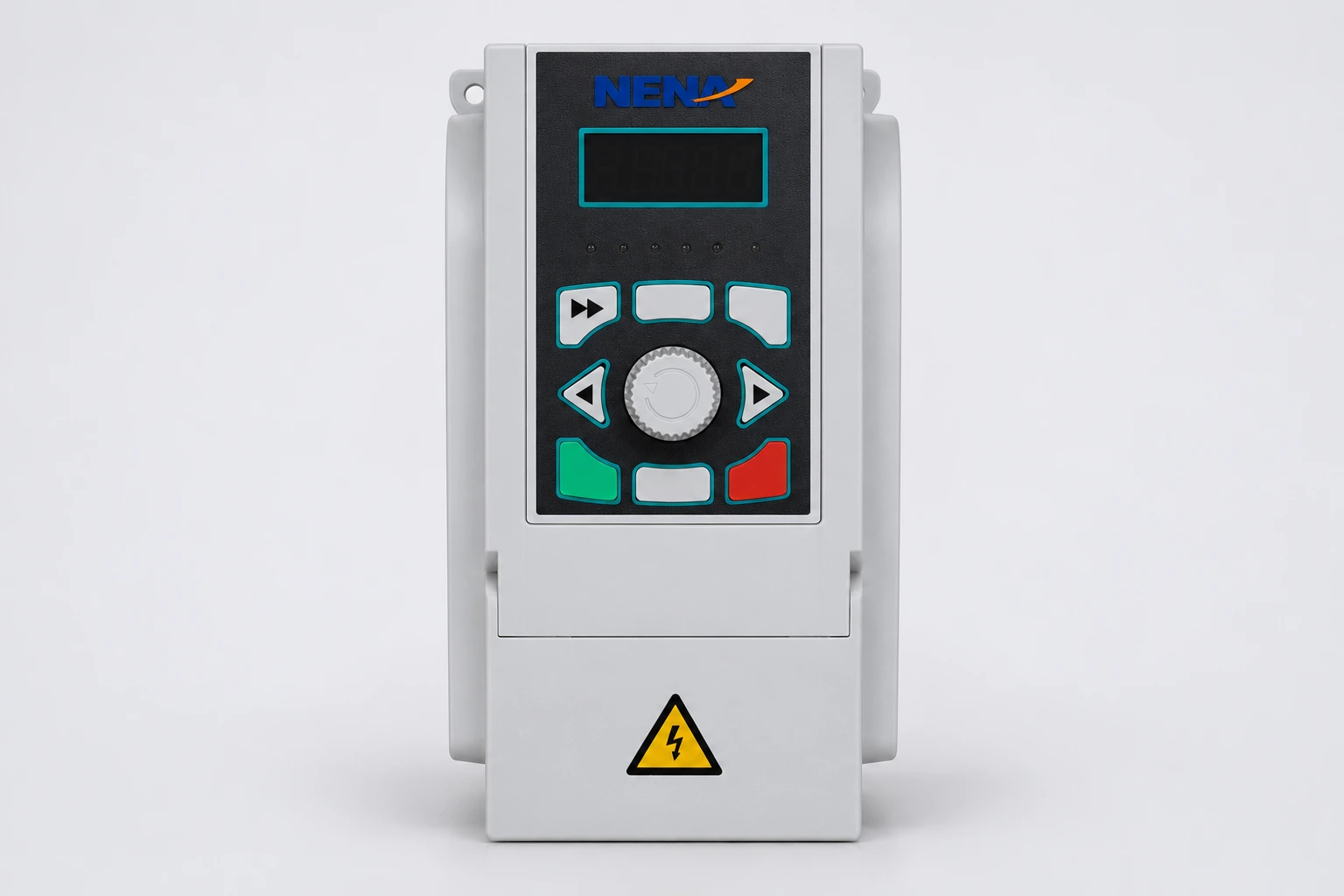
El NENA soft starter for pump motors uses voltage control during starting and a built-in bypass running path. That product description does not establish a universal starting current, permitted start duration or thermal recovery time. Confirm the actual model, supply rating, motor nameplate, connection arrangement and application manual before reviewing a setting.
For the motor, retain rated current, voltage, frequency, speed and the winding-connection information applicable to the supply. For a pump, record the pump type and process condition at start. For another load, describe its starting resistance and inertia. The same motor can face a different starting requirement after a mechanical or process change, even when its nameplate has not changed.
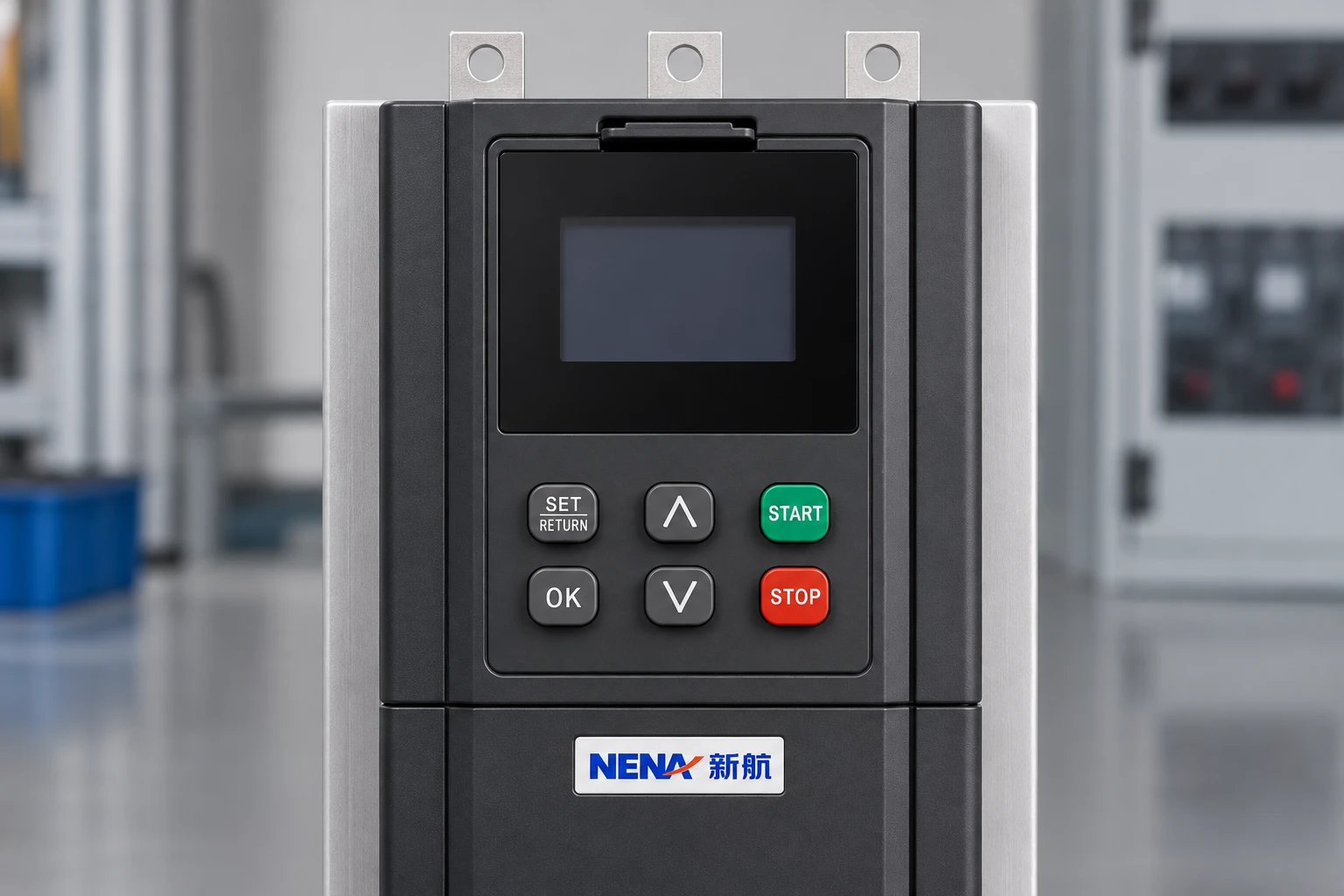
Begin with available control records and the approved schematic. Identify the selected command source, enable conditions, external permissives and any active fault. A local keypad and a remote controller may have different authority. A START request in a supervisory log is not proof that the starter accepted a start; preserve the input, status and timing evidence that establishes the actual sequence.
If the system never entered its starting state, investigate the command and permission chain first. Do not raise a current limit to repair a missing permissive. Similarly, do not bypass a protection input merely to discover whether the motor can turn. A failed permissive needs a documented explanation and an authorized correction, including the reason it was required in the original design.
Utilice el guía general de resolución de problemas de arrancadores suaves for broader symptom classification. This article focuses on organizing evidence for an acceleration failure after that initial classification. Preserve the exact display text and manual revision instead of assigning another manufacturer’s meaning to a similar fault description.
An induction motor must develop enough torque to overcome the load while accelerating. The Natural Resources Canada motor reference guide distinguishes starting, pull-up, breakdown and full-load torque. The relevant question is therefore what happens through the speed range, rather than whether the starting torque alone looks adequate.
A longer commanded ramp does not automatically provide more accelerating torque. Reducing applied voltage changes the motor’s starting capability, and a limiting function can affect the result. Parameter interactions depend on the starter. Ask the engineer to evaluate the available motor and load characteristics and the observed starting event, rather than assuming the display’s timer is a direct measurement of shaft speed.
Do not use a target starting current borrowed from an unrelated machine. A setting suitable for an unloaded demonstration can fail on a loaded process. Conversely, increasing current without checking the supply, starter duty and motor protection can exchange one problem for another. Keep the diagnostic decision separate from the later calculation or selection of an approved setting.
The following table is an author-proposed record format. It applies the system approach discussed in the US Department of Energy motor and drive systems sourcebook. It is not a list of pass limits. Measurements and access must be planned and performed by personnel authorized for the equipment and task.
| Event pattern | Evidencia necesaria | Enfoque de revisión |
|---|---|---|
| No starting state | Command source, permissives, active fault and accepted-command status | Control authority and the permission chain |
| Shaft remains stationary | Available electrical records, load condition and actual trip sequence | Breakaway requirement, circuit condition and mechanical restraint |
| Speed rises then plateaus | Speed and current history on the same time reference | Accelerating capability through the observed speed range |
| Supply falls during the attempt | Measurement location, supply condition and simultaneous plant loads | The supply path and starting demand |
| Trip occurs after repeated attempts | Start durations, rests, previous load and protection history | Accumulated thermal duty and the original unresolved fault |
Compare recorded supply conditions before and during the event where suitable records exist. Distinguish a reading taken at the incoming supply from one at another point in the installation. Identify concurrent large loads and any recent transformer or feeder change. A normal idle voltage alone cannot describe the voltage available during acceleration.
Have the qualified team review the circuit against the correct drawing, including the motor connection, switching path and protective devices. Supply interruption, an incorrect connection and an inadequate torque margin can produce superficially similar complaints. The team should decide which inspections or measurements can discriminate between them and define the safe work method before accessing conductors.
HSE’s electrical safe-working guidance cURL Too many subrequests by single Worker invocation. To configure this limit, refer to https://developers.cloudflare.com/workers/wrangler/configuration/#limits.
cURL Too many subrequests by single Worker invocation. To configure this limit, refer to https://developers.cloudflare.com/workers/wrangler/configuration/#limits.
cURL Too many subrequests by single Worker invocation. To configure this limit, refer to https://developers.cloudflare.com/workers/wrangler/configuration/#limits.
cURL Too many subrequests by single Worker invocation. To configure this limit, refer to https://developers.cloudflare.com/workers/wrangler/configuration/#limits.
cURL Too many subrequests by single Worker invocation. To configure this limit, refer to https://developers.cloudflare.com/workers/wrangler/configuration/#limits.
cURL Too many subrequests by single Worker invocation. To configure this limit, refer to https://developers.cloudflare.com/workers/wrangler/configuration/#limits cURL Too many subrequests by single Worker invocation. To configure this limit, refer to https://developers.cloudflare.com/workers/wrangler/configuration/#limits y ramp-time explanation. Those pages address setting concepts. They cannot replace the exact model instructions or supply a universal value for the failed starting event described here.
Before the next authorized attempt, specify its permitted process condition, observation method, stop criteria and protection requirements. Define who has authority to stop the test and who reviews the result. A motor reaching speed once is useful evidence, but the release decision should also address the intended starting frequency, normal loading and required control sequence.
Send the starter and motor identities, relevant drawing, settings backup, exact alarms, event timeline and recent changes. Include the driven equipment and the conditions at the failed start. State what remains unknown. Clear gaps are more useful than guessed measurements or a claim that every electrical check passed without an attached record.
Ask the supplier which additional evidence is needed before replacing the starter. A larger unit cannot correct every supply, wiring or mechanical problem. If a different starting method is proposed, review the complete motor-load-system requirement and the project interfaces rather than treating the substitution as a simple box exchange.
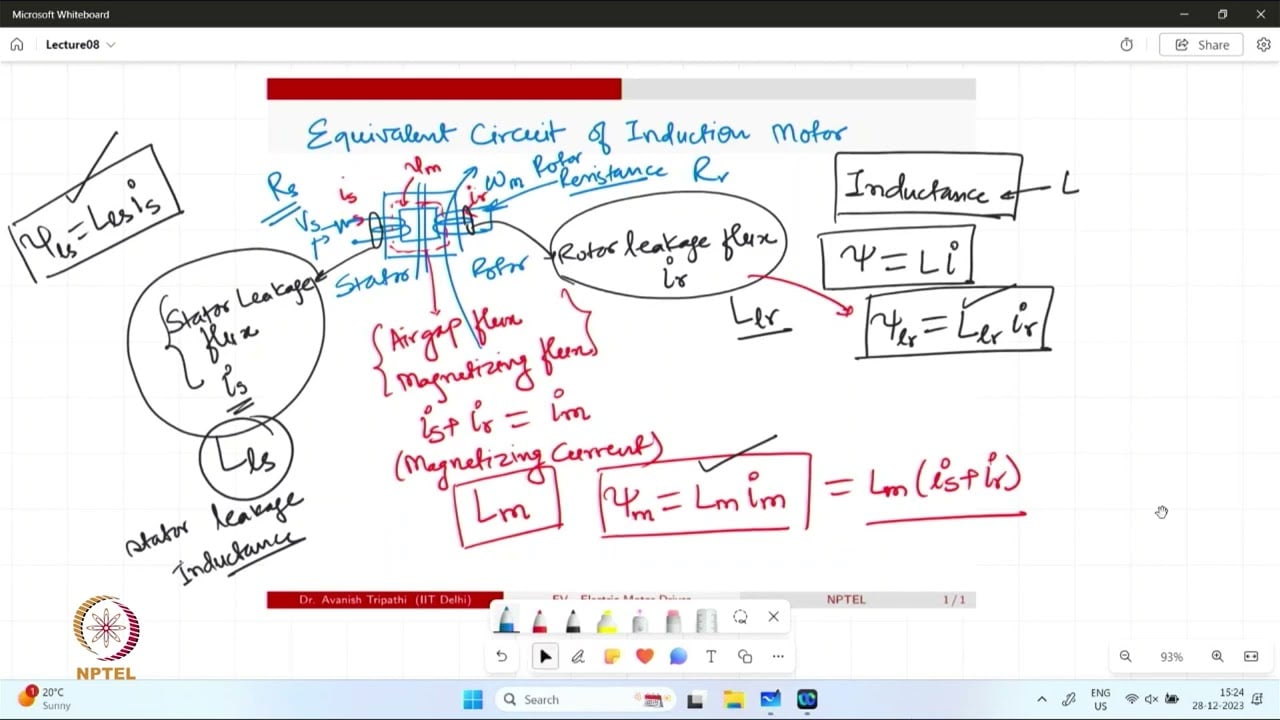
The NPTEL IIT Delhi lecture below explains induction-motor equivalent circuits and torque-speed characteristics. It provides background for understanding the acceleration margin; it is not a NENA parameter-setting or field-testing demonstration.
Ver en YouTube — NPTEL IIT Delhi
No. The motor needs adequate accelerating torque throughout the start. Review the actual control mode, load, supply and protection before approving a parameter change.
No. Confirm that the starter accepted the command and entered its starting state. A missing permissive or another command source can prevent the expected sequence.
No. Preserve the event and thermal history, resolve the cause and follow the approved recovery conditions before another authorized attempt.
Provide equipment identities, the circuit drawing, settings, exact indications, a common event timeline, load conditions and recent changes, with unknown information clearly identified.