Pump short cycling is repeated starting and stopping with operating periods shorter or more frequent than the system and equipment should allow. The cause may be a small effective control volume, an unstable demand signal, returning water, unsuitable pump duty or a pressure-storage problem. Replacing the control box without identifying the sequence can leave the fault unchanged. First record when the start request changes, when the pump actually runs and what the water level or pressure does. Compare that timeline with the approved design and the pump and motor manufacturers’ duty limits.
This guide focuses on industrial water and level-controlled pumping systems. Pressure-operated water supply is a related but distinct case. Electrical inspections, entry into wet wells and changes to protective settings require the appropriate qualified people and site procedures. A control-panel selector is not a substitute for maintenance isolation.
Operators may describe a flashing run lamp, a clicking contactor or changing flow as “the pump keeps switching.” These observations are useful, but they do not necessarily describe the same event. A start request can change without the motor successfully starting. A motor can stop because of a protection trip while the controller continues requesting operation.
Use existing logs and safely accessible indications to separate request, motor running, trip and reset. Record the exact alarm text rather than writing only “fault.” If those states are not available, identify the missing evidence in the service request. Do not ask an operator to open a live cabinet or bridge contacts to create a more complete record.
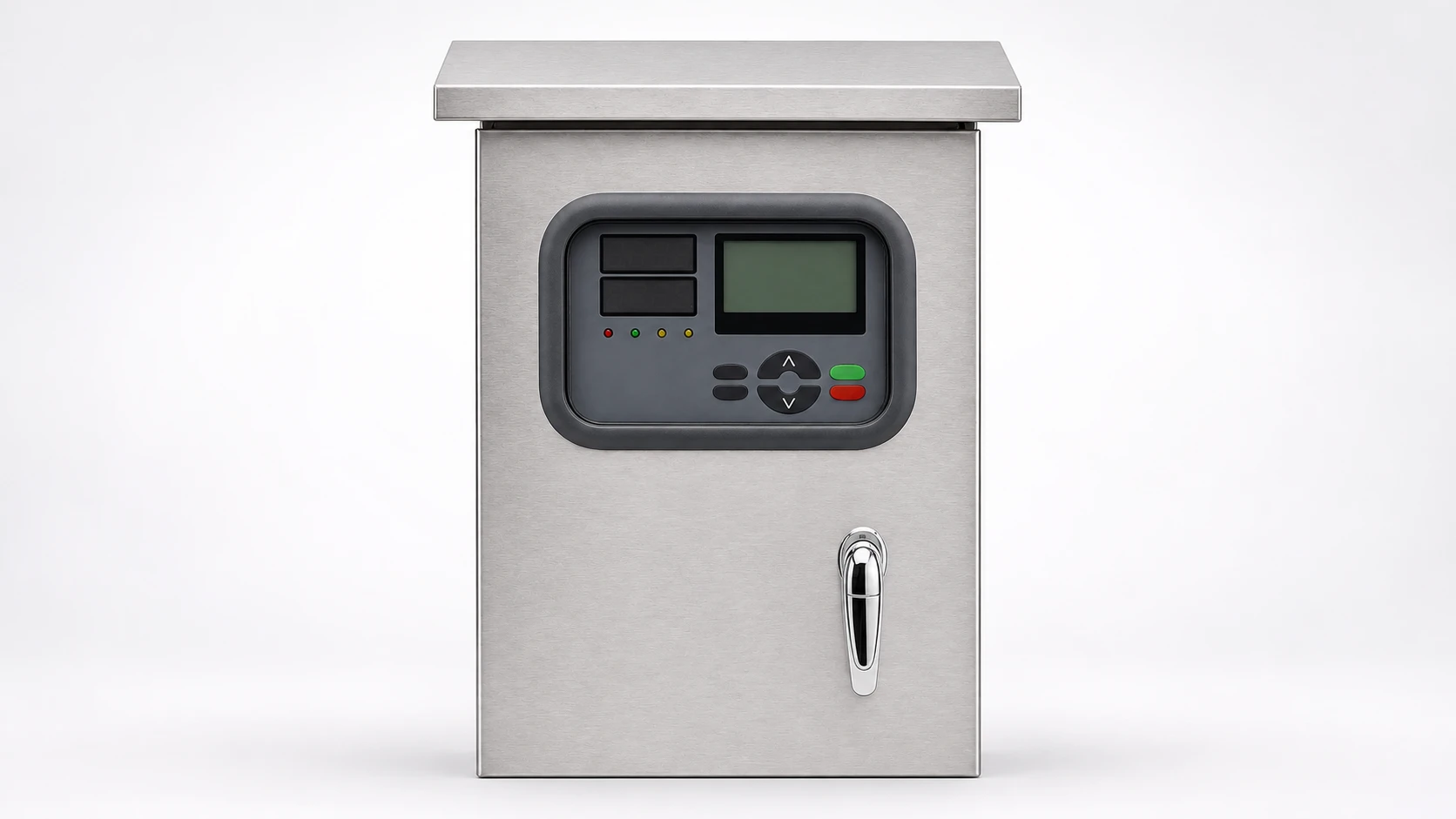
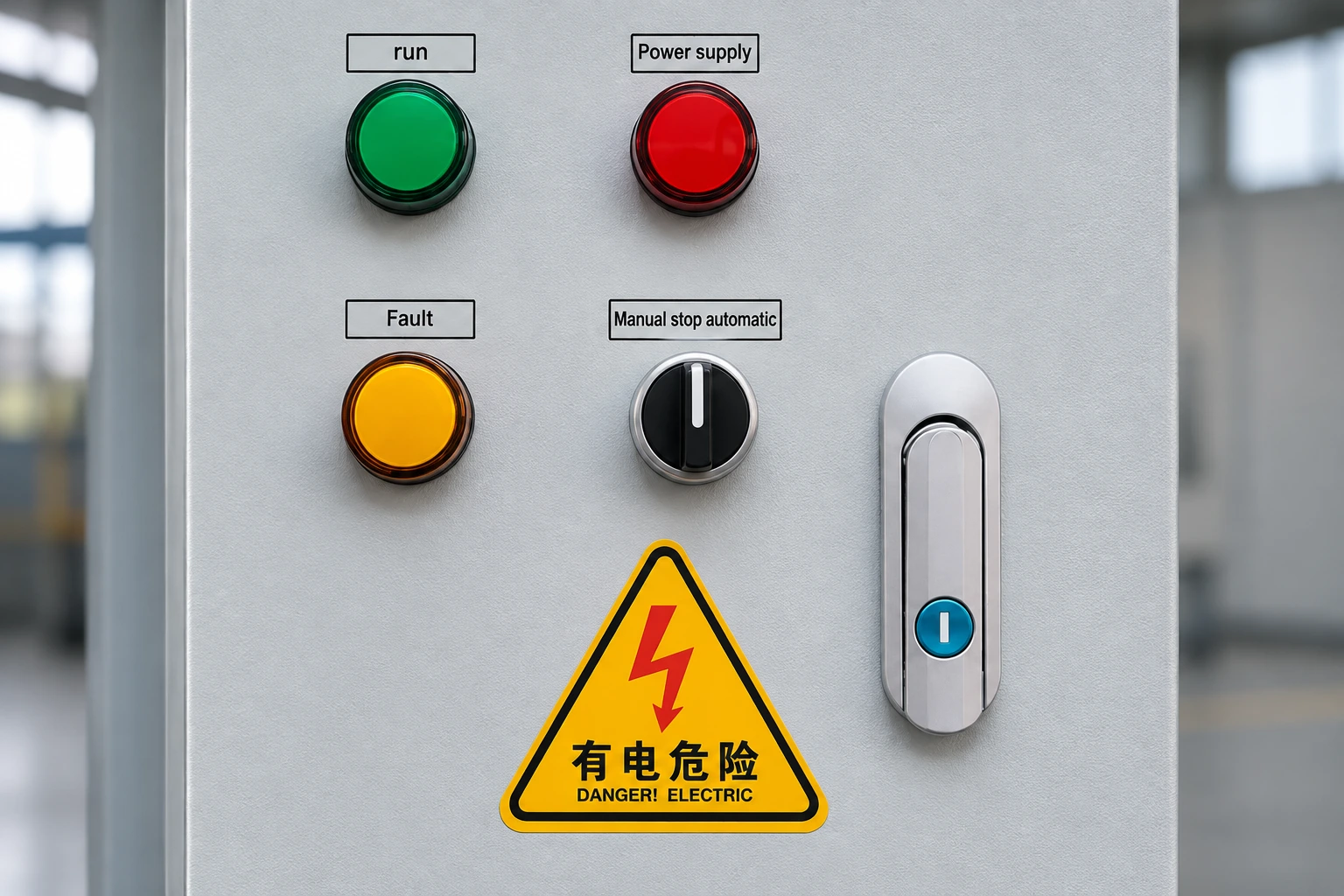
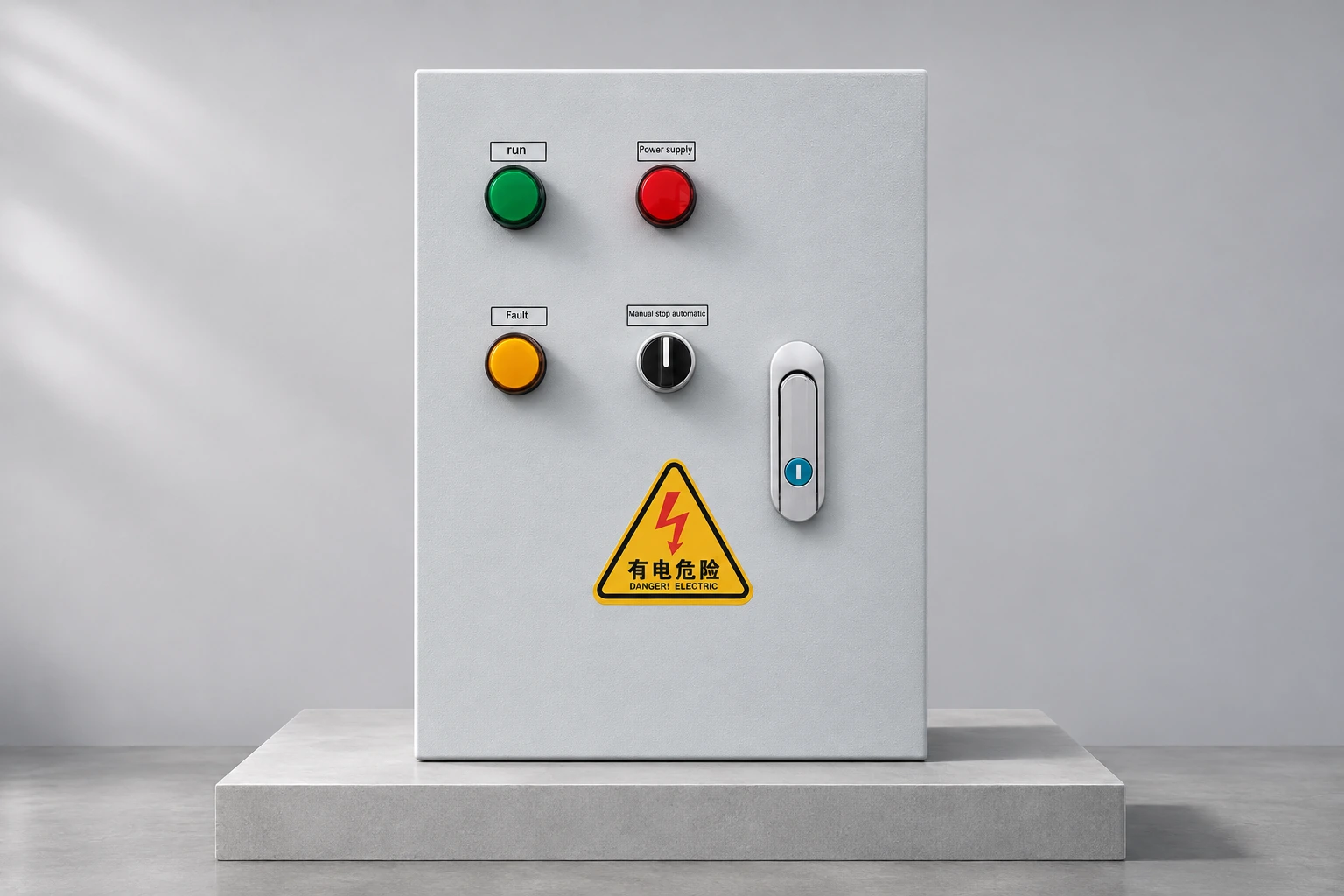
O NENA single-pump control box is the product reference for this article. Its front-panel lamps and selector help illustrate the distinction between an indication and an actual hydraulic condition. The photograph does not verify its internal logic, supported sensors, anti-cycle features or motor protection; these must be confirmed in the supplied documentation.
For several representative cycles, note the start time, stop time, active operating mode, level or pressure indication and any related alarm. Where available, export the original trend with its time resolution. A report containing only total running hours cannot show whether one hour of operation consisted of a few long runs or many very short ones.
Include demand context. A shift change, washdown, batch discharge, rainfall event or tank refill can alter the inflow pattern. A short observation during one unusual event should not be presented as the normal daily condition. Ask whether the symptom is new and identify the most recent maintenance or process change.
The University of Illinois lift-station energy and maintenance presentation recommends monitoring pump running behavior and discusses short cycling and check-valve problems. Its practical value is the use of operational evidence. It does not provide a universal acceptable cycle length for every pump installation.
| Observed sequence | Investigation direction | Evidência útil |
|---|---|---|
| Start request changes repeatedly while actual level is steady | Signal stability, control logic and operating mode | Request, level trend and input-state timestamps |
| Level rises again soon after stopping | Real inflow, returned water and effective storage | Post-stop level trend and known inflow conditions |
| Request remains on but pump trips | Protective response and the underlying pump or motor condition | Exact trip, run feedback and reset history |
| Pressure swings quickly during modest demand | Pressure-system storage and sensing arrangement | Pressure trend, tank documentation and service history |
| Short runs began after a process change | Pump duty versus current system demand | Before/after operating records and revised process information |
The table organizes the work order; it is not permission to keep cycling equipment. If abnormal heat, repeated protective trips, leakage or mechanical distress is present, follow the site’s withdrawal and service process. Avoid repeated resets simply to collect more examples.
In a tank or wet well, the usable volume between the approved start and stop conditions affects the operating cycle. Physical tank capacity is not the same as usable control volume. An obstruction, changed sensor position or revised operating level can alter that volume even though the tank itself has not changed.
Ontario’s sewage pumping-station design guidance discusses cycling volume, equipment duty recommendations and control-device locations away from turbulent flow. It is jurisdiction- and application-specific guidance. Use it to frame the engineering questions, not to transfer its dimensional values automatically to an unrelated industrial tank.
Moving a stop level changes more than cycle length. The reviewer must preserve the required pump submergence and the design’s overflow, alarm and storage provisions. Obtain an approved revised control schedule before making such changes. Record the actual installed sensor positions and the final settings so maintenance staff can detect later drift or unauthorized adjustment.
A level rise after stopping could be normal incoming flow or water returning from the discharge system. The distinction matters because increasing a timer does not remove a hydraulic fault. Review the trend against known inflow and the discharge arrangement. Any valve inspection should follow a planned isolation and pressure-control procedure, rather than an informal live check.
O cURL Too many subrequests by single Worker invocation. To configure this limit, refer to https://developers.cloudflare.com/workers/wrangler/configuration/#limits cURL Too many subrequests by single Worker invocation. To configure this limit, refer to https://developers.cloudflare.com/workers/wrangler/configuration/#limits.
cURL Too many subrequests by single Worker invocation. To configure this limit, refer to https://developers.cloudflare.com/workers/wrangler/configuration/#limits.
cURL Too many subrequests by single Worker invocation. To configure this limit, refer to https://developers.cloudflare.com/workers/wrangler/configuration/#limits.
cURL Too many subrequests by single Worker invocation. To configure this limit, refer to https://developers.cloudflare.com/workers/wrangler/configuration/#limits.
cURL Too many subrequests by single Worker invocation. To configure this limit, refer to https://developers.cloudflare.com/workers/wrangler/configuration/#limits.
An anti-cycle delay can change when a pump is permitted to restart, but it cannot create missing storage or correct returning water. A delay may also interact with high-level response, process availability and other protections. Confirm the intended priority of each function rather than adding time simply until the symptom becomes less visible.
For multi-pump installations, verify whether the issue concerns the whole station or one unit. Alternation can share duty, but it does not establish that storage and pump capacity are suitable. See the separate guia de alternância duplex for that control function. Do not claim that a single-pump control box provides duplex operation.
Sensor-specific checks belong in the float-switch troubleshooting guide. O high-level alarm article addresses alarm response and independence. Those are complementary tasks: a pump that cycles less often still needs a verified response to an abnormal water level.
The service report should connect the initial sequence to a confirmed cause, describe the correction and show comparable post-service evidence. Include the approved operating mode, relevant duty limits and the tested alarm and protection responses. Identify any demand conditions that were not available during the trial so the result is not overstated.
For a control-box inquiry, provide the motor details, sensor type, supply information, current drawing, observed cycle record and required operating sequence. Ask the supplier to confirm capabilities in writing. This gives the supplier a concrete task without assuming that an enclosure’s appearance proves an internal feature.
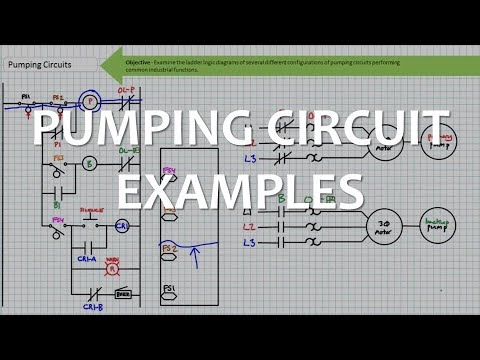
Jim Pytel’s educational lecture below demonstrates pumping circuit examples. It helps explain how start and stop logic relates to a pumping sequence. Treat it as background learning, not an instruction to alter the installed circuit or bypass a field device.
Assista no YouTube — Jim Pytel
Use the applicable pump, motor and starting-equipment duty limits together with the system design. A single universal number cannot establish acceptable operation for all installations.
Only if the confirmed cause is addressed by the replacement and its approved control design. Storage, returning water and unsuitable pump duty can remain after a panel change.
No. It changes the control sequence and may affect process or alarm response. Review the cause and the complete operating requirements before adding or changing a delay.
Record start requests, actual running and stopping times, level or pressure behavior and exact alarms using available safe indications. Preserve the timeline before settings are changed.