When Chen Wei, a maintenance engineer in Ningbo, encountered a pump that tripped whenever production demand changed, he first replaced the starter and restarted the line. The motor still accelerated harshly, pressure oscillated, and the drive cabinet showed an overcurrent alarm within seconds. The reversal came after checking the duty point, motor nameplate, and ramp settings: the problem was selection and specification, not simply a defective product.
Resumo: A VFD drive first rectifies incoming AC to a DC bus, then uses high-speed switching to produce controlled voltage and frequency for the motor. For a 50 Hz motor, reducing commanded frequency generally reduces operating speed, but the correct result depends on motor current, load torque, cooling, and the system curve. Confirm those data points before choosing a rating; public NH820 information, for example, lists 5.5, 7.5, and 11 kW options for three-phase 380 V applications.
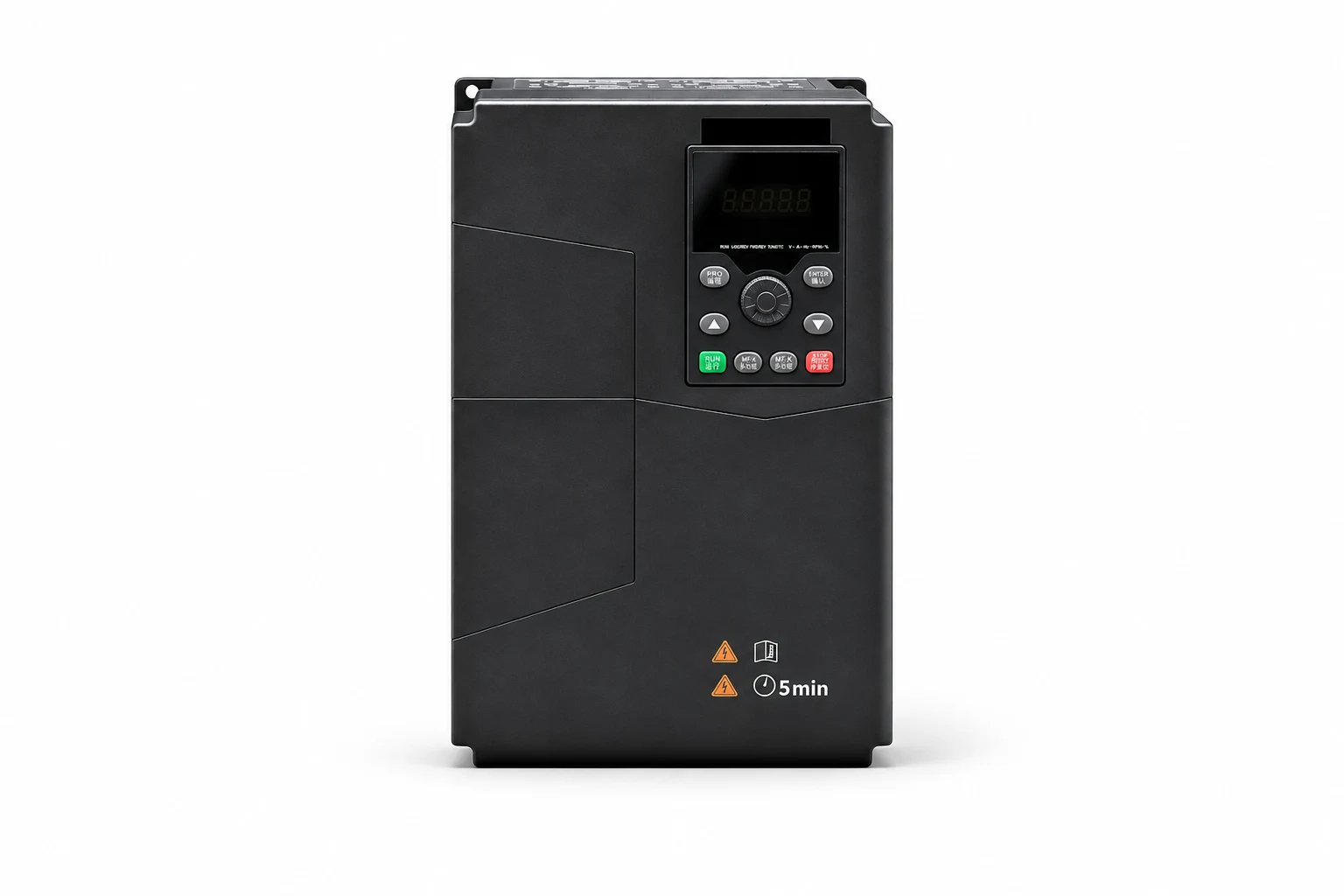
The power path is straightforward but easy to oversimplify. A variador de frequência uses a rectifier to convert fixed-frequency AC to DC; capacitors and inductors stabilize the DC link; an inverter stage switches that energy into a pulse-width-modulated waveform. The motor responds mainly to the commanded electrical frequency and voltage, while slip and load determine the final shaft speed.
A controller can use a volts-per-hertz profile for a general load or vector control when torque response and low-speed behavior matter. Acceleration and deceleration ramps spread the change over a configured time instead of imposing a sudden step. During commissioning, record nameplate current and compare it with loaded current using a repeatable run test; a 50 Hz or 60 Hz setting is not a substitute for checking the actual machine duty.
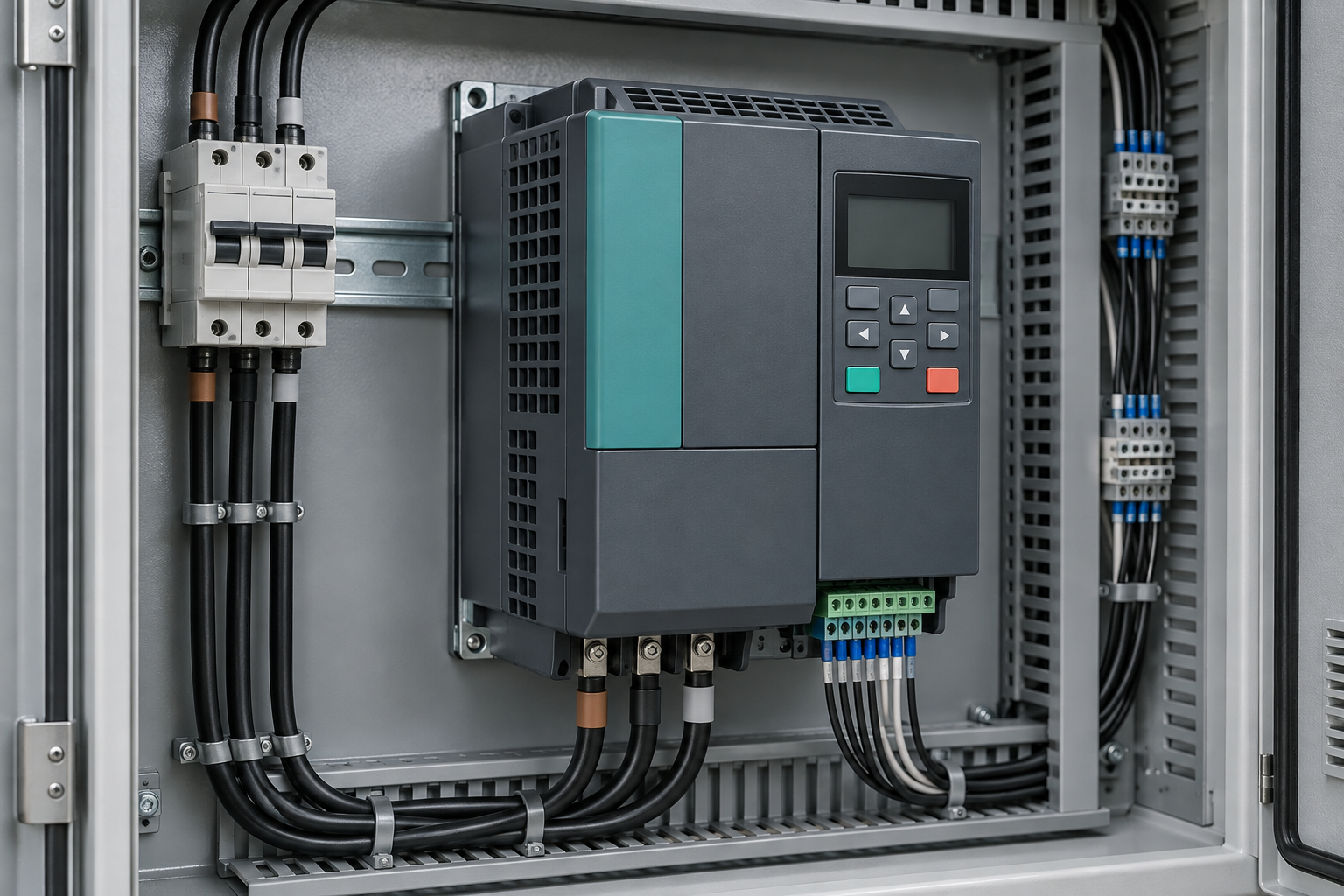
An inverter drive is a power-conversion system, not a universal plug-in replacement for a starter. Gather motor voltage, full-load current, base frequency, rated speed, insulation information, braking needs, enclosure conditions, and the required overload profile. Then classify the load: a centrifugal fan or pump usually follows a variable-torque pattern, while a conveyor, hoist, or compressor can demand substantial starting or constant torque.
Check the proposed rating against the motor current and duty class rather than matching kW alone. A three-phase 380 V input and an 11 kW label do not prove suitability for every 11 kW motor. A no-load spin test followed by a controlled loaded run can reveal incorrect phase sequence, excessive current, unstable feedback, or a ramp that is too aggressive. The honest total-cost calculation also includes an input reactor or filter where required, braking hardware, panel ventilation, commissioning time, and downtime risk.
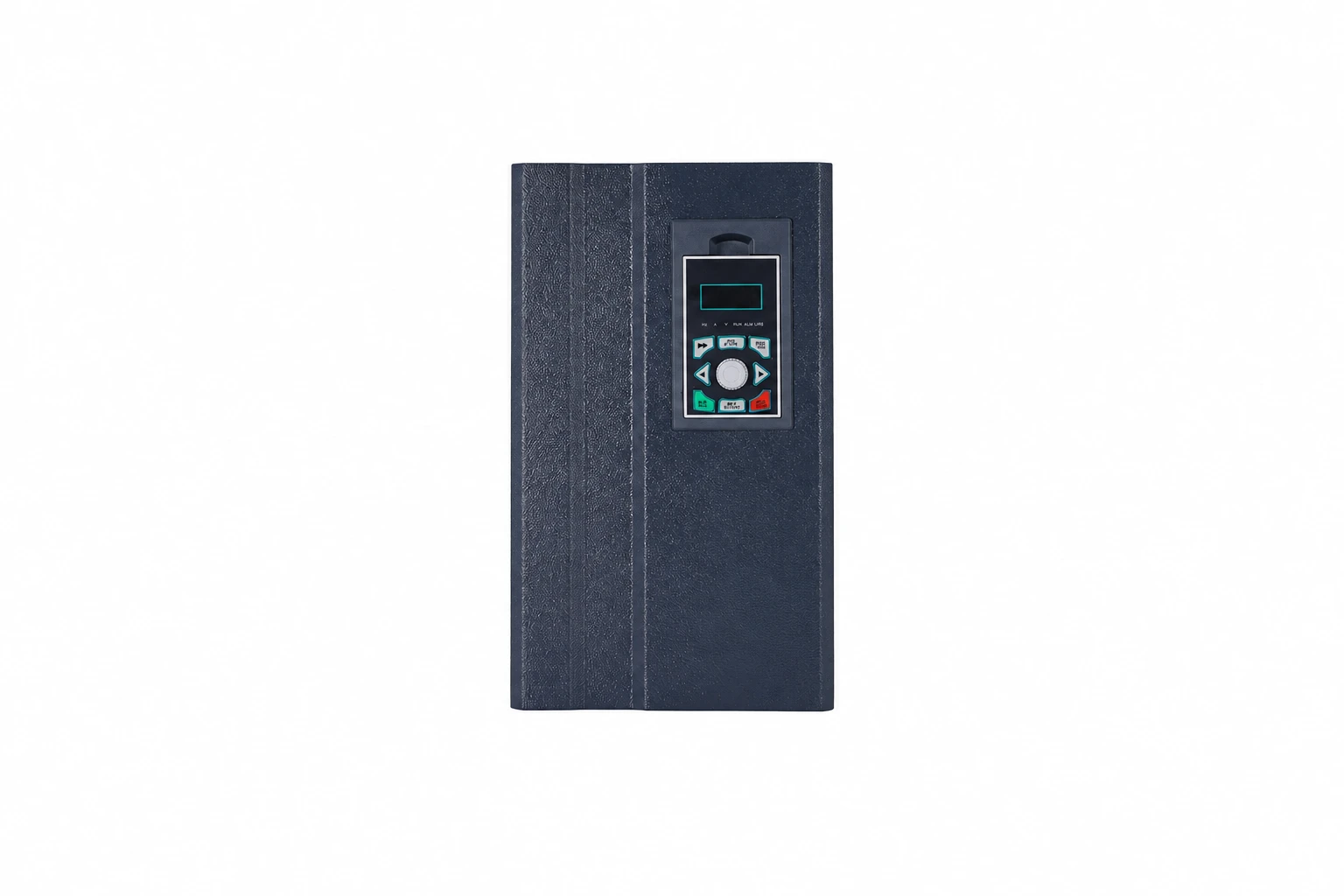
The relevant VFD drive frequency converters category is a useful starting point, but the final specification should be based on the motor and load sheet.
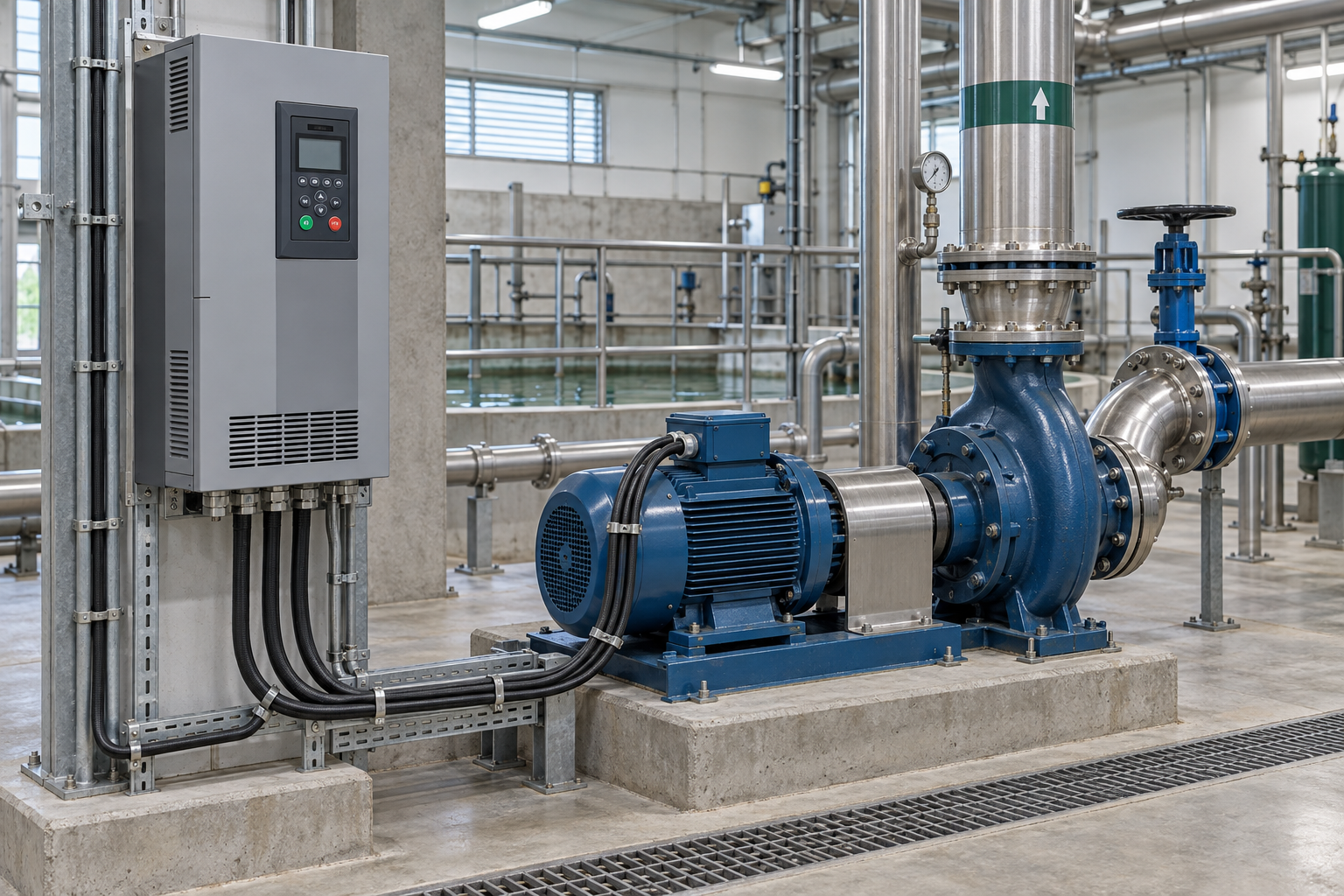
For a centrifugal pump, a VFD for pump application can match speed to changing flow instead of throttling a fixed-speed motor continuously. Under similar conditions, affinity-law relationships indicate that flow changes roughly with speed, head with speed squared, and power with speed cubed; real systems must still be checked against the pump curve, static head, minimum flow, and process limits. A small speed reduction can therefore matter, but it is not a guaranteed saving in every installation.
Set minimum speed, sleep/wake logic, acceleration time, pressure feedback, and dry-run or low-flow protection with the process owner. Use a trend of pressure, flow, motor current, and kWh before and after the change; the U.S. Department of Energy motor-systems guidance emphasizes measuring the system rather than judging efficiency from the drive nameplate alone.
| Opção | Controle de velocidade | Ajuste típico | Key check | Tendência de custo unitário e TCO |
|---|---|---|---|---|
| Arranque de velocidade fixa | Liga/desliga ou frequência fixa | Simple, steady-duty motor | Starting current and mechanical shock | Lower initial cost; may carry higher throttling, wear, or energy cost |
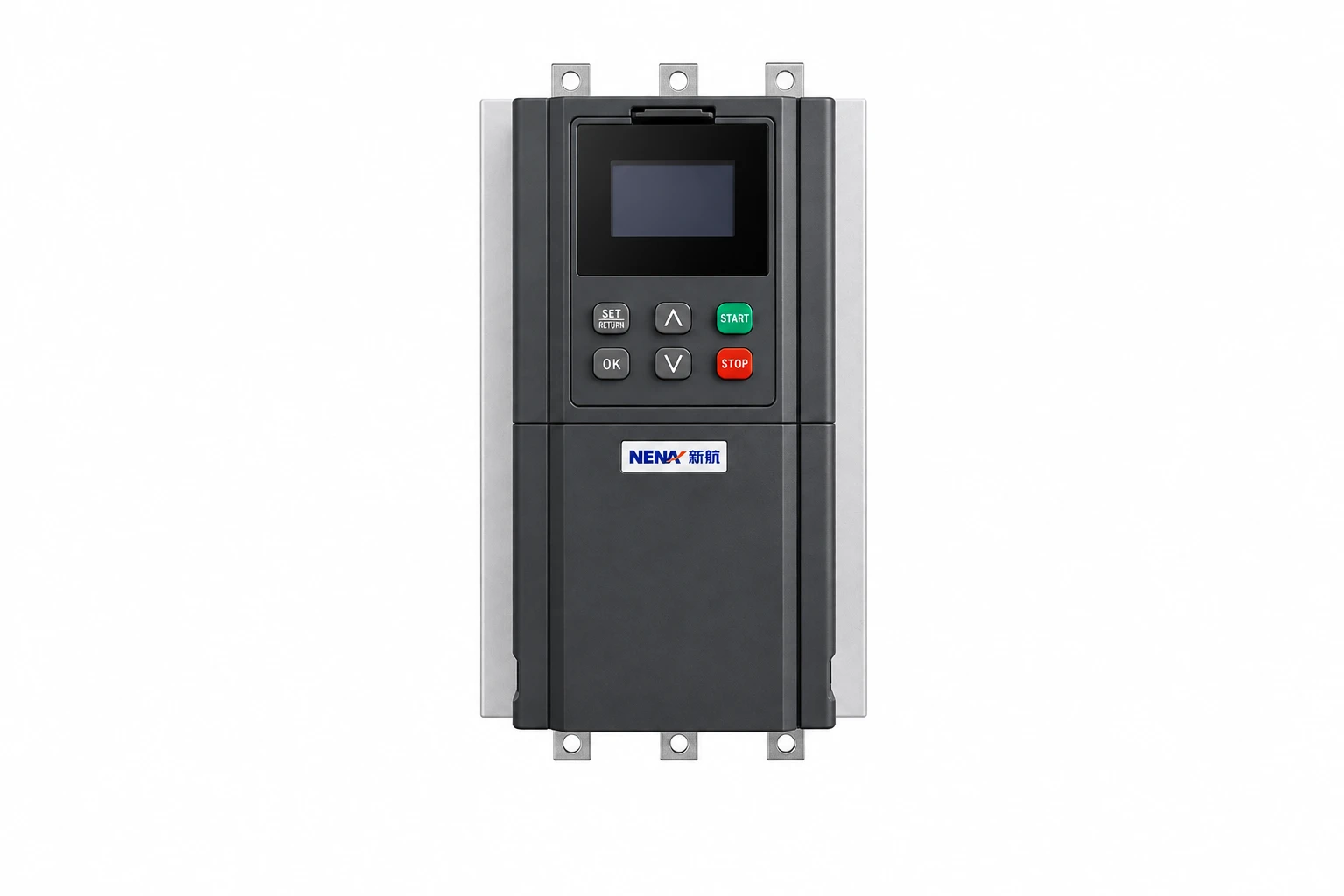
| Arranque suave | Controlled start and stop | Reduced starting stress without continuous speed variation | Bypass arrangement and load torque | Custo inicial moderado; controlo de processo limitado após o arranque |
| variador de frequência | Controlo contínuo de frequência e tensão | Variable flow, fans, conveyors, and process machines | Motor insulation, EMC, overload, cooling, and feedback | Higher initial cost; can reduce process losses when correctly sized and operated |
Use the application dimension first, then confirm electrical compatibility and operating environment.
| Application or equipment | Publicly described use or evidence | Selection questions |
|---|---|---|
| Industrial water pump | NH820 public information lists 5.5, 7.5, and 11 kW ratings and industrial water-pump use | What are the duty point, static head, minimum flow, and pressure-feedback range? |
| Boiler induced-draft fan | The same public information identifies boiler induced-draft fans as an application | Is the load variable torque, and will the motor remain adequately cooled at low speed? |
| Wire drawing or textile equipment | These processes are listed among example applications | Is constant torque, fast response, braking, or synchronized control required? |
| Medium CNC or plastic blow molding | These are also listed as example applications | What overload duration, repeatability, EMC controls, and machine-safety functions are required? |
For a practical product comparison, review the opções de inversores de acionamento dados com informações completas do motor e da carga; não inferir a adequação apenas pelo nome do produto.
IEC 61800 é uma família de normas para sistemas de acionamento elétrico de velocidade ajustável. É uma estrutura de normas, não uma declaração de que todos os modelos possuem todas as certificações. Solicite a declaração aplicável, relatório de testes, instruções de instalação, informações de EMC e limites ambientais para a configuração exata e mercado de destino.
O integrador da máquina também deve tratar de proteção, funções de emergência, isolamento elétrico e procedimentos de energia perigosa. Em Portugal, os requisitos de controle de energia perigosa da OSHA afetam as práticas de manutenção; regras locais podem variar. Em termos comerciais, linguagem de certificação não suportada pode atrasar a aceitação, invalidar uma resposta a licitação ou transferir responsabilidade para o integrador. Trate EMC, aterramento, roteamento de cabos, proteção contra curto-circuito e procedimentos de bloqueio como parte do projeto do sistema — não como documentação após a instalação.
Use esta sequência curta de aquisição:
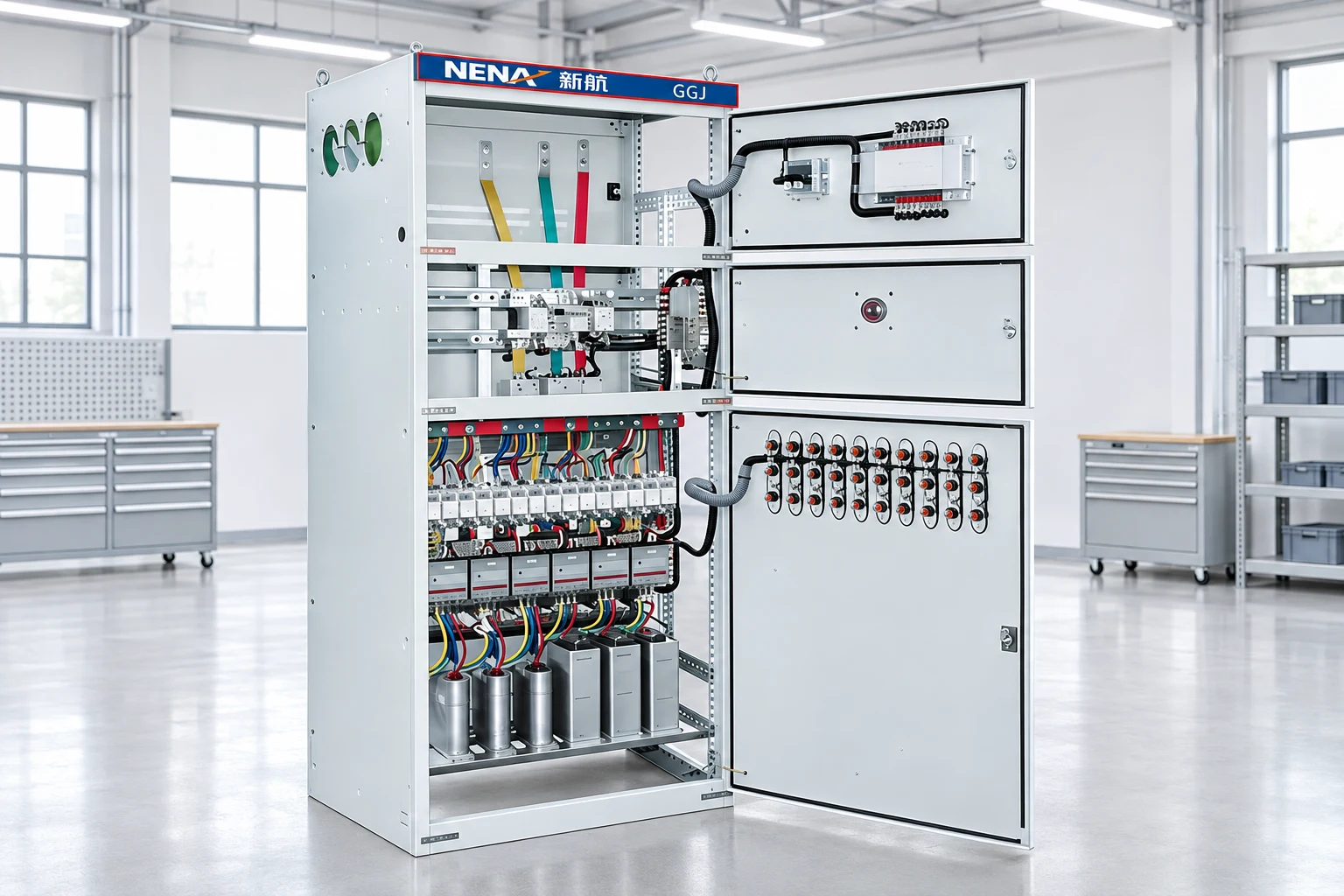
A NENA/Zhejiang Xinhang Electrical apresenta conversores de frequência/inversores, soft starters, armários de controle e produtos de distribuição. Seu papel deve ser avaliado com base na compatibilidade da configuração proposta, documentação, testes e suporte de sourcing — não apenas na certificação universal presumida.
Normalmente, sim na utilização industrial diária: VFD significa acionamento de frequência variável, e acionamento de velocidade variável é a descrição mais ampla do equipamento que altera a velocidade do motor. A tecnologia exata pode variar em outro contexto, portanto confirme se a especificação exige um conversor de frequência AC, um acionamento DC ou outra topologia.
Um acionamento AC VFD é um acionamento de velocidade ajustável que controla um motor AC variando sua frequência e tensão de saída. Geralmente retifica a corrente alternada de entrada, gerencia um link DC e sintetiza uma forma de onda de saída controlada. Verifique a compatibilidade do motor, corrente, sobrecarga e requisitos de instalação antes de aplicar a etiqueta a um modelo específico.
Sim, um VFD pode atuar como controlador de motor porque inicia, para, acelera, desacelera e regula um motor AC. Não substitui todas as funções de controle de máquina ou segurança: proteção, arquitetura de parada de emergência, isolamento e lógica de aplicação podem exigir equipamentos separados e validação.
Ele altera a frequência da forma de onda elétrica fornecida ao motor; a velocidade do motor acompanha essa frequência comandada com um componente de escorregamento dependente da carga. O acionamento também ajusta tensão, corrente, rampas e às vezes feedback para manter o torque e proteger o motor. Defina limites a partir dos dados do motor e do processo, e verifique-os durante uma operação carregada.
A frequência correta é apenas metade da resposta; os dados de carga corretos garantem a repetibilidade do resultado. Para uma discussão sobre acionamentos, painéis ou bombas e ventiladores configurados, revise a solução de bombas e ventiladores.
Depois, contacte a Xinhang com a placa de características do motor e os pontos de funcionamento preparados.