Ring main unit replacement planning starts with the condition and capability of the installed equipment, then works outward to protection, cables, civil space, supply continuity and commissioning. Replacing an old RMU with a unit carrying a similar voltage label does not establish compatibility. Before requesting a price, assemble a verified site record and define the interfaces the replacement must satisfy. That preparation helps separate an urgent safety action from a planned renewal and exposes the tasks that can otherwise extend the outage.
This guide is a project-planning framework for owners, engineers and procurement teams. It is not a switching instruction or a recommendation to continue using suspect equipment. Operational restrictions and immediate risk controls must be decided by the responsible authorized personnel.
Write down the trigger in specific terms. It might be an adverse inspection finding, unreliable operation, obsolete parts, a changed network fault level, a building redevelopment or a requirement for different protection and monitoring. These triggers lead to different priorities. A cosmetic deterioration issue and a restriction arising from a safety notice should not share an unexplained replacement deadline.
HSE’s guidance on keeping electrical switchgear safe describes assessment of aged equipment using condition and risk. Its approach supports decisions about retention, refurbishment and replacement rather than treating age as the sole criterion. The assessment must still address the specific equipment, installation and responsibilities at the site.
Keep the distinction between the long-term capital decision and the current operating decision clear. A replacement purchase order does not by itself make the existing installation acceptable until delivery. If restrictions are necessary, identify who owns them, how operators are informed and when the arrangement will be reviewed.
Capture the manufacturer, type, serial identification and available drawings for every relevant functional unit. Obtain photographs from permitted safe locations, including legible nameplates and the surrounding room or kiosk. Record missing or uncertain information explicitly. A guessed rating can be more damaging than an acknowledged gap because it may pass unnoticed into a purchase specification.
Gather inspection history, maintenance reports, fault events and available operating restrictions. Check whether previous modifications were incorporated into the drawings. When old documentation disagrees with the visible installation, commission a competent verification exercise using an approved method. Do not open compartments merely to complete a purchasing checklist.
A UK government notice concerning specified legacy RMU models illustrates why equipment identity matters when checking safety information. That historical notice concerns named models; it is not a finding about NENA equipment or every older RMU. Match notices against verified manufacturer and type details, and refer any applicable warning to the responsible specialist.
Provide an updated single-line diagram, normal open points, feeder functions, source arrangements and future expansion assumptions. Identify all credible sources, including embedded generation where applicable. The replacement designer needs the actual network duty and protection philosophy, not just the former equipment’s label.
Have the responsible engineer confirm system voltage, frequency, insulation requirements, current duties and fault-related ratings. Distinguish continuous current from short-time withstand and switching capabilities. Do not use one headline rating as a substitute for the complete required duty. State which network study supplies each value and when that study was last reviewed.
For a transformer tee-off, define the required protective arrangement and coordination with upstream and downstream devices. A change from one protection method to another can affect settings, auxiliary supplies, testing and maintenance. Those consequences should be designed before the replacement reaches the installation site.
The table below is a project checklist, not a product specification. Each row should have a named owner and a supporting document. Use it during the site survey and proposal review to prevent assumptions from disappearing between electrical, civil and operations teams.
| Interface | What must be established | Required planning output |
|---|---|---|
| Power cables | Cable identity, condition, route and compatible termination arrangement | Approved cable and termination schedule |
| Proteção | Scheme, sensing, tripping supply and coordination | Reviewed drawings, settings and test scope |
| Physical installation | Access route, foundation, clearances and environmental conditions | Surveyed layout and civil work package |
| Operations | Supply continuity, isolation boundaries and authorized control | Approved outage and switching arrangements |
| Monitoring | Signals, controls, communication and point ownership | Point schedule and end-to-end test plan |
| Entrega | Evidence needed before release for service | Acceptance checklist with responsible signatories |
Existing cables may constrain the replacement more than the room dimensions do. Record cable type, size, conductor material, route and available slack from verified records and a suitable survey. Ask the designer to assess whether the new termination positions can be reached without unacceptable strain or an unplanned joint. Do not assume a cable can simply be pulled sideways to match a different cabinet.
Identify the termination accessories and responsibilities for their supply and installation. Clarify whether existing accessories can be retained and who is authorized to make that assessment. A cabinet quotation that excludes cable work may still be reasonable, but the excluded work needs a budget, schedule and owner.
Define post-installation cable checks through the responsible engineer. The existing guide to RMU cable testing boundaries explains why the test object and connected equipment must be identified. A generic instruction to test everything is not an adequate commissioning specification.
Check the complete route from delivery vehicle to final position. Door openings, corners, lifting arrangements, floor loading and temporary storage can all affect the method and outage duration. Have the supplier provide transport and installed dimensions for the actual offered assembly. Catalogue images are unsuitable for estimating a lifting plan.
Review operating and maintenance clearances, access control, environmental exposure and the manufacturer’s installation requirements. Any internal-arc classification must be considered with its tested arrangement and installation conditions; a label alone does not prove that an existing room provides the necessary conditions. Ask for the evidence relevant to the final configuration.
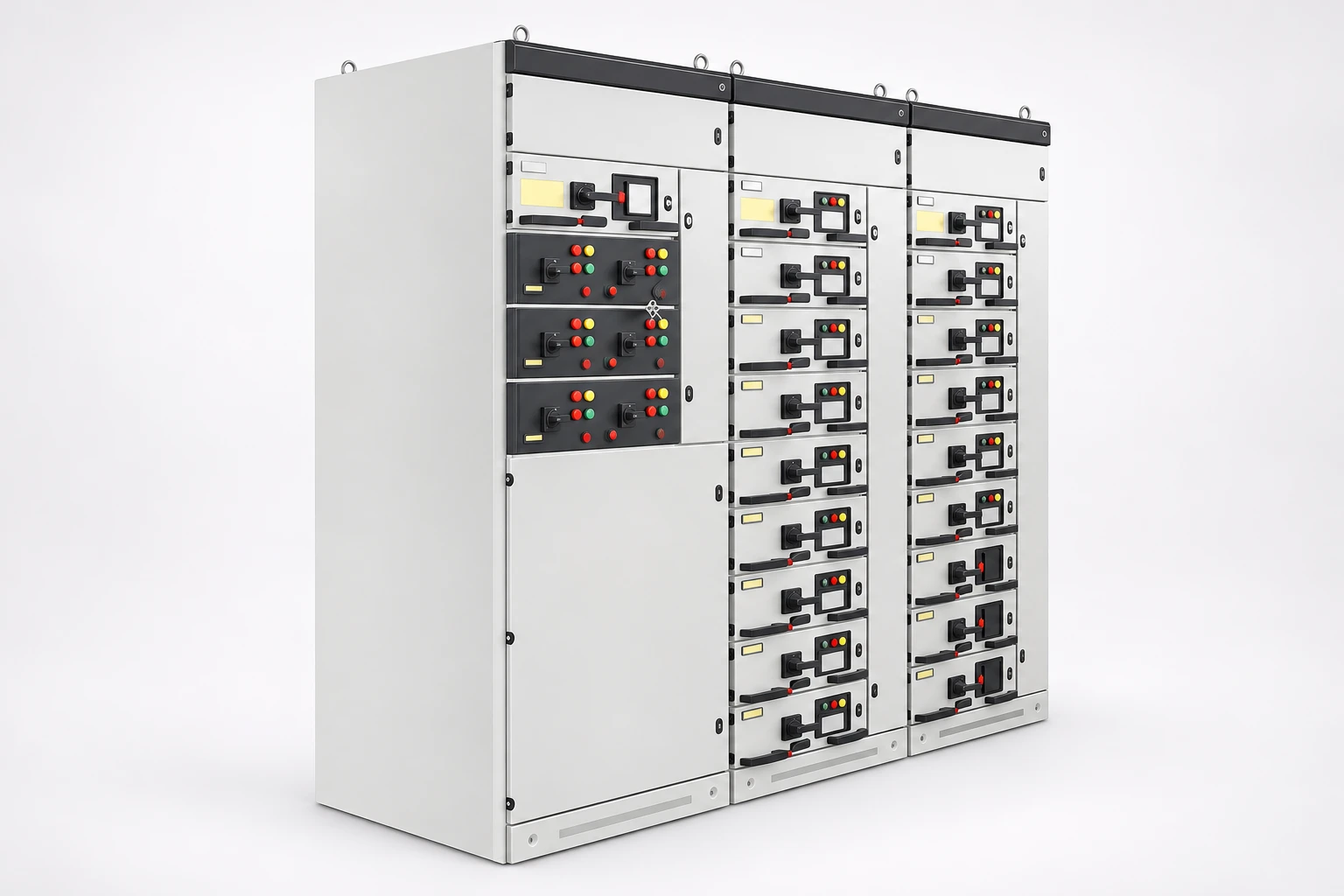
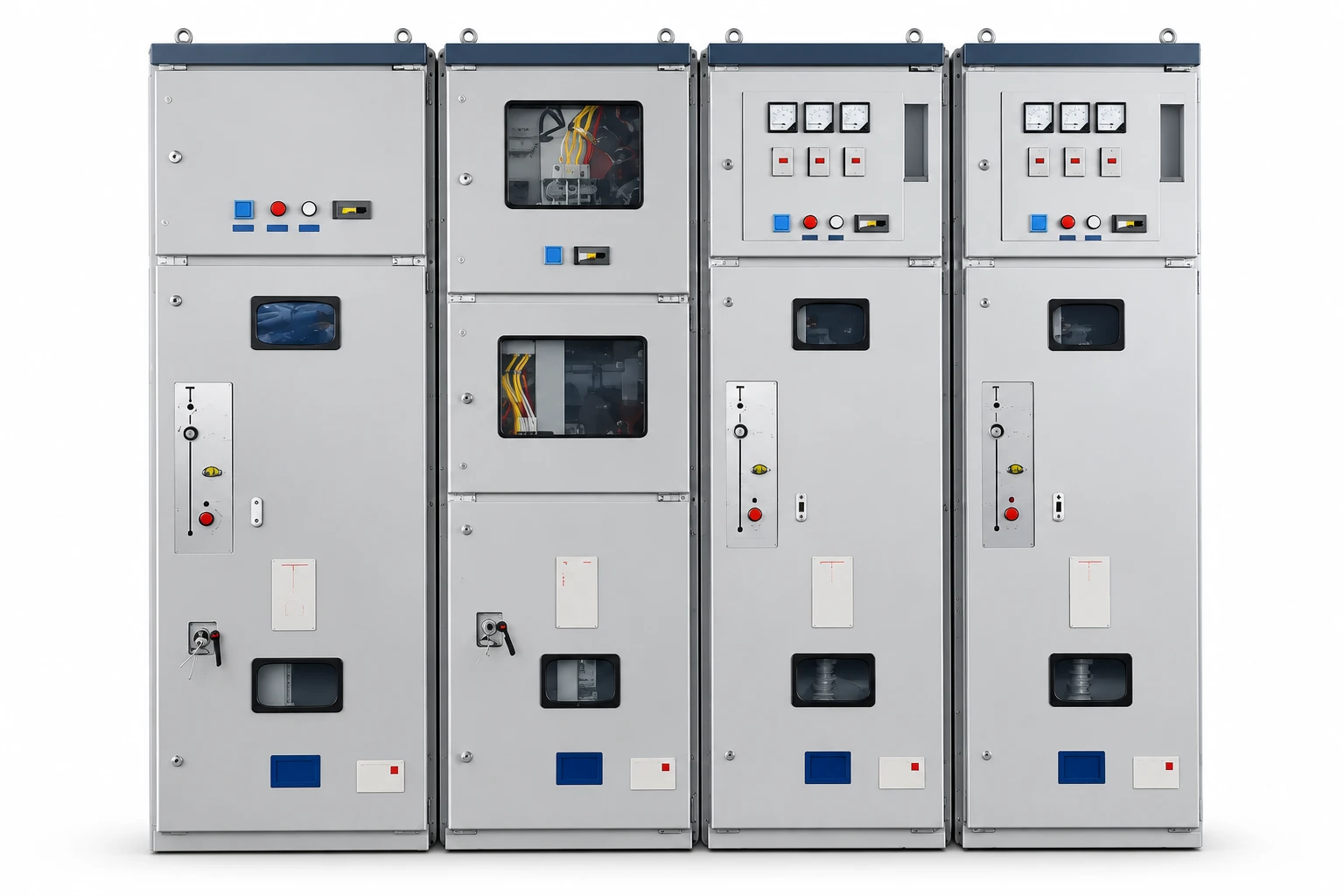
O NENA HXGN15-12 metal ring network switchgear page provides a reference for the site’s switchgear product family. The pictured multi-panel assembly does not establish a drop-in replacement, a particular protection scheme or certification for your room. Confirm the exact offered construction and project documents before ordering.

List the work that must be finished before the outage begins: approved drawings, delivered accessories, civil preparation, protection settings, trained personnel and agreed test procedures. Verify actual delivery rather than relying on a promise that an essential item will arrive during the outage. Include specialist availability and any utility coordination in the readiness review.
The operations team should own the authorized switching arrangements and supply-continuity decisions. Define temporary supplies, affected loads, communication channels and contingency actions in the approved plan. A blog article cannot supply the site-specific sequence or decide which alternatives are safe. Keep that operational authority separate from the installation contractor’s task list.
Establish hold points for cable identification, mechanical completion, protection verification and permission to energize. Identify who can release each one and what record is required. If an unexpected condition is discovered, stop at the relevant hold point and reassess. A timetable should not silently override an acceptance requirement.
Request a commissioning schedule covering the actual supplied configuration, including mechanical functions, protection, control supplies and monitoring where fitted. Distinguish factory records from site checks. Factory evidence is valuable, but it cannot establish that field wiring, settings and cable identification are correct after installation.
Review the relationship between operating mechanisms, position indications and access controls. The article on ring main unit interlocks provides a focused discussion of that subject. For the broader equipment distinction, use RMU versus switchgear when aligning the purchasing team’s terminology.
Make manuals, final drawings, settings, spares information and operator familiarization contractual deliverables. Confirm that the people who will operate the replacement understand its actual arrangement rather than assuming experience with the old unit transfers unchanged. Record open defects and restrictions before the asset is handed to normal operations.
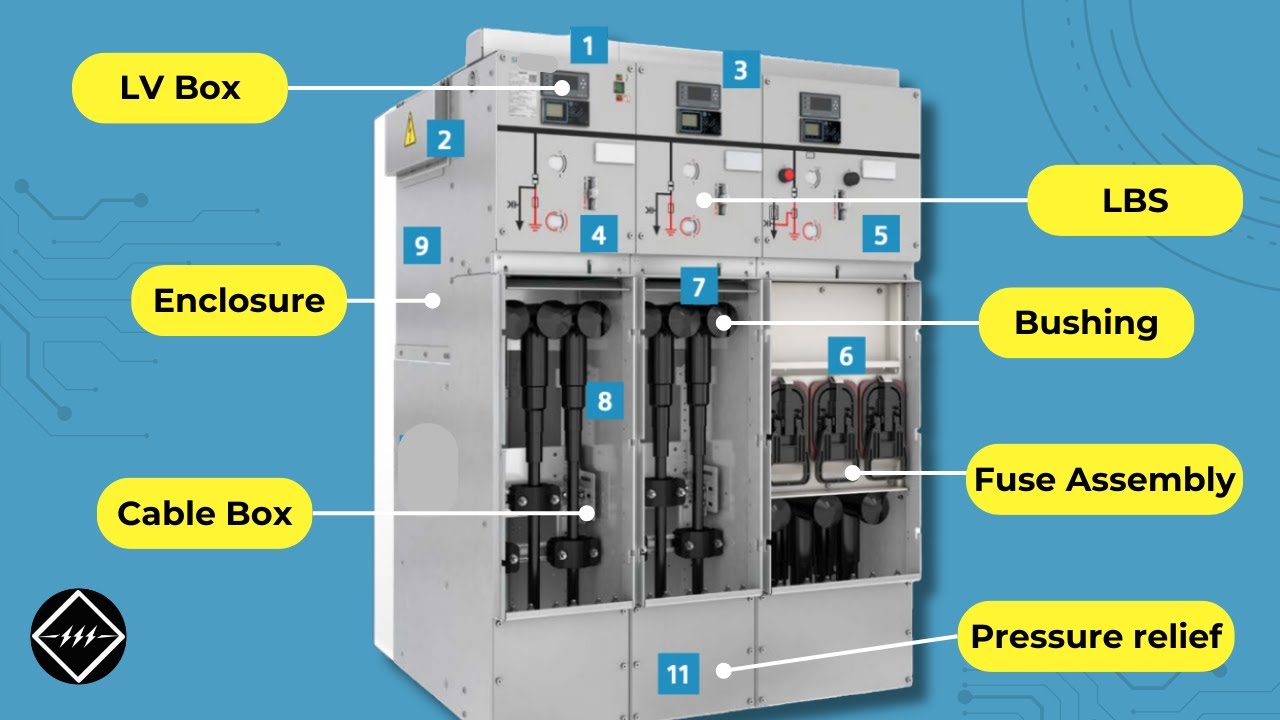
TheElectricalGuy’s educational overview introduces RMU components and their functions. It can help a project team discuss the equipment consistently. It does not provide a replacement design, a switching sequence or evidence that the illustrated NENA product has every component shown in the video.
Assistir no YouTube — Gaurav J – TheElectricalGuy
A idade é um dos fatores a considerar. O estado, o regime de funcionamento, as restrições operacionais, a disponibilidade de assistência técnica e as consequências de uma falha também são importantes. Em vez de aplicar uma regra universal baseada na idade, deve ser realizada uma avaliação documentada pelos especialistas responsáveis.
Não. A função integral da rede, a proteção, os cabos, as condições de instalação e a configuração de funcionamento devem ser compatíveis. A semelhança das designações ou das dimensões do armário não garante a intercambialidade.
É necessária uma avaliação específica para o projeto, tendo em conta o seu estado, percurso, comprimento e compatibilidade das terminações. Identifique os trabalhos a realizar nos cabos e as verificações de aceitação antes da interrupção do serviço, em vez de assumir que a sua reutilização é automaticamente possível.
Documentos de projeto aprovados, equipamentos e acessórios entregues, trabalhos de construção civil concluídos, pessoal competente, procedimentos operacionais autorizados e procedimentos de aceitação acordados. Atribua um responsável e um prazo para a tomada de decisão a cada dependência ainda por resolver.