Pump float switch troubleshooting should separate three things: movement of the float, the electrical signal reaching the control panel and the panel’s response to that signal. A pump that will not start automatically does not prove the float has failed. Record the symptom and approved operating sequence first, then let a competent technician trace the signal through defined test boundaries. Do not bridge terminals, defeat protective functions or enter a wet well to experiment.
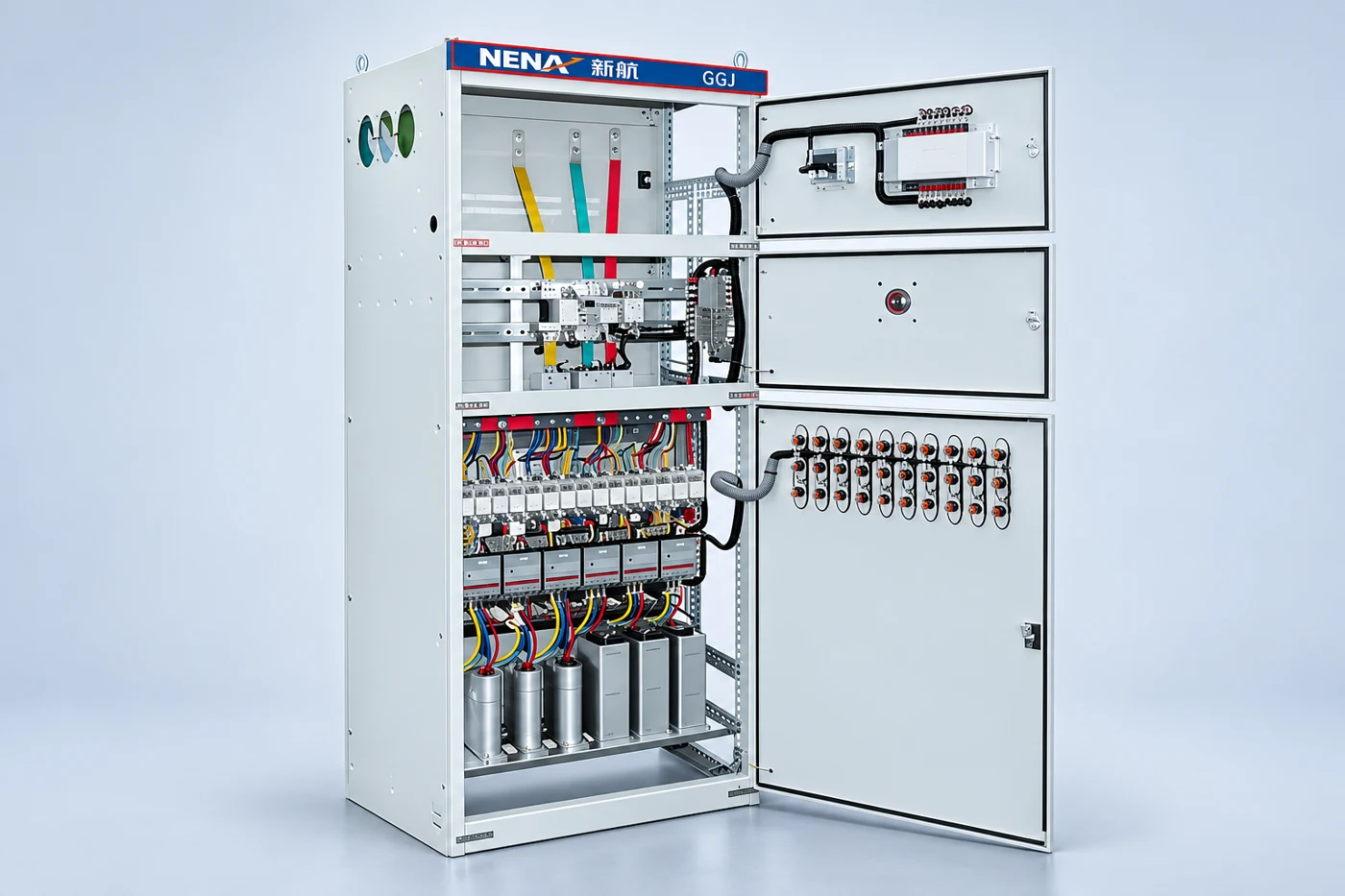
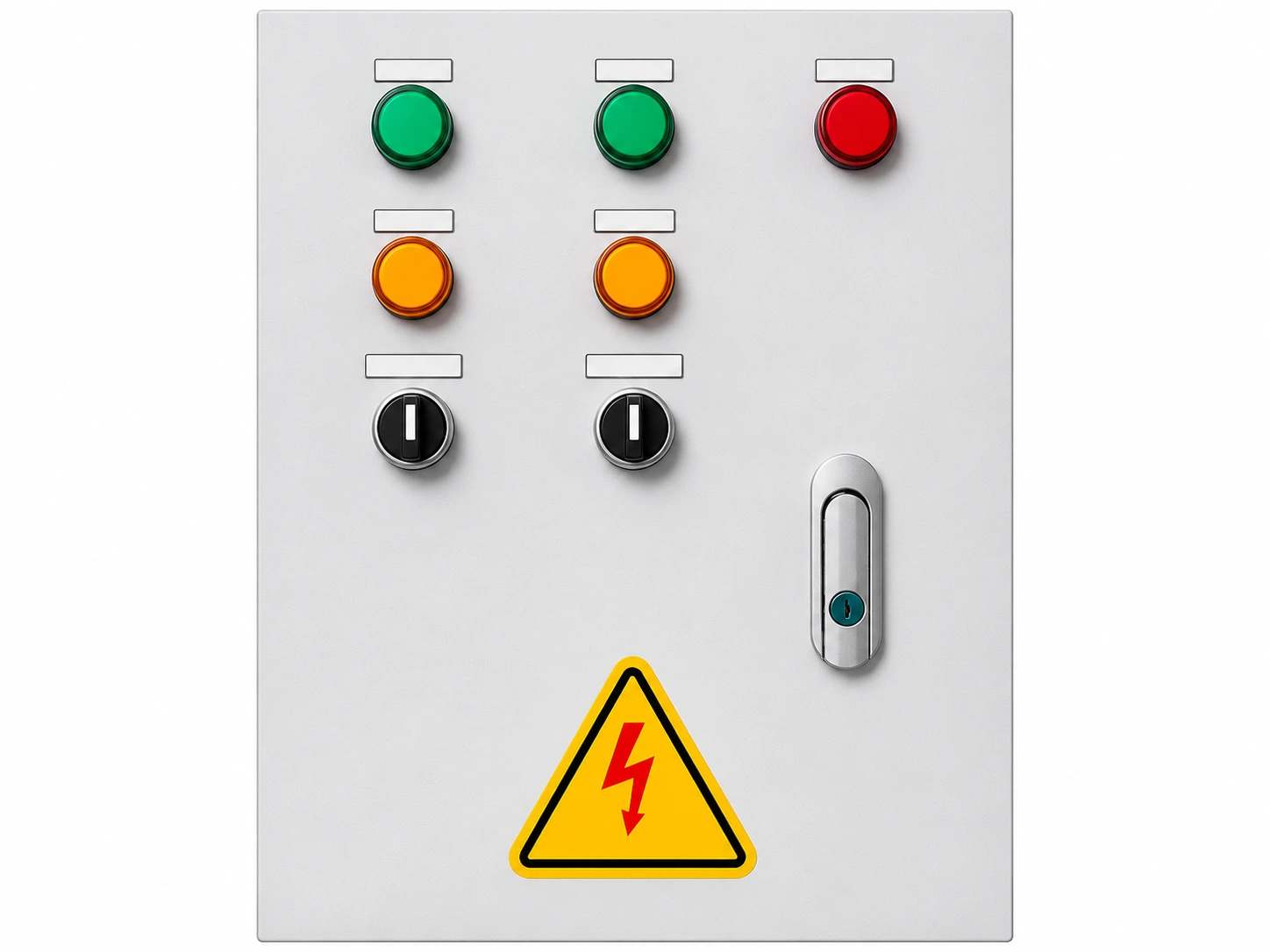
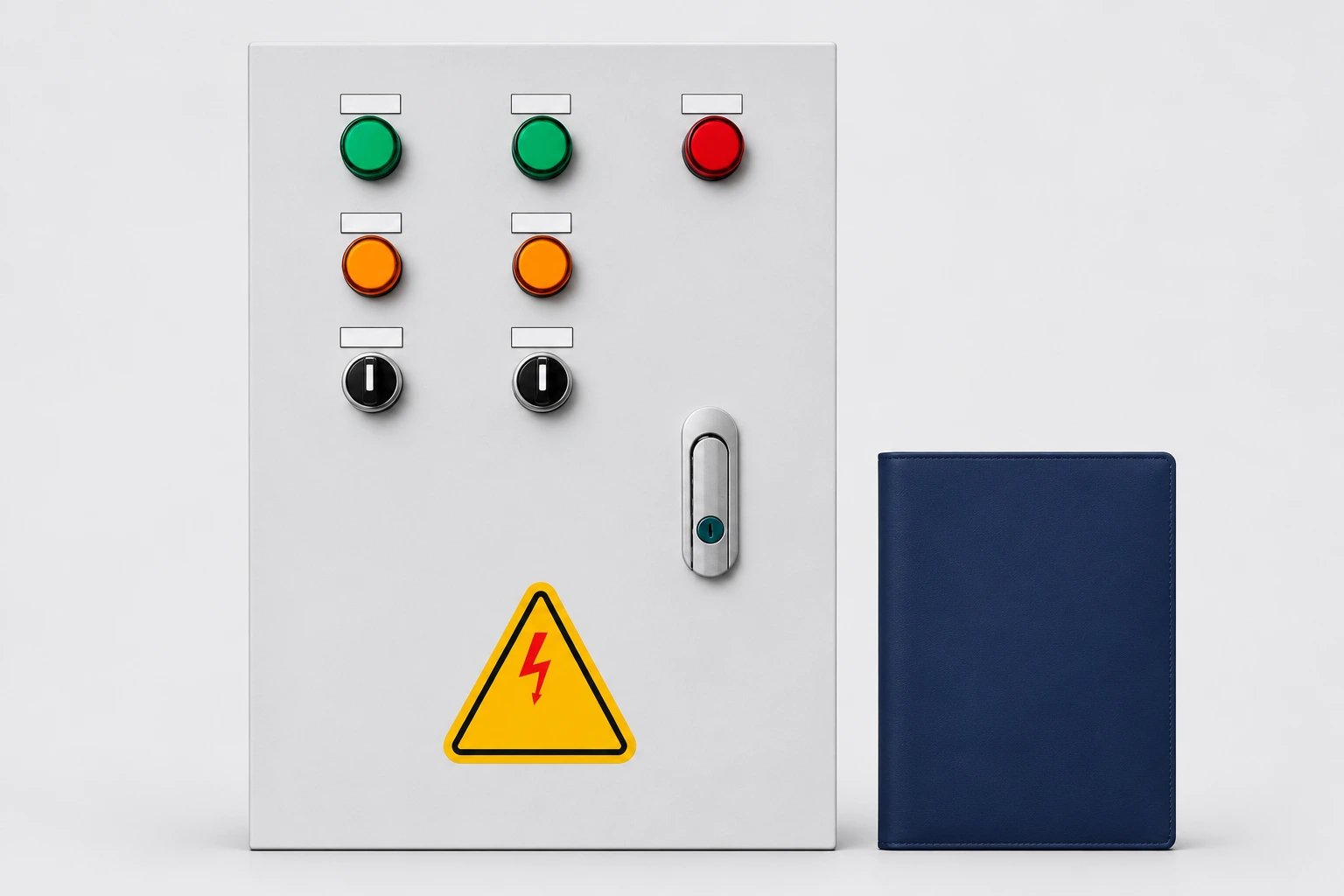
This guide concerns diagnosis of the level-input chain. The illustrated NENA two-pump control box provides product context, but the front-panel photograph does not establish the input voltage, terminal assignments or installed float arrangement. Those details must come from the order-specific drawings and instructions.
Record whether the pump fails to start, fails to stop, cycles unexpectedly or behaves differently in manual and automatic modes. Note the observed liquid level, selector position, alarms and relevant event times. Identify which pump is affected and whether the symptom is continuous or intermittent. This provides a starting point for testing rather than a premature replacement decision.
Manual operation can help describe the fault, but it is not a complete diagnosis. A pump that runs in manual mode may still have a problem in the automatic command path, an interlock or another part of the sequence. A pump that does not run in either mode may require investigation beyond the float circuit. The actual circuit determines which functions remain active in each mode.
Keep immediate overflow response separate from component testing. If the level is rising dangerously, use the site’s approved incident procedure and contact the responsible operator. The pump high-level alarm guide covers that operational assessment. Troubleshooting must not distract from managing the immediate condition safely.
Identify every level device from the drawing and cable labels. A float may request a start, stop a pump, add another pump or raise an alarm. Do not assume that the highest float starts both pumps or that every installation uses the same number of devices. Record the intended function and the normal state for each input.
Confirm whether the arrangement is for filling or emptying. Also distinguish the switch’s contact description from the controller’s interpretation of that contact. A description such as normally open needs its stated reference condition; it does not independently tell the technician what the complete system should do at every water level. The approved sequence and circuit must resolve that question.
When drawings and observed behaviour disagree, record the discrepancy before changing settings. The installation may have a wiring fault, an undocumented modification or an incorrect drawing. Guessing which document is right can create a second fault and erase useful evidence. Ask the responsible engineer to establish the correct baseline for the test.
From an approved safe position, check whether the float can move as intended or is obstructed by the basin wall, another cable, deposits or nearby equipment. Note the mounting arrangement and visible damage. Do not reach into liquid or open an electrical enclosure unless the authorised procedure specifically permits the activity and controls its hazards.
В руководстве по эксплуатации EPA-hosted lift-station maintenance webinar identifies deposits on floats as a maintenance concern and includes inspection, cleaning and record keeping in its guidance. Use the site’s approved cleaning procedure and intervals appropriate to the actual service. A recurring deposit problem deserves review rather than repeated unrecorded emergency cleaning.
Photograph an obstruction before it is removed where that can be done safely. Record whether cleaning changed the symptom and whether the cable routing was corrected. If a float works briefly after being disturbed and then fails again, the original cause may remain. Do not report a successful repair solely because the device moved during one visit.
This original table organises observations and next questions. It does not prescribe live measurements, terminal bridging or acceptance values. The technician must select the appropriate method from the actual circuit and approved instructions, with the necessary isolation and operational controls.
| Observed condition | What remains uncertain | Запрашиваемые доказательства |
|---|---|---|
| Float visibly trapped | Whether mechanical obstruction is the only fault | As-found position, corrective action and complete automatic retest |
| Float moves but panel input does not change | Switch, field cable, connections or input configuration | Results at defined boundaries using the approved test method |
| Panel input changes but no start command occurs | Sequence, selector mode, permissive or controller response | Input state, required conditions and command-state record |
| Start command occurs but pump does not run | Output, motor protection, power circuit or pump condition | Separate investigation of the downstream command and power path |
| Pump starts and stops unexpectedly | Level movement, switch state, connection fault or sequence behaviour | Time-correlated level, input and command observations |
| Fault disappears during the visit | Intermittent cause has not been demonstrated | Monitoring plan and clear status of the unresolved finding |
Split the chain into the float, field cable and junctions, panel terminals, controller input and subsequent logic. Agree where each test begins and ends. A result at the panel input alone cannot tell you which upstream component caused a missing signal. Conversely, a switch that operates correctly on a bench does not prove that the installed cable and connections are sound.
Record test conditions and results for the actual input type. Continuity testing applies only where the circuit and approved method make it appropriate, with the relevant section isolated from power and other connected equipment. Some level devices and input arrangements need different methods. Never apply an assumed test voltage or meter function to an unidentified circuit.
A deliberate input simulation, if the responsible team approves one, is a controlled test with a defined boundary and restoration check. It is not a permanent bypass. The test plan must consider that a simulated input may start equipment or change the sequence. Record what the simulation established and what it excluded, then verify removal of all temporary arrangements.
Inspect the cable route and junction environment as part of the same investigation. Document visible damage, suspect seals, moisture evidence and unidentified splices. Do not infer an internal defect only from an exterior photograph. Where further inspection or replacement is required, name that task and keep the fault status open until its result is available.
If the input changes correctly, compare the resulting command with the approved sequence. Check the relevant selector mode, permissives, trips and latching conditions through the documented method. A controller that refuses to start a pump may be responding correctly to another condition. Replacing a functioning float would not resolve that situation.
В руководстве по эксплуатации Введение в электробезопасность HSE stresses maintenance to prevent danger and competent repair. For this investigation, record who is authorised to perform the electrical work and which approved procedure applies. General background material does not identify the terminal logic of this NENA panel or authorise changes to its control circuit.
For two pumps, verify which input functions are shared and which are pump-specific. Keep the diagnosis separate from the alternation decision. The duplex alternation guide explains lead selection and sequence checks. An alternation complaint and a failed level input may appear together, but each needs evidence before a repair is selected.
When the switch is confirmed defective, match the approved electrical function, contact rating, cable specification, mounting method, operating movement and service environment. Compare the replacement documentation with the original circuit. Matching the colour or external shape is not enough, especially when the device interfaces with a controller rather than switching a motor directly.
Ask the supplier to confirm compatibility for the identified application. The enquiry should include the float’s markings, panel drawing, input details, liquid conditions and the mounting arrangement. If the existing device cannot be identified, obtain a reviewed replacement specification instead of ordering an apparently similar part and changing the circuit to make it work.
Retain the failed part and the as-found information until the cause has been reviewed where practical. A damaged cable or unsuitable mounting may destroy a replacement in the same way. The repair decision should address the demonstrated cause, not only restore operation long enough to leave the site.
Use the approved test plan to verify the relevant start, stop and alarm responses, including recovery to normal service. Check that temporary test arrangements have been removed, selector positions are correct and the final configuration matches the drawing. For a two-pump system, verify the affected functions for each pump rather than assuming one successful start proves the complete sequence.
Record the symptom, confirmed cause, replaced components, settings changed and retest results. Explain any limitations, such as an intermittent fault that could not be reproduced. Assign a follow-up if monitoring is needed. A clear unresolved finding is more useful than a false pass that leaves the next operator believing the fault has been eliminated.
When the investigation expands into panel replacement or modification, review the wider electrical specification, including the control panel short-circuit rating where applicable. A level-control repair should not introduce undocumented changes to the power assembly or its intended use.
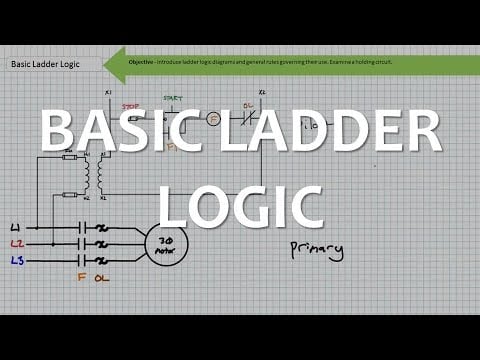
Jim Pytel’s Basic Ladder Logic lecture provides neutral educational background for following inputs and outputs in a control circuit. It does not supply a wiring diagram for this panel. Use it to understand the diagnostic reasoning, then use the approved drawings and qualified personnel for the actual work.
Смотреть на YouTube — Джим Пител
Нет. Это сужает симптом, но оставляет необходимость проверки автоматического входа, проводки, разрешений и последовательности управления.
Да. Механическое движение само по себе не доказывает, что правильное электрическое состояние достигает панели через установленный кабель и соединения.
Нет. Любая одобренная симуляция требует определения границ тестирования и документированной проверки восстановления; это не является постоянной заменой рабочего устройства уровня.
A documented cause, suitable corrective action and successful retest of the relevant automatic sequence and alarms support closure, with any remaining limitations clearly recorded.