Soft starter motor nameplate settings must describe the connected motor and its actual connection, not simply the starter’s largest advertised power rating. Before changing parameters, identify the motor, supply, connection topology and installed starter model. Then map each required field to the correct nameplate entry and the manufacturer’s instructions. Keep the motor rated current separate from measured running current, the starting current limit and the starter’s own current capability. This guide provides a practical review framework for buyers and commissioning teams; the final settings and electrical work require the responsible engineer and the exact equipment manual.
A purchase list may show the intended motor, while the machine now carries a replacement with a different current or connection. Begin with equipment identification. Record the motor manufacturer, model and serial number, then photograph the complete rating plate and connection information where safe access is available. Match that identity to the machine and the approved electrical drawings before using an old settings sheet.
Check whether the plate lists more than one voltage, frequency or connection. Keep the associated values together rather than copying whichever number is easiest to read. If the motor has been rewound, modified or replaced, obtain the relevant repair and application information. An unreadable plate is a missing engineering input, not a reason to estimate current from a nearby motor of similar size.
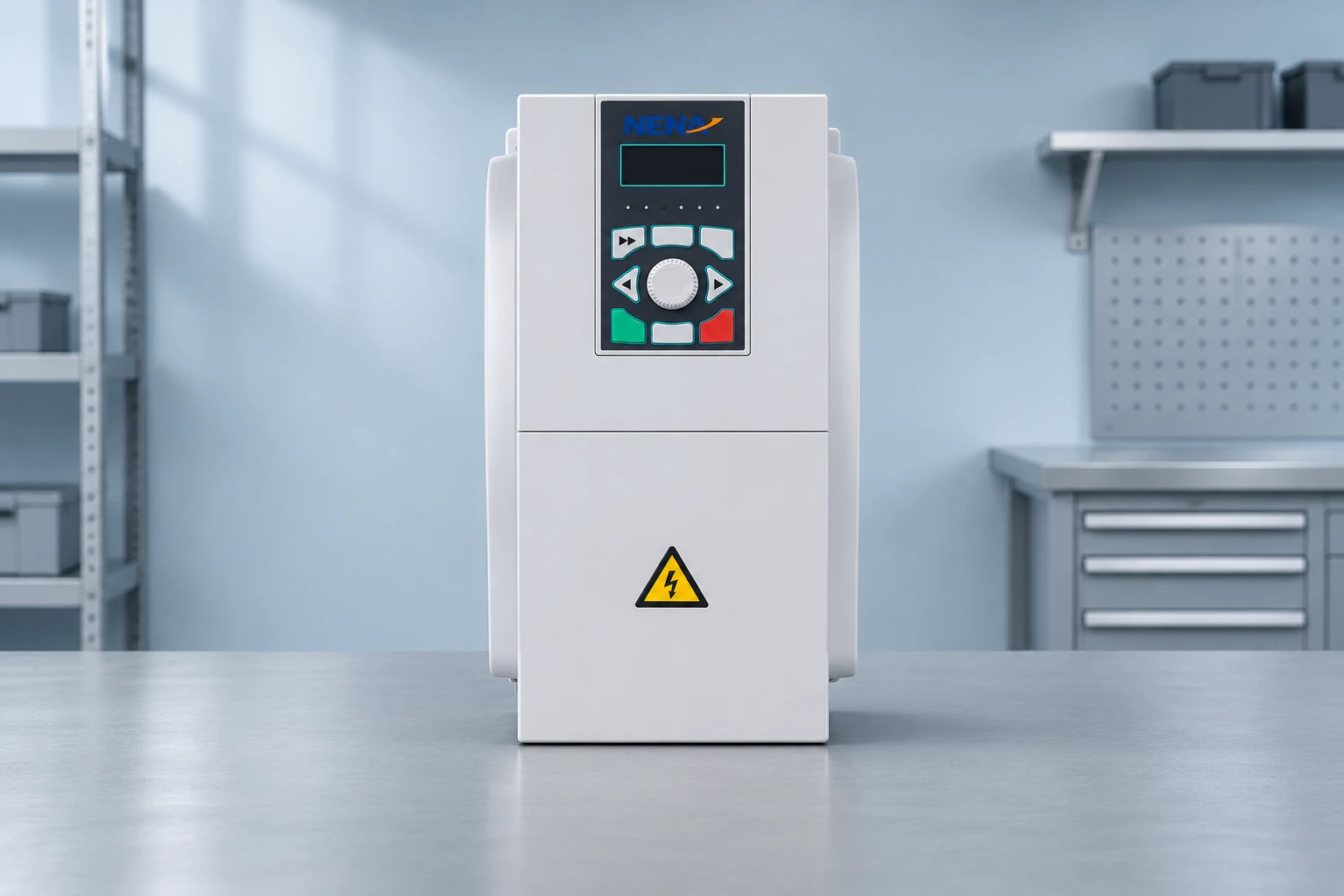
El DOE motor-driven systems guidebook includes a structured motor survey and nameplate data form. Use that approach to retain the original motor data separately from subsequent observations. For a purchased ZR900 online soft starter, request the delivered model’s parameter descriptions and connection drawing; a product-family page cannot confirm every menu field or protection arrangement.
The motor nameplate current is a rated operating value associated with stated motor conditions. The measured running current is an observation at a particular load and supply condition. The starter’s rated current describes the selected equipment under its specified duty and environment. These values serve different purposes and should occupy different fields in the commissioning record.
A lightly loaded machine may run below its rated current. Entering that observation as the motor’s rated current can misrepresent the motor to the protection system. Conversely, copying the current rating from an oversized starter can misrepresent the connected motor in the other direction. Neither shortcut is justified simply because the display accepts the number.
The starting current limit is another setting with a model-specific definition. It may be expressed relative to a configured motor current or another reference stated in the manual. Identify both the units and the reference before interpreting a percentage. Do not treat a starting-current percentage as a replacement for the motor-current entry, and do not change either field solely to make an unexplained trip disappear.
Build a review sheet that records the source, interpretation and destination for each required value. Some starters require only a small set of motor inputs; others offer additional protection and application parameters. A field being present does not mean its correct value can be guessed from a generic commissioning example. Mark unavailable inputs and resolve them before the test that depends on them.
| Information | Qué se debe verificar | Common mistake to avoid |
|---|---|---|
| Rated motor current | Correct plate entry for the actual supply and connection, plus the starter’s input definition | Copying starter capacity or a light-load measurement |
| Voltage and frequency | Matched plate values, actual source and permitted operating conditions | Mixing values from different rating rows |
| Motor power and speed | Units and rated operating data where the installed model requires them | Using synchronous speed in place of rated shaft speed |
| Service factor and duty | Motor documentation, application limits and protection instructions | Applying a habitual allowance without documented support |
| Connection topology | Approved drawing and the starter’s supported arrangement | Transferring a setting from a differently connected installation |
| Thermal protection | Assigned protective device, sensor arrangement and approved trip behavior | Assuming every bypass or operating state has identical protection coverage |
This is a data-review table, not a universal settings schedule. The DOE motor selection and application handbook provides broader context for motor ratings, loading and application conditions. Equipment-specific instructions determine how those data are used by the installed starter.
A starter connected in the motor line and one arranged within a delta circuit do not necessarily measure or interpret current in the same way. Do not apply a conversion factor from a remembered example until the actual diagram and the parameter definition are confirmed. The question is not merely where the sensor sits, but what the manufacturer expects the user to enter.
Ask the panel builder to identify the supported connection, sensing location and required current basis on the drawing and settings schedule. Include the bypass arrangement in that review. If a replacement starter uses different terminology, map the old function to the new definition rather than transferring the numerical value field by field. A matching display label is useful evidence, but it is not a complete compatibility assessment.
cURL Too many subrequests by single Worker invocation. To configure this limit, refer to https://developers.cloudflare.com/workers/wrangler/configuration/#limits.
cURL Too many subrequests by single Worker invocation. To configure this limit, refer to https://developers.cloudflare.com/workers/wrangler/configuration/#limits.
cURL Too many subrequests by single Worker invocation. To configure this limit, refer to https://developers.cloudflare.com/workers/wrangler/configuration/#limits.
cURL Too many subrequests by single Worker invocation. To configure this limit, refer to https://developers.cloudflare.com/workers/wrangler/configuration/#limits guía de tiempo de rampa del arrancador suave cURL Too many subrequests by single Worker invocation. To configure this limit, refer to https://developers.cloudflare.com/workers/wrangler/configuration/#limits cURL Too many subrequests by single Worker invocation. To configure this limit, refer to https://developers.cloudflare.com/workers/wrangler/configuration/#limits. cURL Too many subrequests by single Worker invocation. To configure this limit, refer to https://developers.cloudflare.com/workers/wrangler/configuration/#limits.
Before the first authorized test, save the existing configuration and compare it with the reviewed settings sheet. Confirm that the machine can start safely and that the test conditions represent the intended operating case. Establish who can issue a run command and how an unexpected movement or abnormal result will be handled. Parameter entry itself is not permission to start machinery.
El HSE guidance on planned maintenance and safe isolation emphasizes competent people, controlled energy and clear communication. Use those principles when collecting motor information or checking a modified installation. A photograph or measurement that requires unsafe access is not a necessary shortcut; schedule suitable access under the site’s procedure.
During the approved test, record the source condition, load state, event timing and available measurements. Compare those observations with the expected behavior and the instrument’s limitations. A satisfactory start does not prove every protective function has been tested. Retain separate evidence for the functions and operating states actually verified, with any outstanding checks clearly assigned.
Motor replacement should trigger a review even when the new motor has the same nominal power. Current, efficiency, speed, duty, connection options or thermal information may differ. Likewise, a replacement starter may use different scaling, units or protection logic. Treat either change as a controlled update to the combination of machine, motor, starter and drawings.
Record the previous value, proposed value, source document, reason, authorization and verification result. Preserve the original plate photographs and identify the date of the physical change. If no parameter adjustment is needed, record that conclusion with the comparison evidence. This prevents future maintenance staff from repeating the review simply because no explanation accompanies the settings.
For a wider equipment choice, the guía de selección de arrancadores suaves trifásicos connects motor data with supply and duty requirements. A usable enquiry includes the plate photograph, actual connection, load description, start frequency, environment, existing protection and current drawing revision. Ask suppliers to identify missing information and distinguish a preliminary selection from an approved commissioning schedule.
Jim Pytel’s educational lecture explains the electrical characteristics of squirrel cage induction motors. It provides background for distinguishing operating current and starting behavior. The classroom discussion does not specify the menu entries, protection settings or commissioning procedure for the delivered NENA starter.
Do not assume so. Use the connected motor's documented data and the installed starter's definition of that parameter. Starter capacity and motor rated current describe different equipment characteristics.
No. A no-load measurement describes one operating condition. It does not replace the motor's rated current or the documentation needed to configure protection.
Only after reviewing the new motor data, connection and application against every affected parameter. Similar power ratings do not prove that the old configuration remains appropriate.
Obtain reliable motor documentation or manufacturer confirmation before approving the affected setting. Keep the uncertainty visible instead of estimating a protection input from an unrelated motor.