A soft starter fault reset should follow cause correction and a controlled restart decision. Record the fault first, establish why it occurred, confirm that the permitted reset conditions are satisfied and make the driven equipment safe for the next command. Clearing a message does not repair a motor circuit, remove a mechanical obstruction or prove that protection settings are correct. The available reset methods depend on the exact starter and its configuration. Do not copy another brand’s keypad sequence, input assignment or automatic restart settings onto an unfamiliar unit.
This guide is for maintenance planning and handover, rather than a universal button sequence. Use the model-specific manual and the installation’s operating procedure. For diagnosis across the wider starting system, begin with the guia de resolução de problemas do arranque suave; return here when the question is whether, how and under whose authority a recorded fault should be cleared.
A fault reset acknowledges or clears a fault state when the equipment’s rules allow it. A power cycle interrupts and restores a supply. A factory restoration changes configuration toward a default state. These actions can have very different effects on stored records, command handling and motor settings. Calling all three “reset” makes an already difficult maintenance conversation less precise.
Ask what the operator intends to achieve. If the goal is to restore service after a known protective trip, configuration erasure is usually a separate decision requiring engineering review. If the display is unresponsive, an authorized power-cycle procedure still needs to account for other supplies and possible restart behavior. If the event history is needed for diagnosis, preserve it before any action that might alter its availability.
Write the requested action on the work record in plain language: clear the identified trip, restore a failed control supply, or reload an approved configuration. Include the equipment identification and the relevant manual revision. This avoids an instruction such as “reset everything” becoming permission to change motor data or disable a protection function.
Record the exact code or message, event time and operating stage. A trip before acceleration, during the ramp, at the transition to bypass or after an extended run has different diagnostic implications. Include whether the event was the first occurrence and whether a recent setting change, supply disturbance or mechanical intervention preceded it.
Save the available event log and configuration through supported means. Record motor nameplate information, starter identity, command source and any external protection status. A photograph of the active display may be useful, but it should accompany the surrounding sequence rather than replace it. Do not invent a meaning for an unfamiliar code based on a superficially similar model.
Where operations already attempted a reset, document that honestly. Note how many attempts occurred, whether the fault returned immediately and whether the motor moved. Repeated attempts can alter the thermal and process conditions even when no useful production results. The next technician needs that history to judge what is safe and what evidence remains available.
Use the table as a review framework. It describes evidence and permissions, not fault-code definitions. Model-specific restrictions, required cooling conditions and repair instructions take priority. An unresolved fault should remain an unresolved fault even if the interface offers a clear button.
| Situation | Before clearing | Next decision |
|---|---|---|
| Known external event has ended | Confirm the event, affected equipment and stable restored conditions | Authorize a controlled restart if all required conditions are met |
| Motor or starter thermal protection active | Investigate loading and follow the documented thermal recovery conditions | Do not substitute a power cycle for an approved recovery assessment |
| Electrical damage or repeated protective operation | Isolate and obtain a competent fault investigation | Repair and verify before considering another start |
| Communication or external permissive missing | Restore the required control condition and confirm command ownership | Determine whether fault clearance and a separate start are required |
| Cause remains unknown | Preserve logs and escalate with the operating history | Keep restart outside the approved scope until reviewed |
Resetting a starter is an operating action. It does not establish a safe state for touching its terminals or entering the driven machine. A stop command or disabled output also cannot be treated as the installation’s isolation method. Plan intrusive inspection separately and identify all electrical, mechanical and process energy sources involved.
O orientação de bloqueio e etiquetagem da CCOHS explains the distinction between control switches and devices that isolate energy. Apply the site’s equipment-specific procedure whenever servicing requires hazardous energy control. Work on the actual motor circuit belongs to competent, authorized personnel; the presence of a fault message does not reduce that requirement.
Before any return to service, the responsible people need agreement about who controls the next start. A remote system may retain a demand after the local operator clears a fault. The starter’s response to that demand depends on configuration and control logic. Review it explicitly rather than discovering it while people remain near the equipment.
Depending on the model, reset may be available through a local interface, assigned digital input, communication command or another documented method. Availability is not proof that each method behaves identically. Confirm the required operating state, command duration and permissions from the exact manual. Avoid presenting a generic terminal jumper or keypad hold time as a safe shortcut.
For a remote reset, establish the command path from the operator system to the starter and verify the expected indication back to that system. A command sent is not the same as a command accepted. The installation should distinguish a fault still active, a reset rejected, a ready state and a subsequent start request.
If power interruption is specifically required, use the approved shutdown and restoration sequence. Account for control feeds and stored energy. Do not infer that switching off one upstream device removes every source. Reapply power only after the relevant work and operational release are complete.
A protective trip during starting can leave the motor and starter in a different thermal state from a cold first start. Required recovery depends on the actual equipment, load history and documented protection model. There is no universal waiting period that this article can assign to every installation.
Review starting frequency and recovery considerations when several attempts have already occurred. A restart restriction can be a legitimate protective condition rather than a failed reset button. Do not defeat it by changing current settings, thermal class or protection thresholds simply to obtain one more attempt.
Settings also need a separate approval boundary. If motor data or the starting configuration is suspected, compare the recorded setup with the approved baseline. Correct a demonstrated mismatch through change control, then assess the resulting starting duty. A factory restoration without a verified recommissioning plan can create more uncertainty than the original trip.
The first observation is whether the intended fault has cleared. The second is whether the starter and surrounding system are ready. The third is whether an authorized start produces the expected motor and process behavior. Record each stage separately so a clear display is not mistaken for a successful production test.
O University of Waterloo hazardous energy control program describes coordinated return to service and controlled testing within its institutional procedure. For your installation, use the applicable local arrangements to confirm personnel clearance, equipment condition and responsibility before energization. The cited program is a planning reference, not a replacement for local authorization.
During the approved test, observe the stage at which the previous fault occurred and any associated process condition. Define the permitted test scope and stop criteria beforehand. If the same fault returns, stop and reassess the cause instead of turning repeated reset attempts into a diagnostic method.
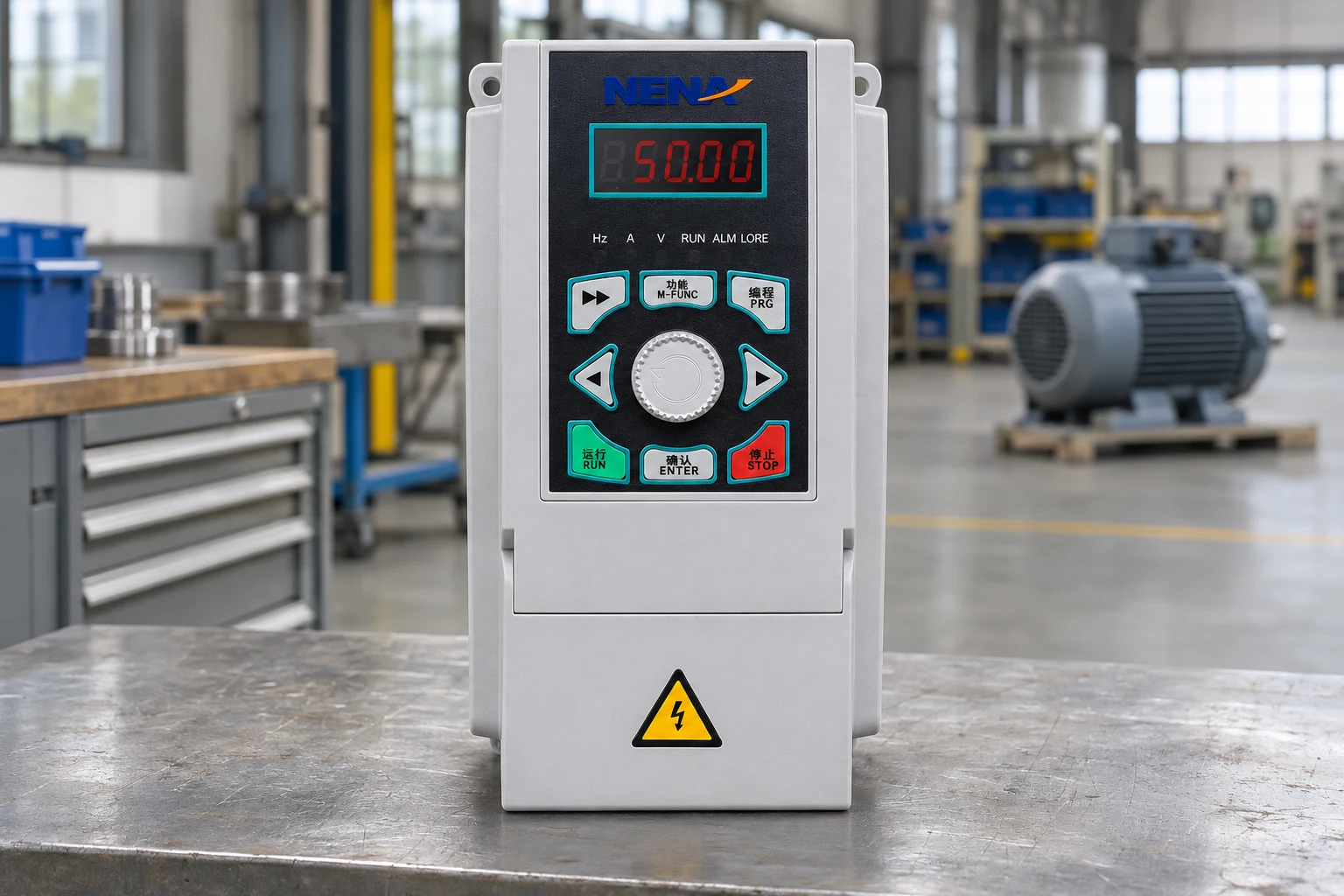
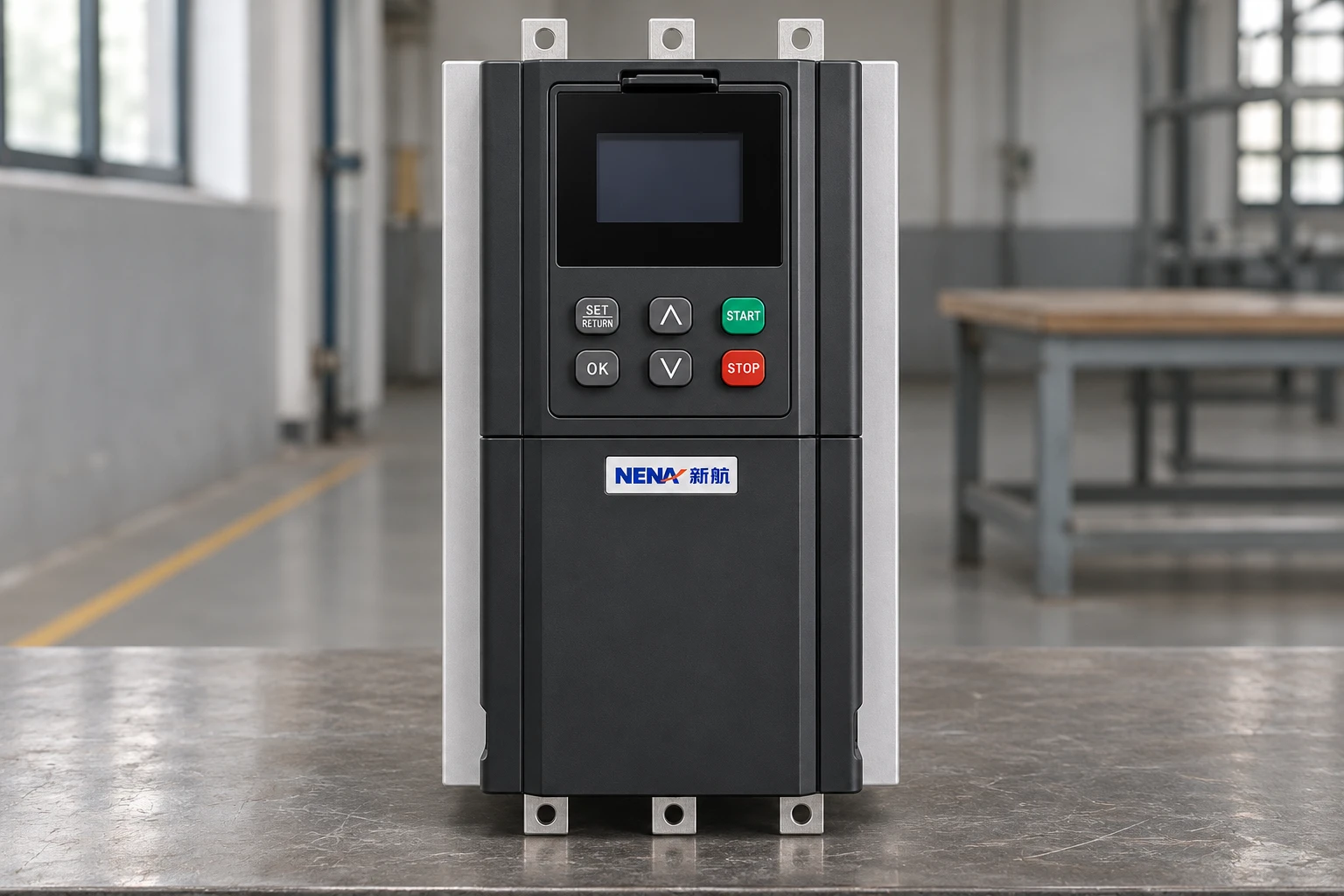
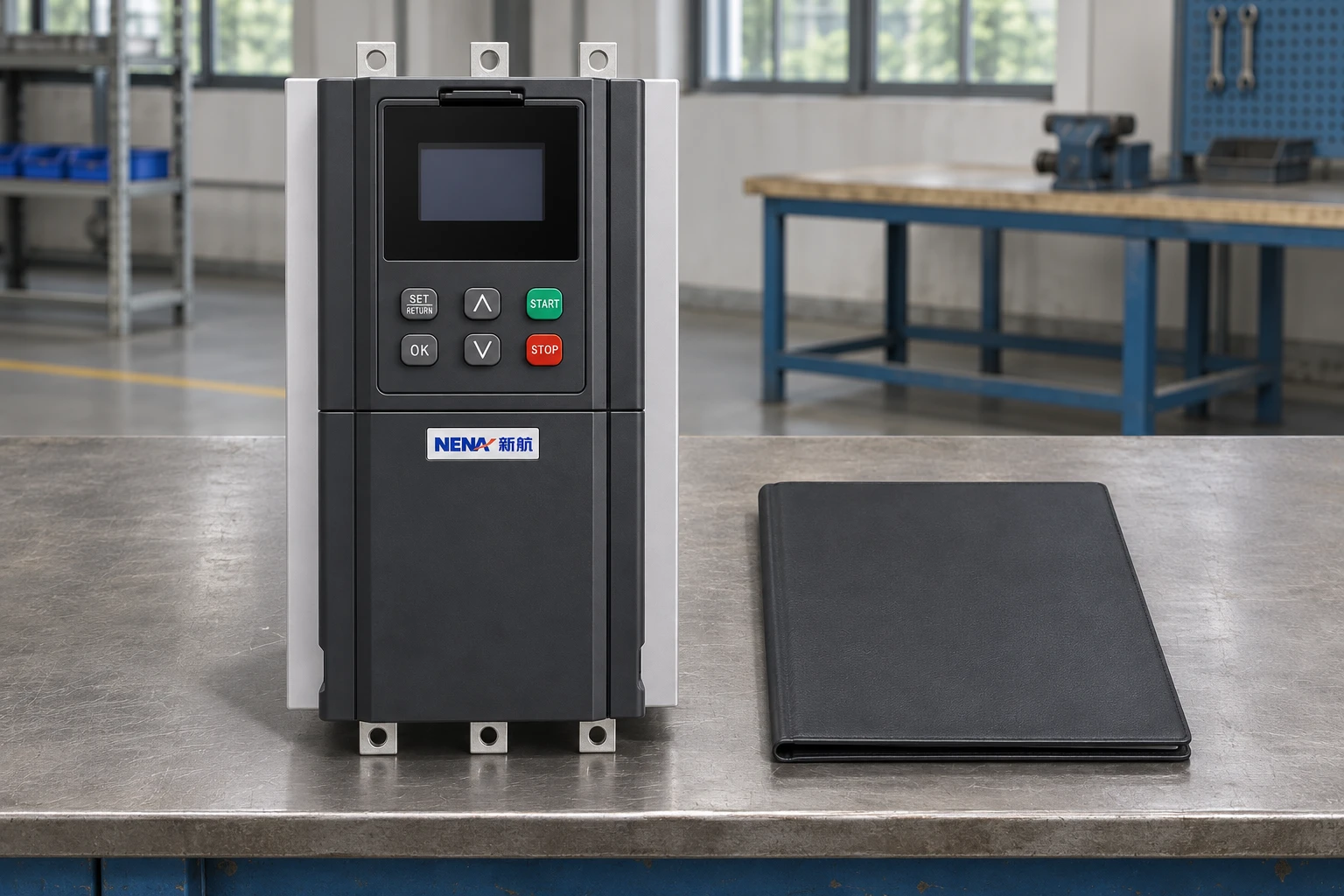
NENA’s pump-application soft starter product provides a relevant starting-system reference. Obtain the exact delivered model manual and approved configuration before discussing reset commands. The product photograph does not identify the firmware, reset input assignment or the control arrangement of a particular installation.
Send the support team the code, event sequence, motor information, configuration record, command source and repair findings. Include whether the system uses internal or external bypass as documented, and whether the fault appears before or after the bypass transition. For a transition-specific symptom, consult the separate bypass contactor fault discussion.
Close the maintenance record with the verified cause, approved action, reset method and restart outcome. State any remaining limitation, such as an untested remote mode or restricted duty. An accepted reset with no subsequent test should be reported as that limited result, not as proof that the entire starting system is healthy.
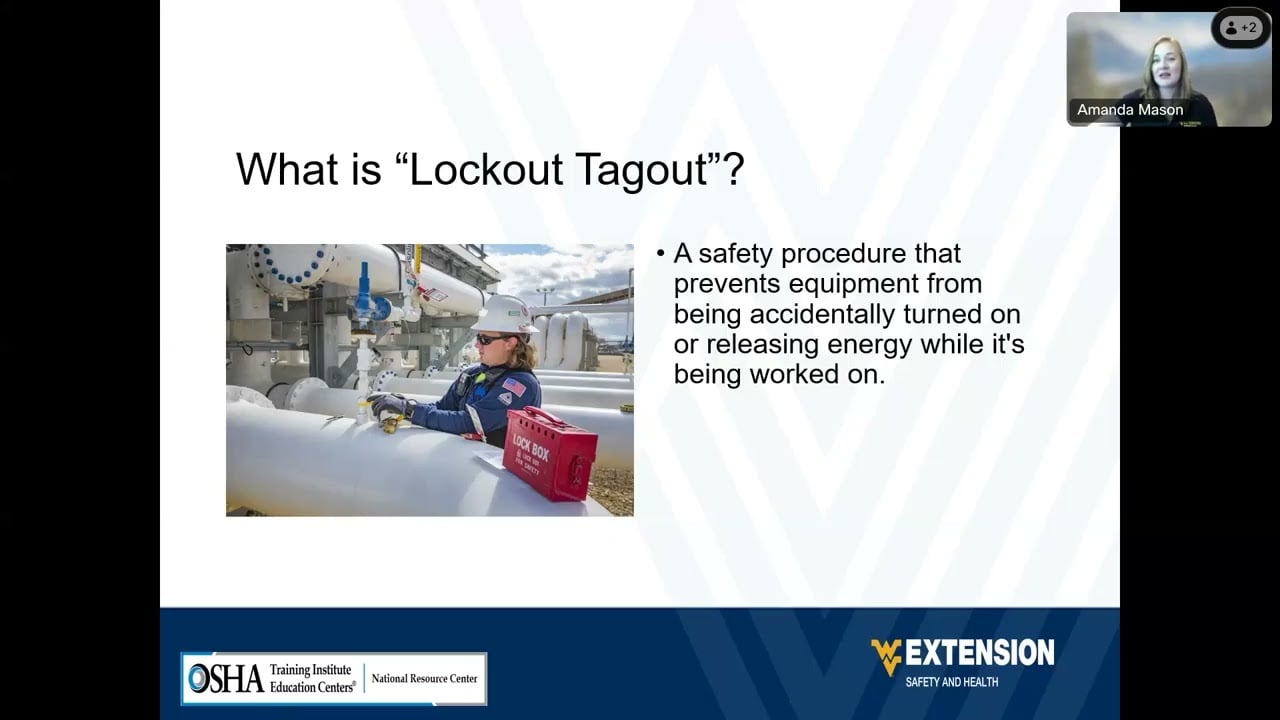
This US Department of Labor video explains lockout and tagout awareness. It supports the distinction between an operating command and maintenance isolation; it does not provide a soft-starter menu sequence.
Watch on YouTube — USDepartmentofLabor
Não. Uma reposição a zero altera um estado de avaria permitido. A causa continua a ter de ser identificada e corrigida antes de um novo arranque autorizado.
No. Factory restoration can change configuration. Treat it as a separate engineering decision requiring an approved baseline and recommissioning plan.
The system may still require a start command, permissive or thermal recovery condition. Verify readiness and command handling using the exact documentation.
No. A recurring fault calls for reassessment. Preserve its history and follow the equipment’s recovery conditions and the site’s maintenance procedure.