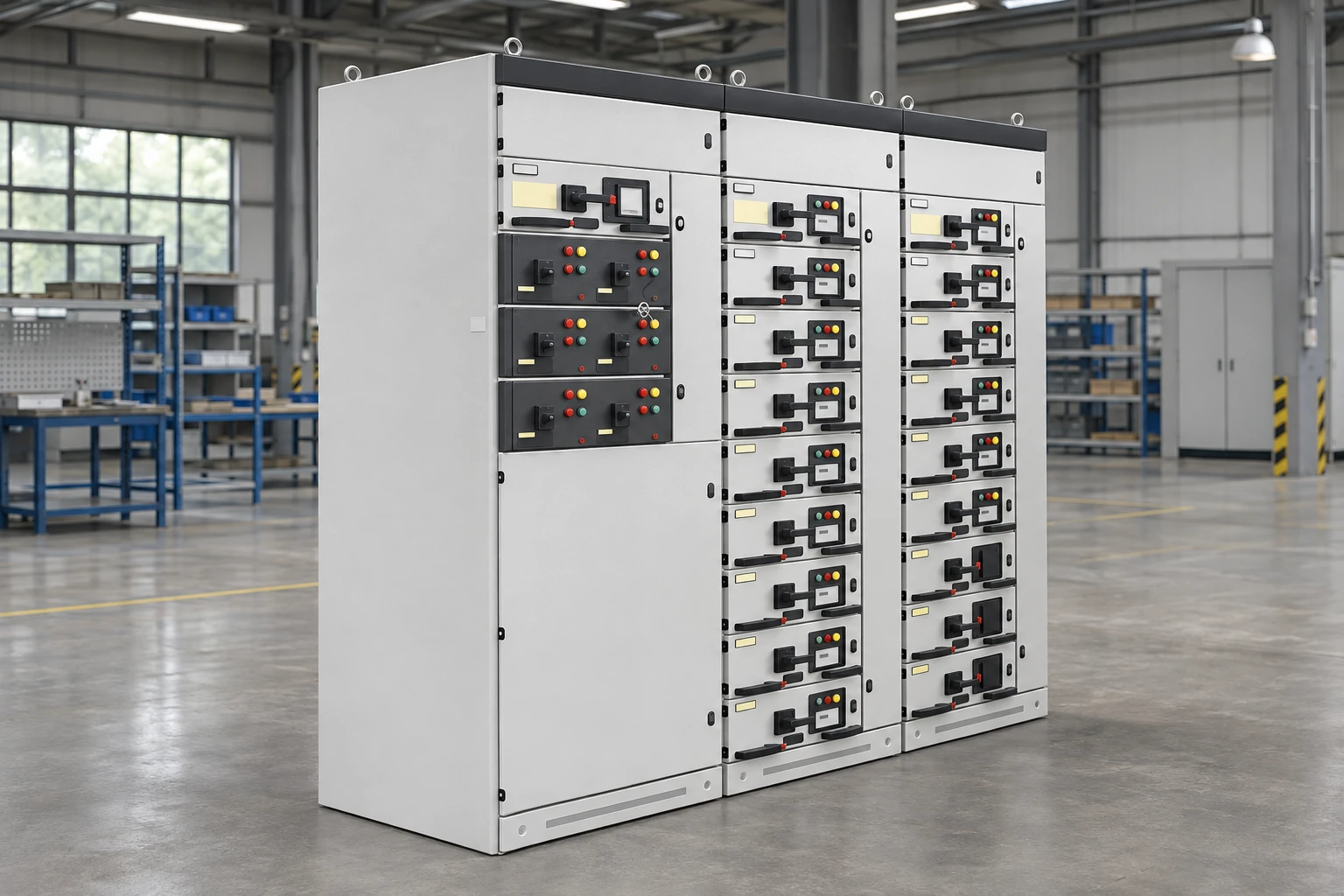
A pump control panel with no power needs a supply-path investigation before a replacement controller is ordered. A dark door lamp can mean a lost feeder, missing control supply, a failed indicator or an interruption affecting only one branch. First establish whether both pumps, the alarm circuit and the operator interface are affected. Record the last normal operating state and keep the process safe. Electrical testing and enclosure access belong to qualified personnel using the installation drawings and approved isolation procedures; a dark panel is never proof that its conductors are de-energized.
This guide focuses on a panel that appears electrically dead. A powered panel refusing an automatic demand is a different investigation. For the broader operating arrangement, see the руководства по выбору шкафа управления электродвигателями. The aim here is to locate the lost function, restore it for a known reason and verify the complete pumping duty.
Ask the operator what stopped first. Did every lamp go dark together, did the alarm remain available, or did only one pump stop? Note whether a building outage, generator transfer, cleaning activity, thunderstorm or recent panel modification preceded the event. Separate observations from assumptions: “both run lamps dark” is evidence; “the controller has failed” is a conclusion that still requires testing.
On a duplex installation, common symptoms can point toward a shared feeder or control supply, while an isolated symptom can point toward a branch. That distinction is useful without being conclusive. Two pumps can have separate motor feeds and a shared control circuit; an alarm can also have an independent source. Obtain the actual schematic rather than inferring the arrangement from the cabinet door.
Document liquid level, available storage, standby capacity and the consequence of another failed start. If overflow or loss of service is developing, operations should activate the approved contingency arrangement. Repeatedly rotating selectors or resetting breakers while the process deteriorates makes the electrical evidence less clear and can introduce unexpected movement.
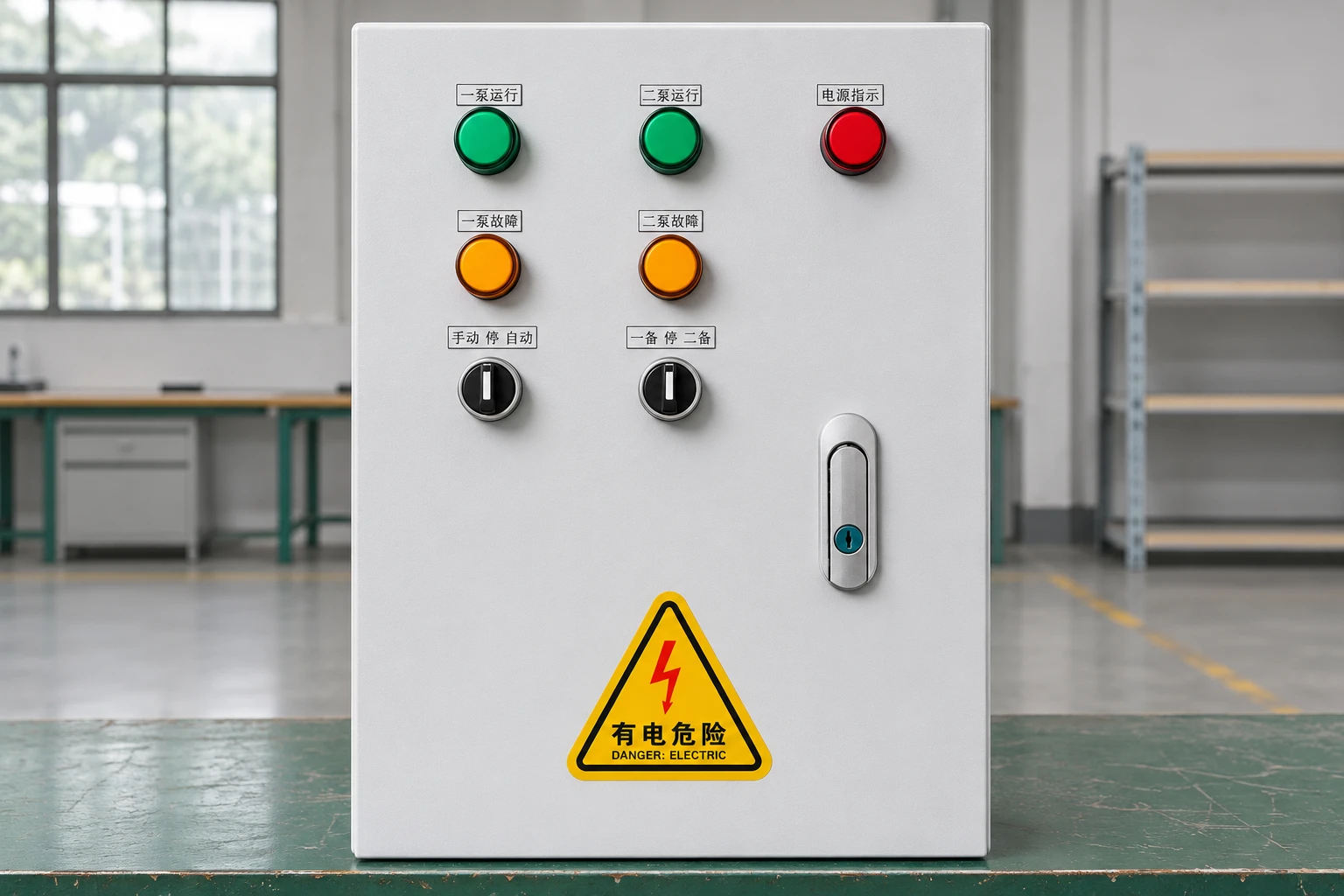
The relevant boundary may extend beyond the main pump disconnect. Possible sources include a separate alarm feed, control transformer, DC power supply, generator connection and externally powered monitoring circuits. These are possibilities to check against drawings, not features claimed for every panel. Identify source ownership, isolation points and the equipment that must remain available during the outage.
В руководстве по эксплуатации HSE guidance on working with electrical equipment provides the safety context for maintenance planning. For intrusive work, establish isolation and verify the electrical state under the site procedure. Any justified energized diagnostic test requires its own authorization and competent execution; this article does not provide a live probing sequence or universal test points.
Keep door indications separate from electrical proof. An indicator can fail while hazardous voltage remains present, and a control supply can disappear while the motor feeder stays energized. Likewise, a selected OFF position is an operating command, not an isolating device. Personnel should not open a cabinet merely because its display is blank.
The decision table below organizes the investigation. It does not assign universal voltage values, terminal numbers or fuse sizes. Those belong to the approved schematic, component ratings and installation records. The competent technician should record the expected condition and the observed condition for each relevant boundary.
| Наблюдаемое состояние | Possible boundary | Evidence needed before repair |
|---|---|---|
| Both pumps and all common indications unavailable | Shared feeder or common control supply | Source arrangement, protective-device condition and approved supply assessment |
| Motor feeds available but door controls dark | Control supply or its distribution | Transformer or power-supply specification and control-circuit protection record |
| One pump unavailable; other controls normal | Individual branch rather than whole-panel power | Branch protection, starter status and pump-specific history |
| Panel works while one lamp remains dark | Indicator or its associated circuit | Signal function, lamp rating and verified operating state |
| Replacement protection operates again | Unresolved downstream defect | Fault investigation and correction before another energization |
A public operation and maintenance manual held by New York DEC distinguishes absent panel supply, protective-device problems and control-circuit problems in pump troubleshooting. Its equipment-specific instructions should not be transferred to a different installation; the useful principle is to establish which electrical boundary has failed before replacing the pump.
A feeder problem may originate outside the cabinet. Coordinate with the person responsible for the upstream distribution system and establish whether other equipment lost supply. A building supply event and a local protective trip call for different follow-up. Record upstream device identity and event timing so the investigation does not stop at the first switch found in an unexpected position.
If the feeder is established as available under the approved assessment, the control supply becomes a separate question. Some panels derive control power internally; others receive it independently. Check the documented primary arrangement, secondary rating, protective devices and connected loads. Never assume a replacement supply is suitable because it fits the same mounting rail.
A protective device that has operated is evidence of an event, not permission to increase its rating. Confirm the correct replacement type and investigate the reason it operated. Moisture, damaged conductors, failed coils or an incorrect component can create a recurring fault, but none should be named as the cause without inspection evidence. Record what was found and what specifically corrected it.
Restored indication does not mean pumping should start immediately. The installation may legitimately be waiting for level demand, permission from another system or release of a protection condition. Check that the drawing and operating description agree on these requirements. Avoid bypassing a permissive simply to make the motor run.
A complaint affecting only automatic operation belongs with the Hand-Off-Auto operating arrangement. A pump that stays stopped after a supply disturbance may also need the power-failure restart review. Those topics complement the supply investigation rather than replacing it.
For duplex equipment, confirm which pump is selected as duty and whether standby takeover is permitted. A healthy standby pump can mask a failed branch, while unavailable common control power can disable both. The final report should identify each branch separately and describe any remaining reduction in capacity.
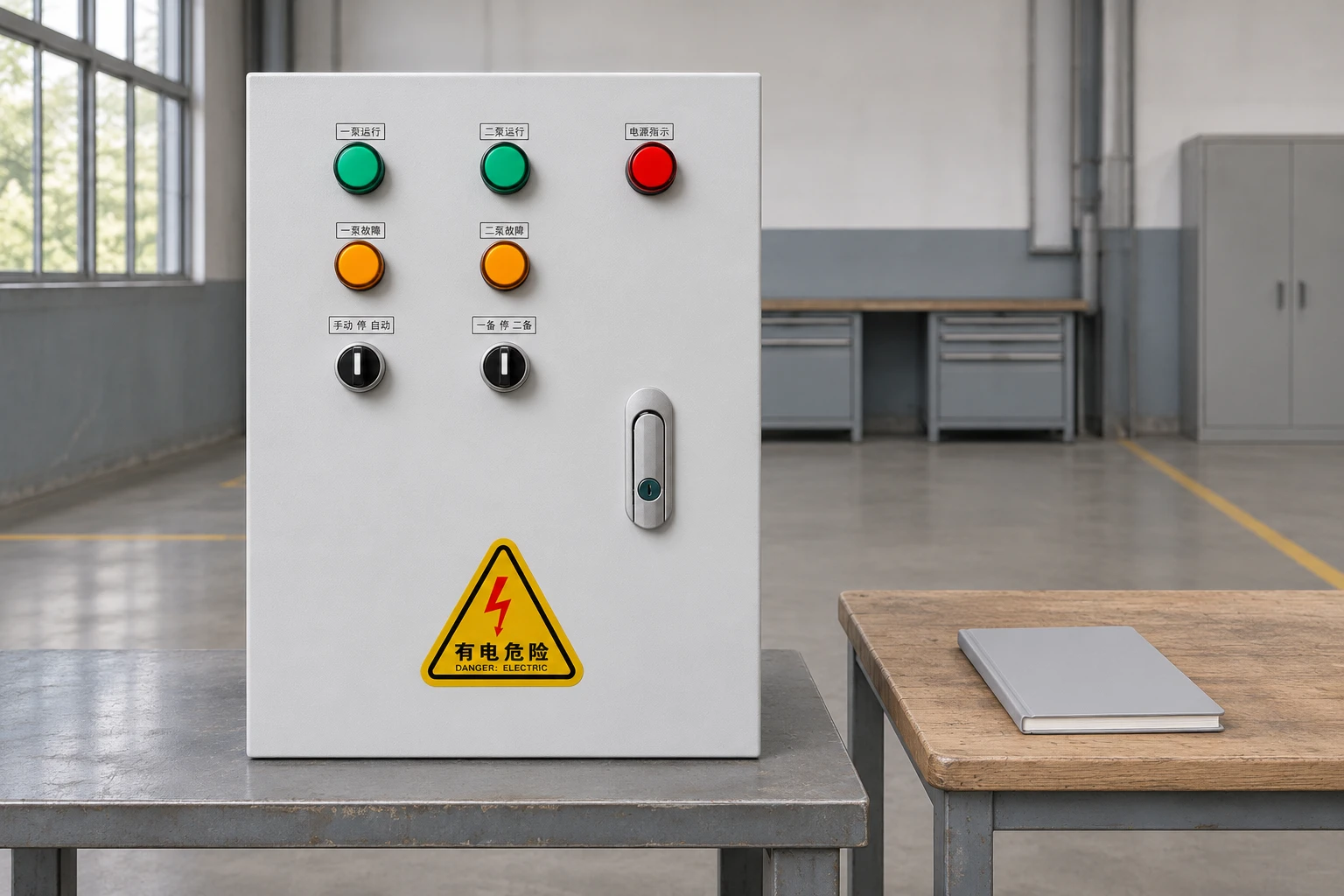
Before restoration, confirm that enclosure work is complete, tools are removed, guards are restored and affected personnel know what will happen. Ensure that valves, wet-well conditions and the discharge route are suitable for the planned test. Follow the authorized sequence for removing isolation and restoring supply; this is an operational release, not just an electrical observation.
Confirm indication, control response and actual pumping separately. A run lamp can show a commanded condition without proving liquid movement. Use the site’s accepted evidence of performance, such as the relevant level trend or discharge observation, and compare it with the expected duty. Do not operate a pump outside its permitted conditions merely to complete a checklist.
Test each required operating mode and each available pump within the agreed scope. Confirm that standby operation, alarms and remote monitoring return to their intended state. If a temporary arrangement was used during the outage, remove it through the approved process and record who accepted normal operation.
Prepare a concise evidence pack: panel identification, schematic revision, supply arrangement, motor information, exact symptoms, protective-device history and the technician’s findings. Include clear photographs taken under safe conditions and distinguish the original state from the repaired state. A cabinet photograph alone cannot establish its internal control voltage or complete protection design.
NENA’s блок управления водяным насосом на один-два насоса is a relevant product reference for duplex control discussions. Confirm the required supply, pump ratings, sensors, alarm arrangement and operating logic in the project documentation. The illustrated door layout does not prove that every installation uses identical internal parts, terminals or restart behavior.
Keep the repair record useful for the next shift. State the failed boundary, the verified cause, the replacement specification, test results and unresolved limitations. If the cause remains uncertain, release only the operating scope that the responsible person has accepted. An unexplained recovery should be recorded as such rather than presented as a completed permanent repair.
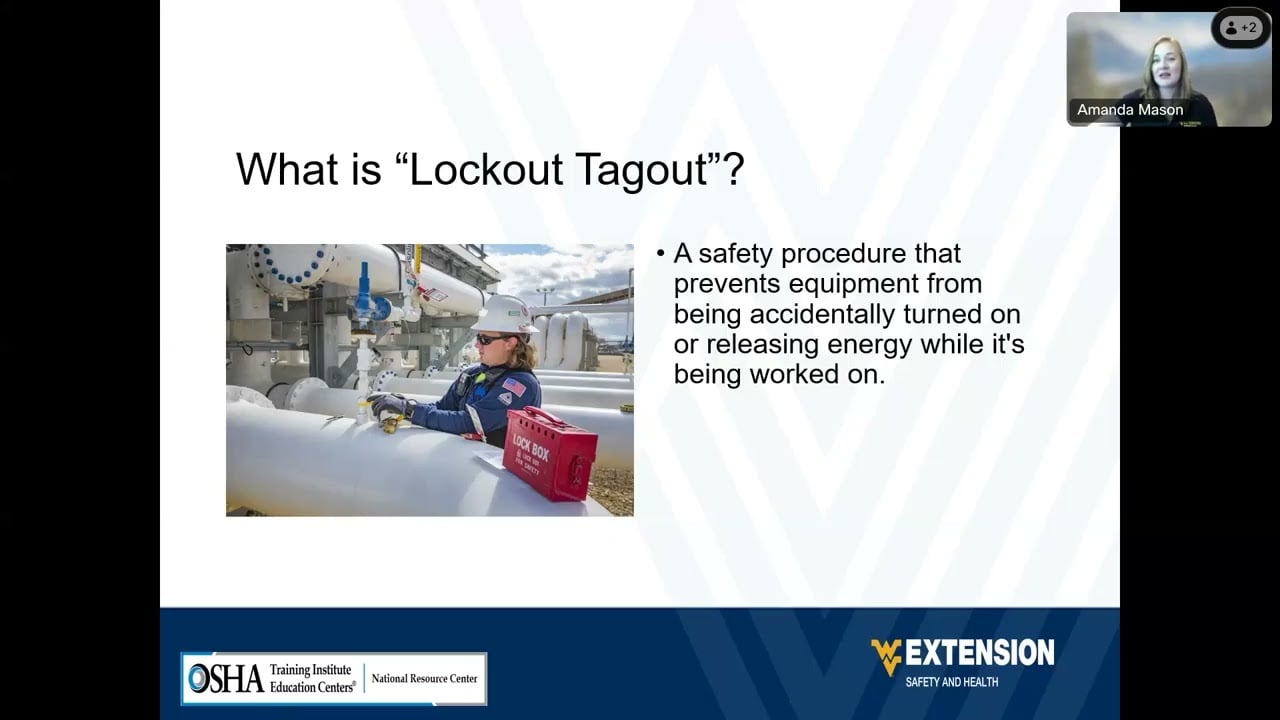
The US Department of Labor video introduces lockout and tagout principles relevant to pump-panel maintenance. It does not demonstrate this cabinet’s wiring or authorize electrical testing. Use it as supporting awareness material alongside the site’s equipment-specific procedure.
Watch on YouTube — USDepartmentofLabor
No. The indicator or its circuit may have failed while other conductors remain energized. Isolation and verification must follow the approved procedure for the actual installation.
First establish its correct specification and investigate why it operated. A recurring operation needs fault correction; a larger fuse is not a repair.
The alarm may use a separate supply or circuit. Verify the actual schematic instead of assuming all door functions share one source.
Documented cause correction and the agreed electrical, control and pumping checks are needed. Restored lamps alone do not establish that the complete pumping duty is available.