A solar pump low flow complaint should be checked against sunlight, actual pumping head and the pump curve before changing inverter settings. A centrifugal pump can rotate while producing too little pressure to deliver water to an elevated tank. Reduced sunlight can therefore mean low flow, intermittent delivery or no delivery, even when the motor appears to run normally. Start with a time-stamped operating record rather than assuming that the inverter is faulty. This guide explains how to separate an expected low-light limitation from a hydraulic restriction, a water-source problem or a drive fault without defeating protection.
A system can have an acceptable midday flow yet fail to fill its storage tank over a day. Another system may deliver little water for a short cloudy period but still meet daily demand. These are different problems. Record both the flow during a defined observation period and the total volume delivered over the day. Include water taken from the tank during that period so consumption is not mistaken for missing production.
Use the same observation point each time. A flow measurement at the pump discharge cannot be compared directly with a reading after irrigation branches have opened. Note which valves and outlets were operating. For a borehole, distinguish the resting water level from the pumping water level. A falling water level changes the lift and can explain declining output even while sunlight improves.
The New Mexico State University solar pumping design manual is useful background for organizing hydraulic and solar inputs. The diagnostic sequence here is a planning framework; it does not replace the specific pump curve or an approved electrical test procedure.
A centrifugal pump must develop enough head to overcome the lift before useful flow reaches the destination. As available solar power falls, the controller may reduce operating speed or stop. Seeing a nonzero frequency on the inverter does not establish that the pump has reached a useful operating point. Motor rotation and water delivery should be logged separately.
Static lift is only part of the requirement. Pipe friction, fittings, filters and the pressure required at the destination also matter. If the receiving tank is higher than shown on the original drawing, the system may need more head than the selected pump can provide during weak sunlight. A larger inverter alone does not correct that mismatch.
The World Bank’s solar pumping technical paper explains the starting threshold and the distinction between static and dynamic head. Its historical equipment examples are not present-day product ratings. No universal irradiance threshold should be copied into an NH133 setting from that document.
| Observed pattern | Evidence to collect | Question to resolve |
|---|---|---|
| Low flow mainly early and late in the day | Time, weather, operating frequency and delivery volume | Does the pump reach useful head only during stronger sunlight? |
| Flow falls after sustained pumping | Pumping water level, elapsed running time and source recovery | Is the water source limiting the duty? |
| Flow stays low in clear midday conditions | Valve positions, filter condition and approved pump curve | Is a restriction or duty mismatch present? |
| Repeated stop and restart | Exact fault text, event times and restart behavior | Is this low solar input, a source protection event or another fault? |
| Tank receives less water than the discharge measurement | Measurement locations, branch consumption and leakage observations | Where is the measured volume going? |
This table organizes observations rather than assigning a cause from one symptom. Hydraulic inputs follow the NMSU and World Bank references above. Electrical measurements require a competent person, suitable instruments and the actual equipment instructions.
Record shading at the time of the complaint. A photograph taken at noon may miss morning shade from trees, a nearby building or the tank itself. Check whether the problem started after vegetation growth, construction or a change in array position. Note heavy surface contamination and damaged modules for qualified inspection, without treating visual appearance as an electrical test.
Do not compare the array’s nameplate wattage with the pump motor rating and conclude that power must be sufficient. Nameplate output describes specified test conditions. Actual available power depends on operating conditions and the complete array configuration. Ask the designer to review the recorded conditions against the original design assumptions.
Keep voltage and current limits separate from energy availability. Adding modules or changing series connections can violate the inverter’s input limits even if the intention is merely to improve cloudy-day output. Any proposed array alteration needs a documented compatibility check, including temperature effects and the exact inverter version. This article does not recommend an oversizing ratio.
Confirm that the intended outlet is available and that valves are in their documented operating positions. Review filter service records and visible pipe leakage. For a surface pump, have qualified personnel investigate suction-side air entry, priming and source conditions according to the pump manual. Avoid running the pump repeatedly merely to obtain another reading when the source may be depleted.
A useful comparison holds the operating configuration constant. If one test uses a short discharge route and another feeds an elevated tank through a long pipe, the difference cannot be attributed solely to sunlight. Mark the configuration on the log, then compare readings taken under similar conditions. Where the system has multiple destinations, treat each destination as a separate duty.
Dry-running protection should remain active. A low-flow complaint is not permission to bypass a level sensor or reduce protective sensitivity. Read the separate solar pump dry-run protection guide when the operating history includes source depletion. Record the protection event before resetting it, because repeated resets can erase the most useful clue.
Start with information available from the normal interface: operating state, displayed frequency, fault history and the exact model identity. Do not infer the cause from a single frequency value. A command, an actual operating value and a protection limit can be different quantities. Identify which value the display represents using the correct manual.
Compare an affected period with a known satisfactory period. Note weather, destination, water level, output and drive state in both records. This gives the supplier a reproducible question: why did this configuration deliver less water under these conditions? It is more useful than asking for a setting that makes the pump run faster.
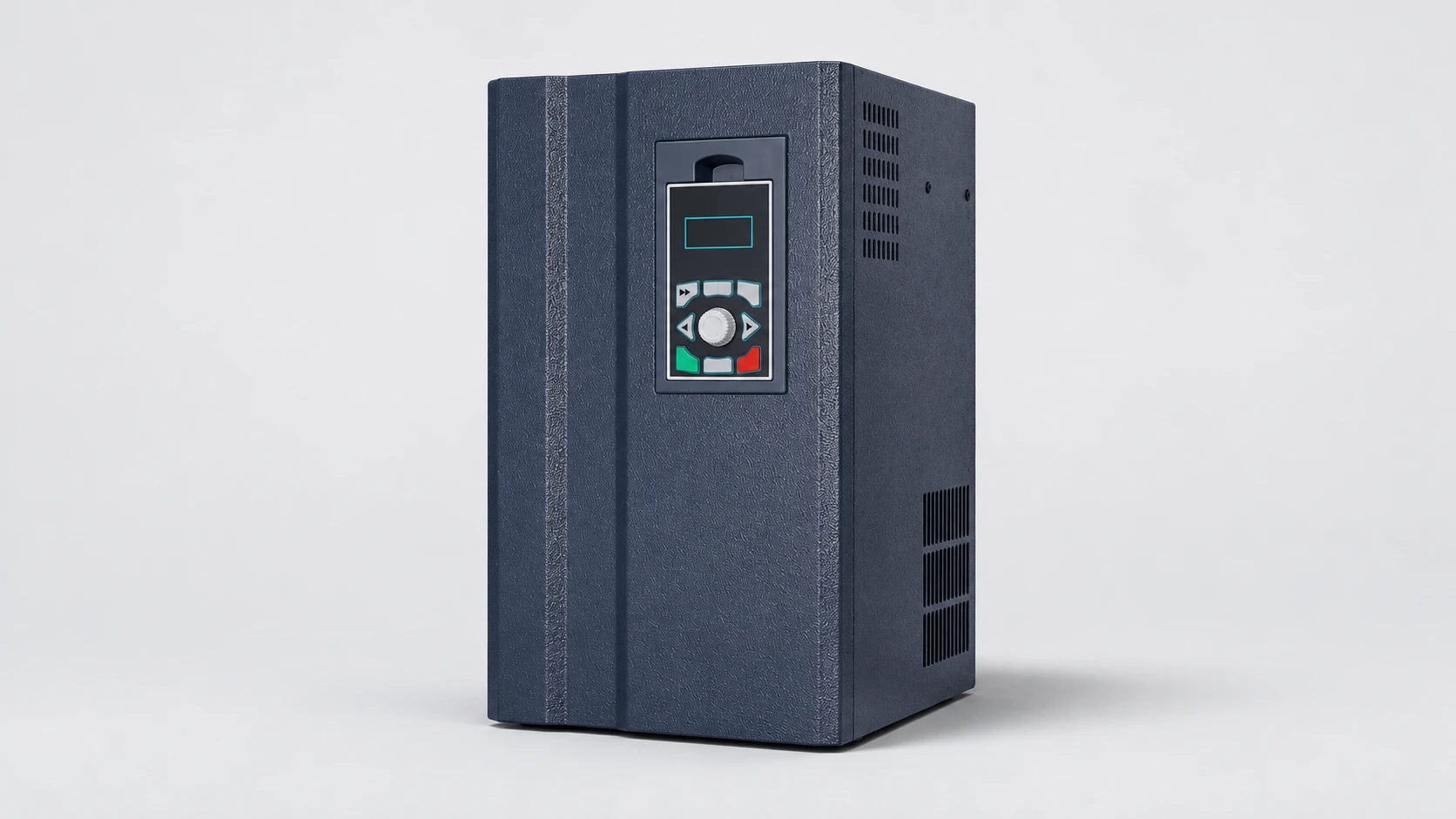
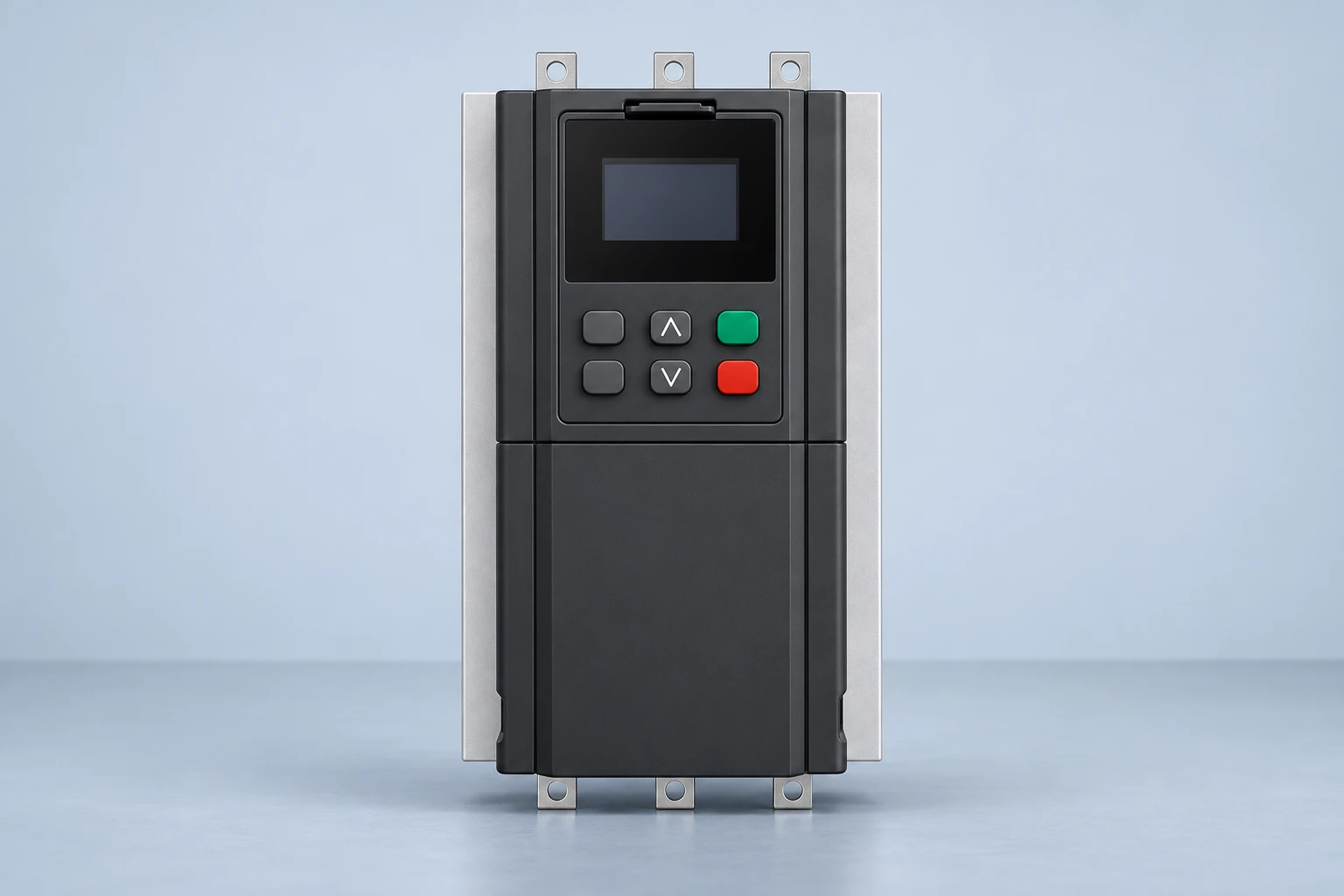
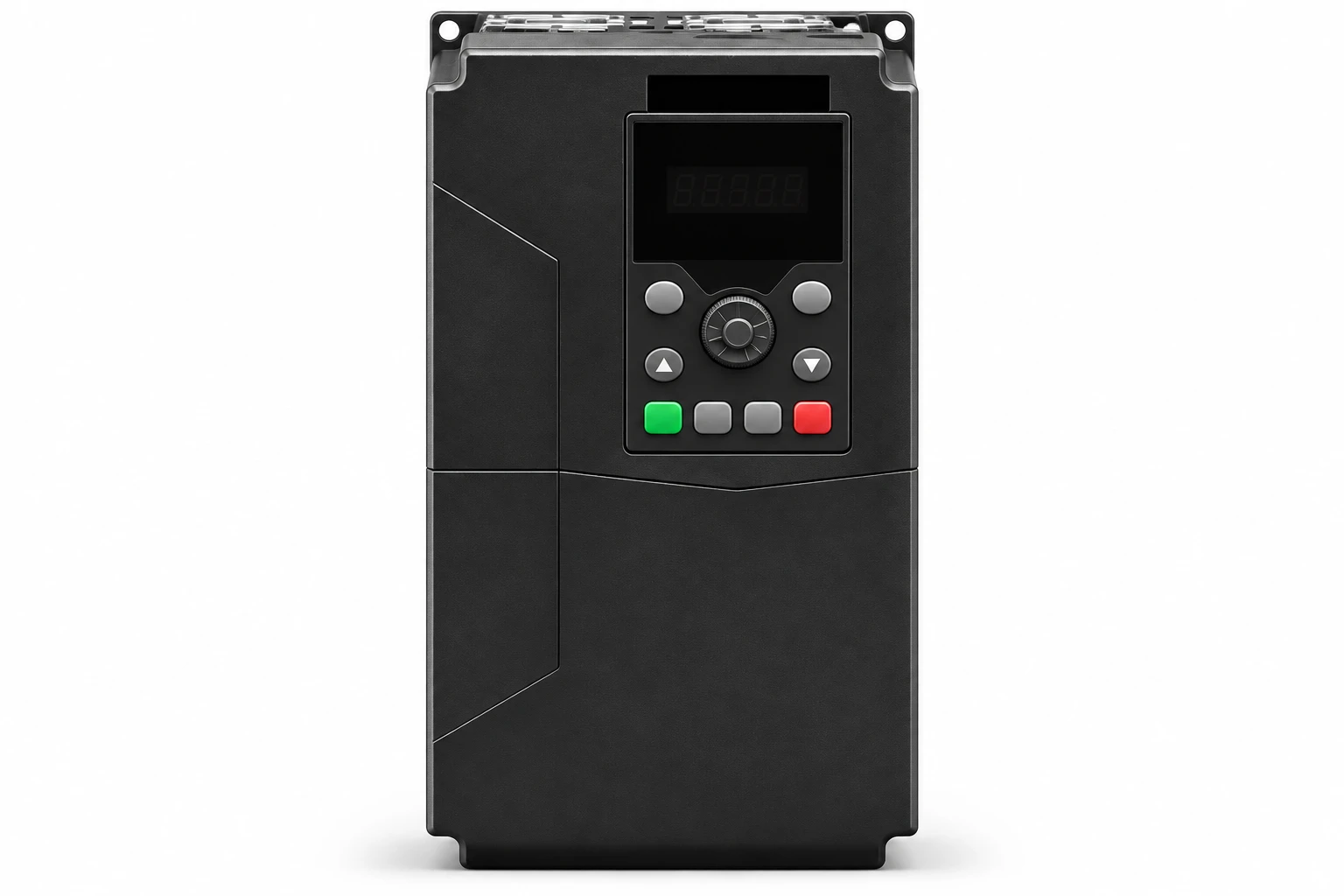
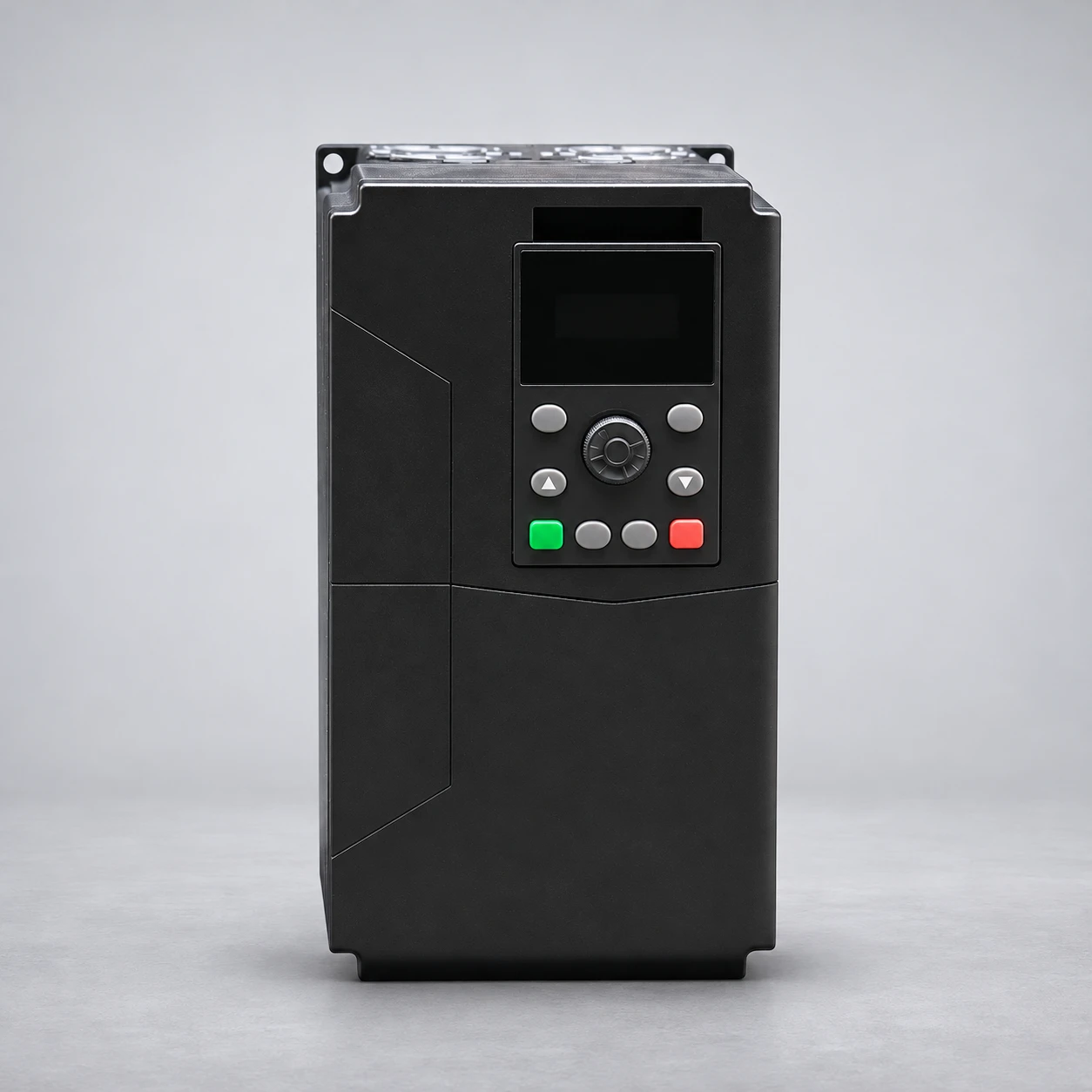
NENA lists the NH133 solar water pump inverter in its product range. Confirm the exact unit’s input limits, motor compatibility, protective functions and documentation before proposing changes. The reference-based illustrations show its exterior only; they do not establish a particular sensor input, weather rating or configured control function.
If the problem is normal low-light operation and daily volume remains adequate, changing settings may offer no practical benefit. If daily volume is inadequate, review the system design, demand and storage together. Water storage can separate the timing of pumping from the timing of use, but tank capacity and water quality requirements need their own project assessment.
If a restriction is confirmed, correct the hydraulic cause under the maintenance procedure and repeat the original comparison. If the actual head exceeds the design duty, obtain a revised pump and system assessment. Where electrical faults are recorded, resolve them through a qualified service process. Do not treat a larger drive as a general repair for every shortage.
For a specification review, use the solar pump inverter sizing article alongside this diagnostic record. The broader VFD pump explanation covers speed control concepts. Neither replaces the manufacturer’s verified water-output data at the required head.
Agree the observation conditions before a service visit: receiving tank level, outlet configuration, source level, measurement location and the period over which volume will be recorded. Note whether the aim is a minimum instantaneous delivery or a daily water total. A test described only as “pump runs normally” cannot resolve a complaint about insufficient water.
Keep the original log after repairs and add the new results beside it. If the weather differs substantially, explain that limitation rather than presenting the two readings as a controlled comparison. A documented improvement in one condition does not establish year-round output. Seasonal demand and local solar records belong in the broader design review.
The university presentation below, hosted by FAO, explains solar pumping in its wider water-supply context. Use it to understand the system relationships; it does not provide NH133 parameter instructions or certify a particular installation.
Watch on YouTube — Food and Agriculture Organization of the United Nations
Yes. Rotation does not prove sufficient discharge head. Check the pump operating point, source condition and delivery route before changing controls.
Not necessarily. It cannot create missing solar energy or correct an unsuitable pump duty. Confirm the limiting factor first.
No. Preserve protection and record its events. Investigation should follow the pump and controller instructions.
Send the exact pump and inverter identities, pump curve, array configuration, actual lift, pipe route, water levels and time-stamped flow and fault records.