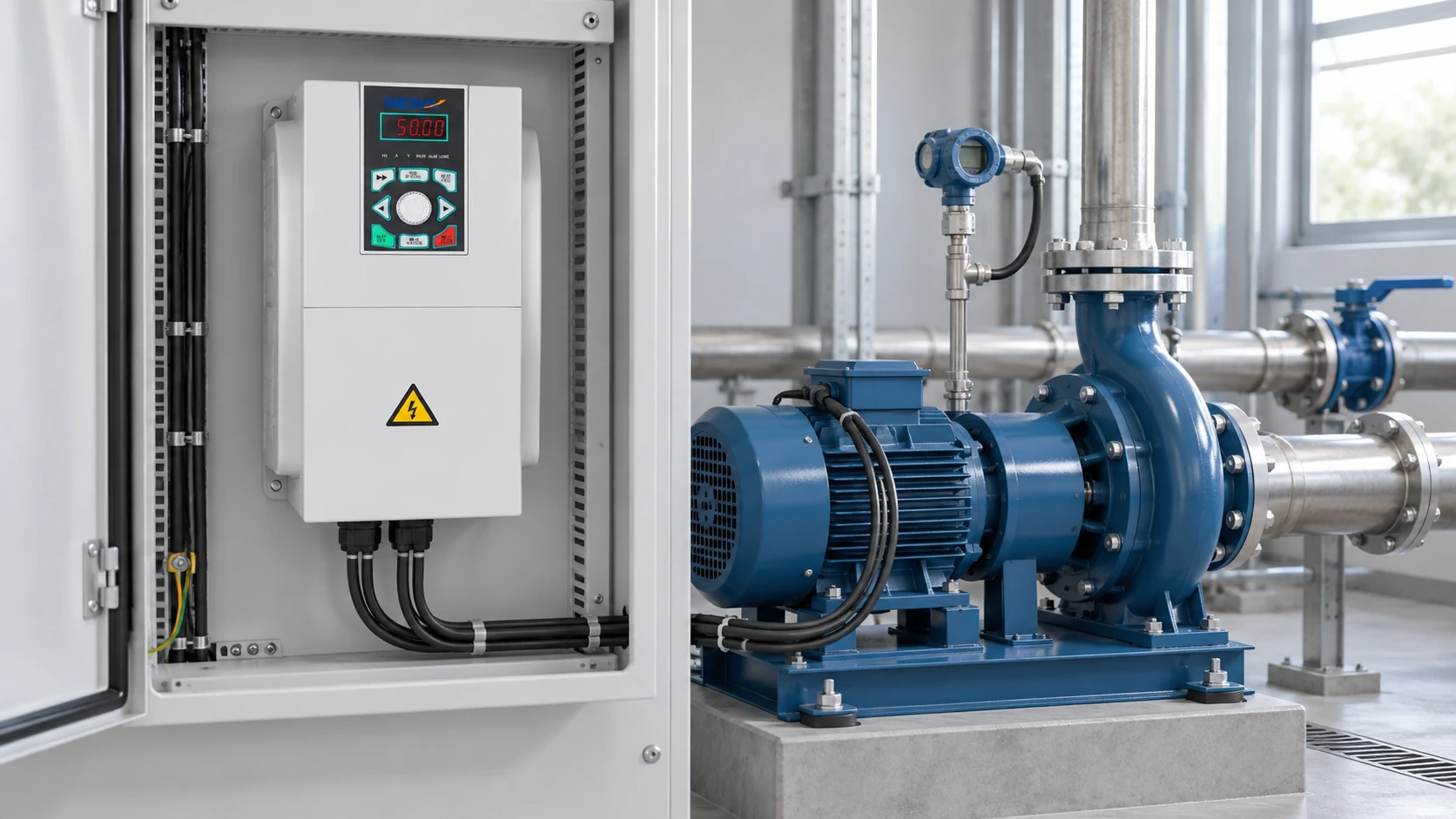
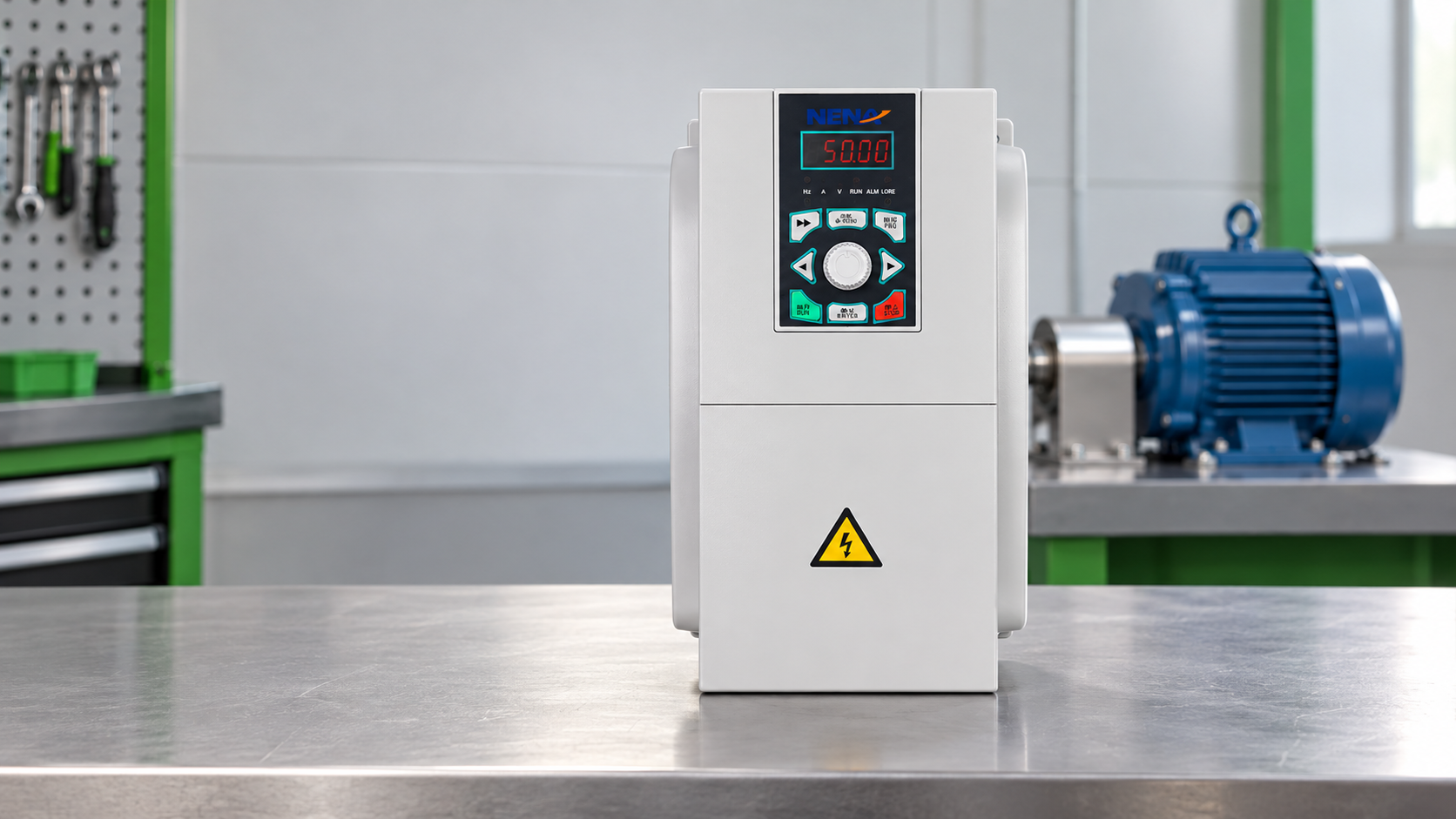
A Monterrey engineer connected 230V single-phase to a three-phase pump drive, which tripped on overcurrent. Motor fine; drive mis-sized by output hp, ignoring single-phase specs and pump start profile. Re-specifying, protection and tuning fixed it — sizing issue, not impossible voltage conversion.
Summary: Only explicitly rated VFDs convert single-phase to three-phase. Output is limited by continuous current; derating, larger protection or minimum motor size may apply. Check supply, motor, load, EMC and IEC/UL specs before ordering; standard three-phase drives aren’t automatically suitable.
A VFD first rectifies the incoming AC to a DC link and then synthesizes three output phases with insulated-gate power switches. A unit designed for single-phase input normally has a rectifier, capacitors, and thermal design specified for the higher input current that a single-phase source can require at the same output power. A three-phase-input model may fault, overheat, or fall outside its warranty if it is connected to two live conductors without an explicit single-phase approval.
In procurement language, a single phase to 3 phase VFD is therefore an input-rated drive and an application decision, not a generic wiring trick.
Check four ratings together: line voltage (for example, 200-240 V), line frequency (commonly 50 or 60 Hz), continuous output current, and overload duration. Motor base frequency and rated current come from the motor nameplate; horsepower is only a screening value. IEC 60034-1 defines motor rating and performance terminology, while IEC 61800-5-1 addresses the drive system’s electrical, thermal, and protective safety. Neither standard removes the need to follow the chosen manufacturer’s input and derating instructions.
The honest sizing question is not “can the drive make three phases?” but “can it deliver the required current and torque without exceeding its thermal limits?” A single-phase input can increase rectifier and DC-link ripple stress. Some manufacturers publish a continuous-current reduction, an input-current multiplier, or a larger frame recommendation; there is no universal derating percentage. Record the exact values in the purchase specification.
For a first shortlist, compare the drive’s approved input configuration with the frequency converter category, then request the model-specific wiring diagram and protection schedule. This is more reliable than inferring suitability from a catalog family name.
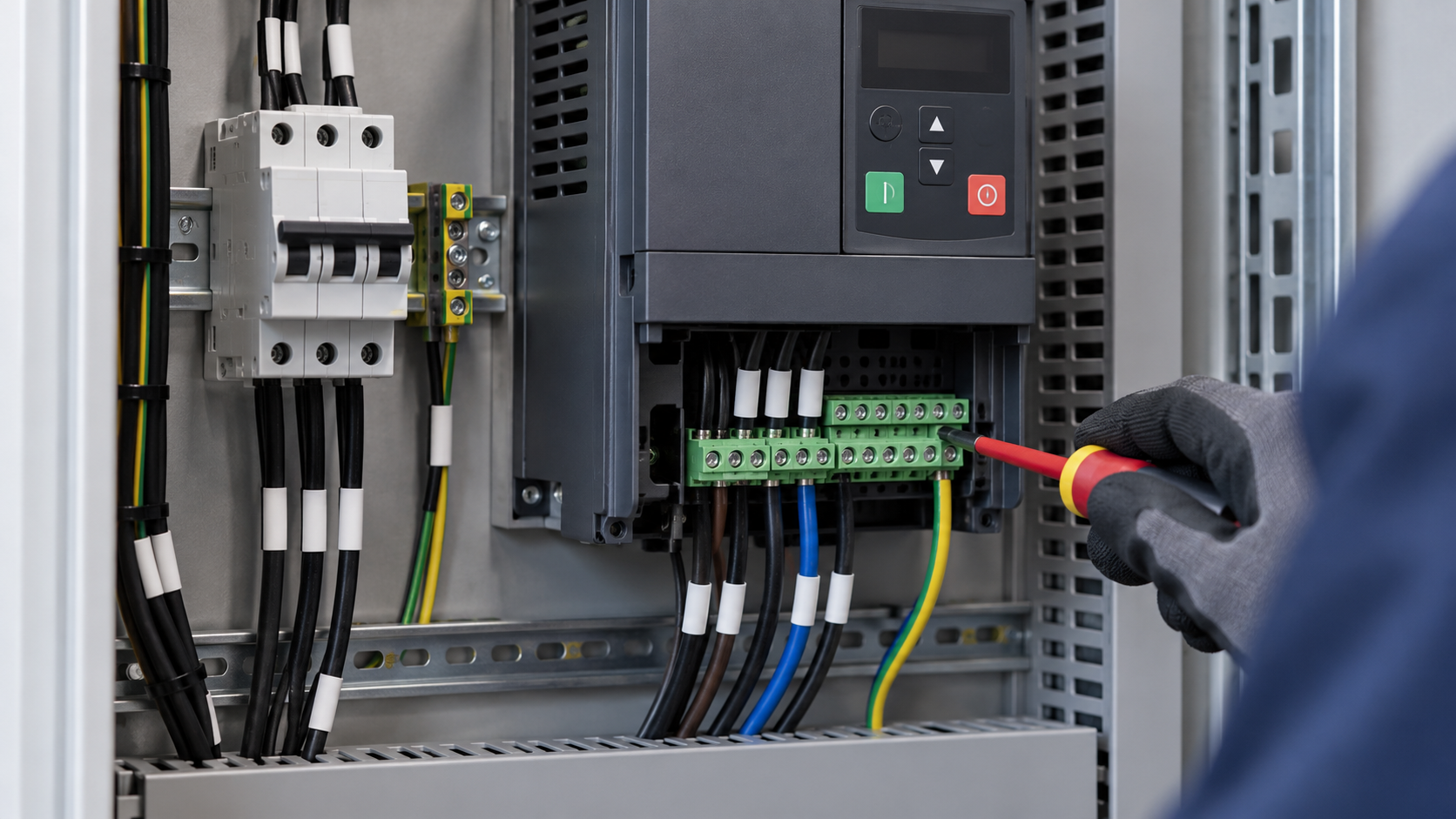
“Phase converter” describes a wider family than VFDs. Rotary converters use a motor-generator arrangement; static converters use capacitors and switching components; VFDs actively control frequency, voltage, acceleration, and often braking. A converter can produce a usable third phase while offering little speed control, whereas a VFD is normally selected when controlled acceleration, variable speed, or electronic protection is part of the process.
A phase converter can be perfectly serviceable for a fixed-speed machine, but its suitability should be demonstrated with phase-balance, starting-current, and loaded-temperature measurements.
Use the phrase single phase to 3 phase converter precisely in a request for quotation. Ask whether the supplier means a VFD, rotary converter, static converter, or a packaged system; otherwise, offers that appear comparable may have different output quality and protection.
Input protection is application-specific. The protective device must coordinate with the drive’s published short-circuit rating, prospective fault current, conductor size, disconnect requirements, and local electrical code. A drive’s internal electronic overload function protects the motor under defined conditions; it does not replace upstream short-circuit protection or a lockable disconnect. If a bypass is requested, the bypass contactors, interlocks, and motor protection must be designed so the drive cannot be connected to an energized output.
Harmonic current, conducted emissions, and cable layout can matter as much as the conversion itself. IEC 61800-3 sets EMC emission and immunity categories for adjustable-speed power drive systems; the installation category, cable length, grounding, filters, and supply impedance determine what measures are needed. A line reactor, DC-link choke, EMC filter, or shield termination may be appropriate, but each adds voltage drop, heat, cost, or leakage current. Verify the manufacturer’s permitted combination rather than adding parts by habit.
For energy decisions, use measured operating points rather than a headline efficiency figure. An illustrative calculation might compare a pump’s measured input power at 100%, 80%, and 60% speed, including drive losses and minimum-flow constraints. Label the result as an estimate until the process and meter data are available. A soft starter may address inrush on a fixed-speed motor, but it does not provide the same continuous speed control as a VFD.
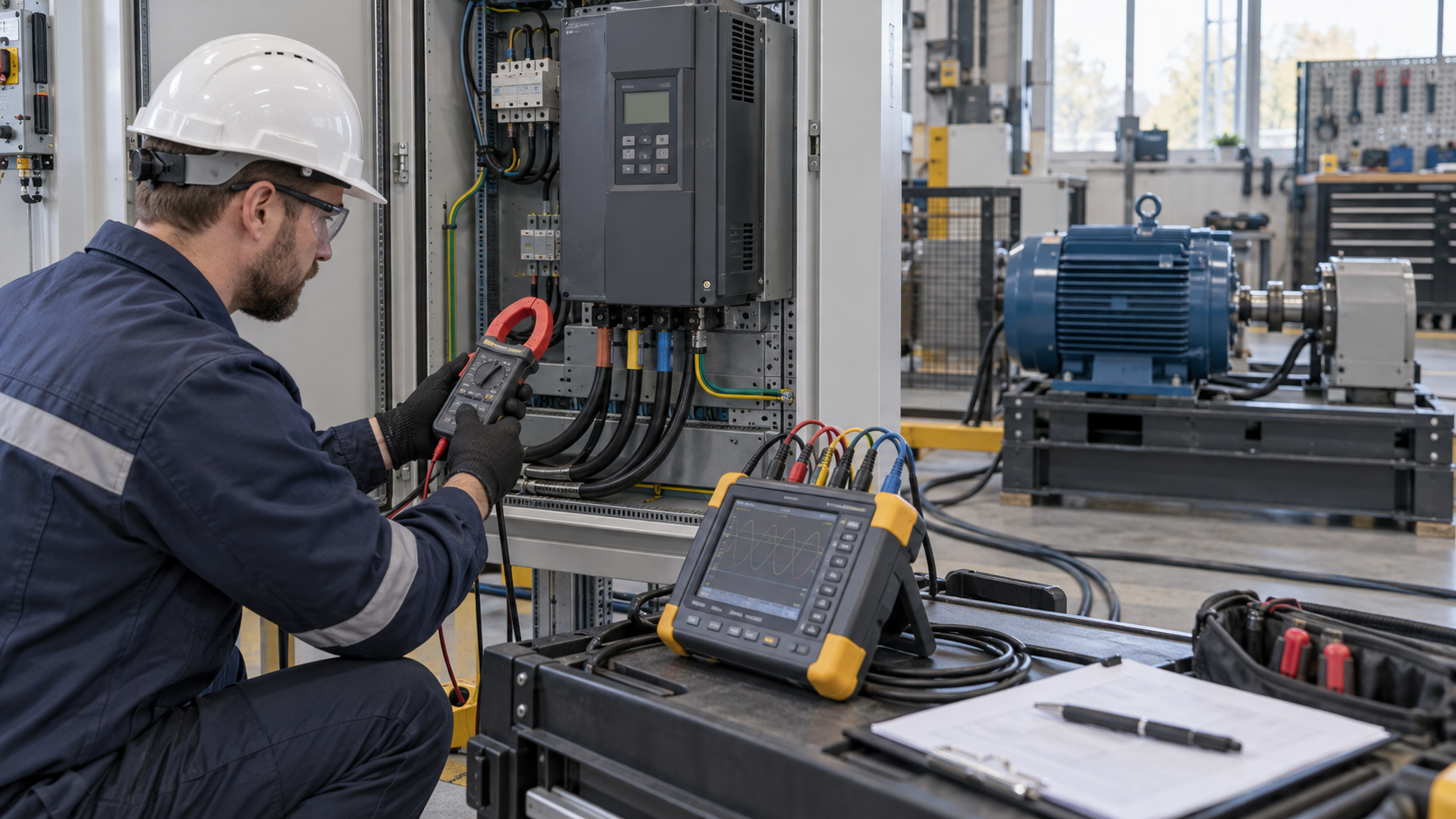
Standards are useful when each one is assigned a clear scope. They are not interchangeable product badges, and a test-method reference is not automatically a certification claim.
| Standard or code | Scope relevant to the project | Procurement consequence |
|---|---|---|
| IEC 61800-5-1 | Electrical, thermal, and protective safety of adjustable-speed electrical power drive systems | Request the applicable declaration, installation instructions, creepage/clearance information, and protective limits for the selected model |
| IEC 61800-3 | EMC emission and immunity requirements for power drive systems | Define the intended environment, cable arrangement, filtering, and verification method before shipment |
| IEC 60034-1 | Ratings and performance of rotating electrical machines | Match motor rated current, voltage, frequency, duty, and temperature rise to the drive settings |
| UL 61800-5-1, where required | North American safety requirements for adjustable-speed electrical power drive systems | Confirm that the exact drive and intended installation have the required listing or evaluation; do not generalize from a product family |
| NFPA 70 (National Electrical Code), where adopted | Installation rules for conductors, overcurrent protection, disconnects, and motor circuits | Have the responsible electrical professional apply the adopted edition and local amendments |
For a multi-load machine or a regulated destination, ask a qualified integrator to review the single line diagram before purchase. XNHANG can be included as a sourcing contact when the request contains the motor data, supply details, duty cycle, and documentation requirements; product suitability should remain tied to the written engineering review. Use the contact us page to send that data rather than requesting a quotation from horsepower alone.
Yes, if the VFD is explicitly rated for the available single-phase input and the motor and load stay within its continuous-current and overload limits. A three-phase-input model is not automatically approved for single-phase operation. Confirm derating, input protection, EMC requirements, and the manufacturer’s wiring instructions before energizing it.
Neither is universally better. VFDs excel at variable speed, controlled ramp/braking and electronic monitoring; phase converters suit fixed-speed machines with different service priorities. Compare load profile, waveform needs, maintenance, installation and total cost, not just device labels.
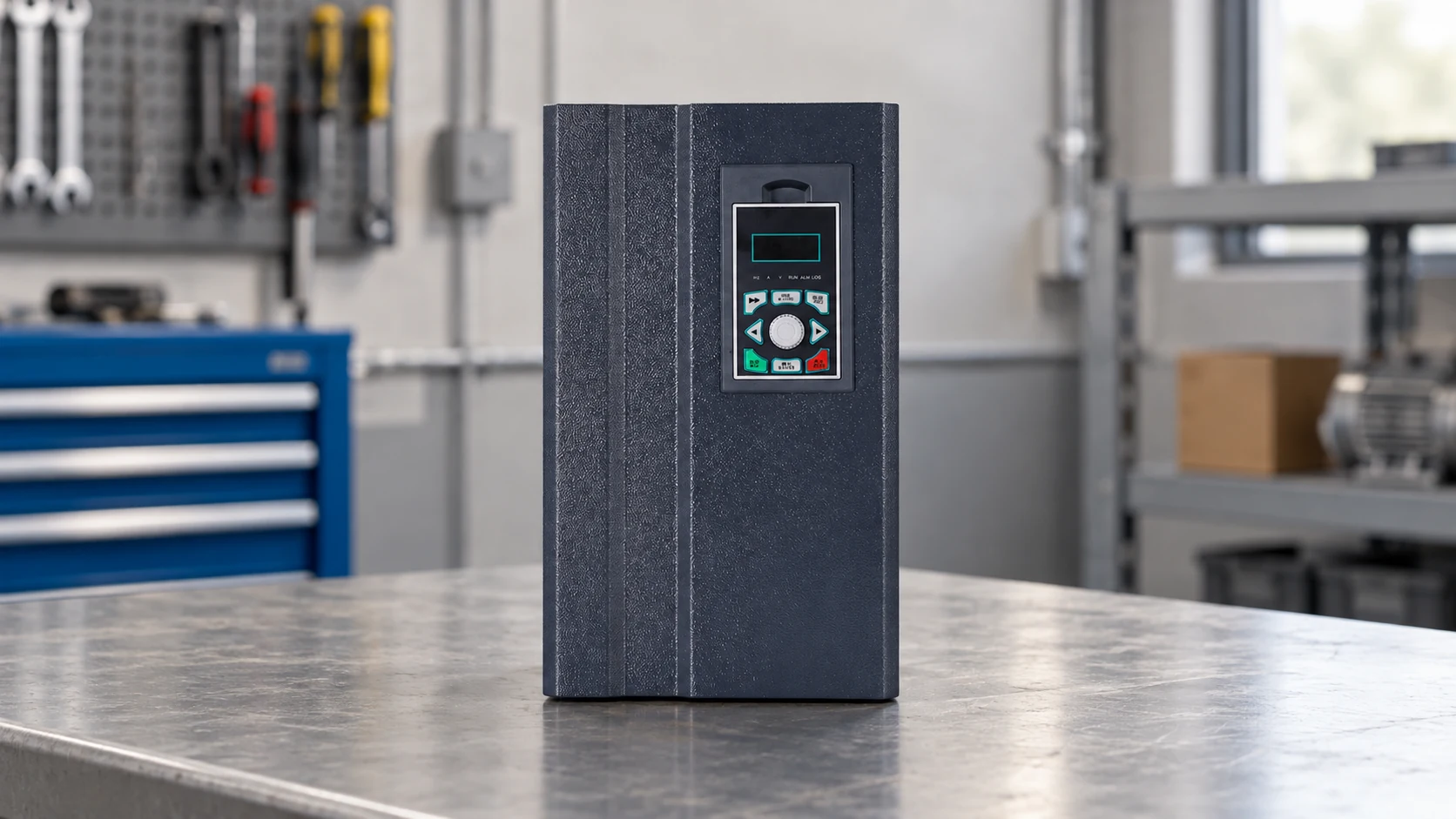
This adjustable-speed drive has single-phase-rated input rectification and thermal design, delivering three-phase output to compatible motors. Output frequency and voltage stay within its operating limits. It has a finite current rating; motor wiring must match the output voltage.
Conversion is possible via a suitable VFD, rotary/static converter or utility upgrade. Selection depends on speed control, starting torque, motor count, waveform, protection, EMC and local codes. Gather supply and motor data first, then review and test under load.
The reliable conversion is the one that survives the nameplate check, the loaded test, and the compliance review. When the supply, motor, process, and documentation are specified together, a single phase to 3 phase VFD becomes an engineered solution rather than a guess based on horsepower.