A soft starter bypass contactor failure can involve a missing close command, unsuitable coil supply, a mechanical defect, damaged power contacts or incorrect feedback. A fault reported at the end of acceleration does not identify which of these failed. Start by preserving the event record and matching the starter, motor and cabinet drawings. Then have qualified personnel assess the command, actuation and power paths separately under the equipment-specific instructions. This approach helps a buyer or maintenance manager request a useful diagnosis before ordering a replacement. It also avoids assuming that a click, a run lamp or an auxiliary contact proves normal current transfer.
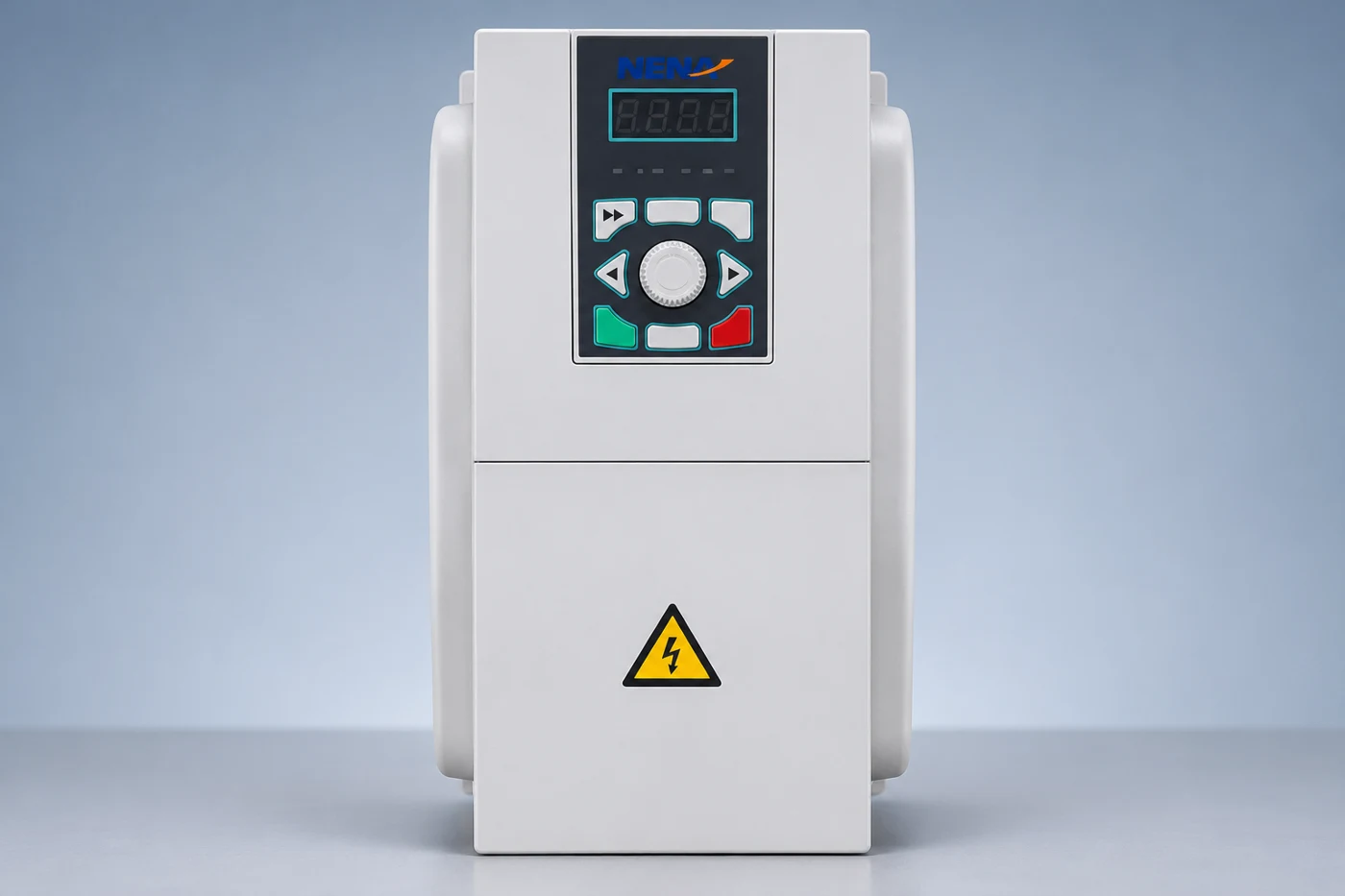
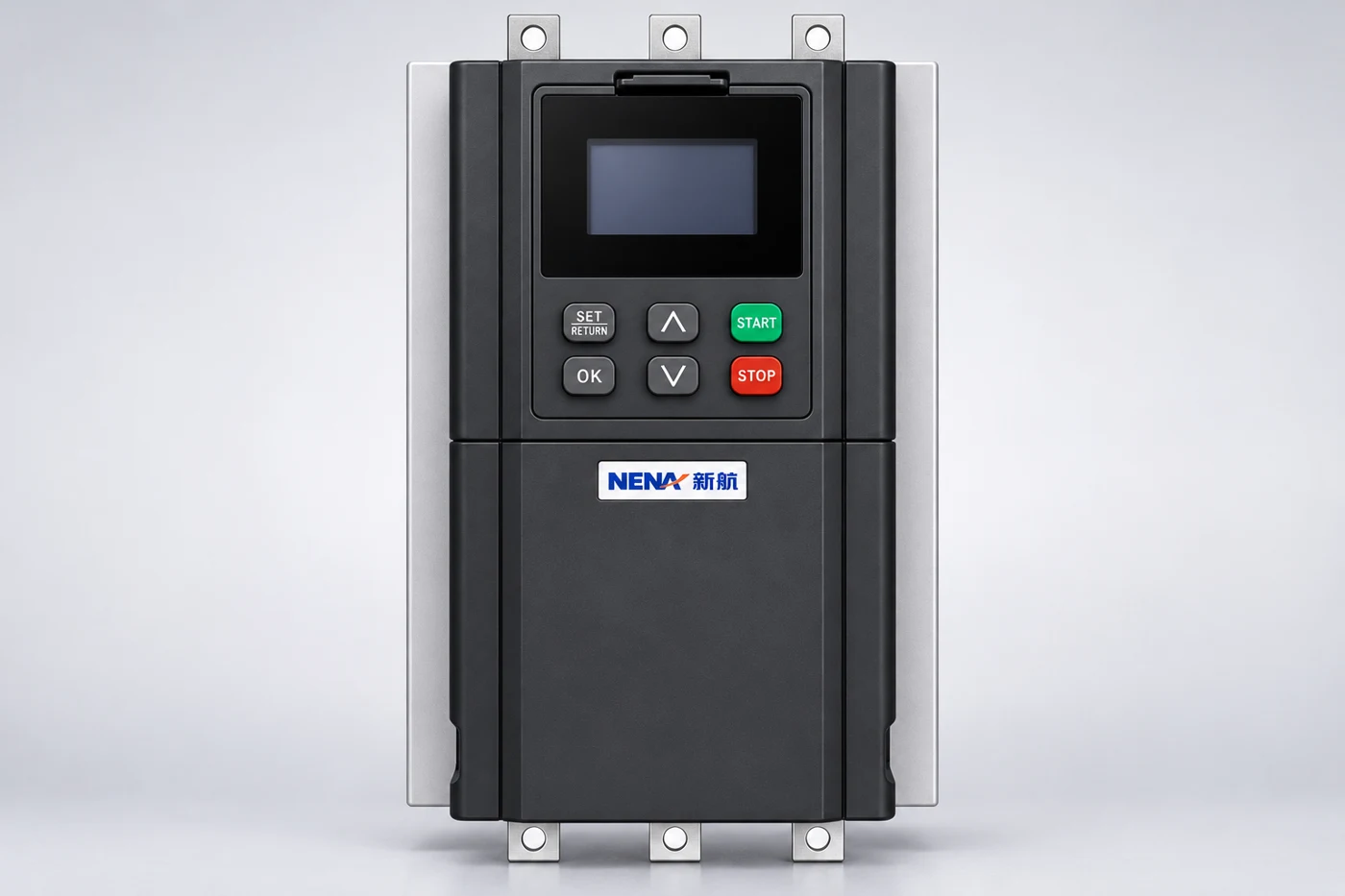
In the arrangement described on NENA’s built-in bypass soft starter product page, the bypass provides the running current path after the starting sequence. Confirm the exact ordered model and its manual before interpreting an indication. An internal bypass and an external contactor assembly have different service boundaries. A cabinet drawing may also contain a separate line contactor, so a reference such as “KM1 failed” is useful only when everyone is reading the same drawing.
Ask for a marked component schedule identifying the bypass device, the source of its operating command and the feedback used by the controller. If the bypass is internal, request the manufacturer’s diagnostic and service route rather than assuming its coil or contacts are user-accessible. Keep photographs limited to safely available nameplates and external indications. Opening a product to identify components requires the appropriate authorization and safe-work arrangements.
Write a short timeline: start request accepted, acceleration observed, bypass indication appeared or remained absent, and the exact fault displayed. Include whether the motor reached its expected operating condition and whether the event happened on a cold start or after earlier starts. Use timestamps from available logs where possible. An operator’s observation is valuable, but distinguish it from a measured speed or a controller’s recorded state.
Request the current parameter export and the last known working version. Add recent changes to the motor, mechanical load, supply, control circuit and starter. Do not change several parameters and then try to reconstruct the original condition. The general soft starter troubleshooting guide helps organize wider faults; this article concentrates on the narrower handover between the starting state and the bypass running path.
For an intermittent incident, record what is missing as carefully as what is known. If there is no coil-supply record, label it unknown. If a run lamp is driven by a programmable controller, identify that source. These small distinctions prevent a report from turning assumptions into evidence and help the service engineer choose the next approved check.
Indian Railways’ CAMTECH motor starter booklet identifies coil or wiring faults, control timing problems and insufficient operating voltage as possible reasons a soft starter bypass contactor does not engage. It also separates the power and control circuits. Use that distinction to frame the investigation; the booklet is general guidance, not a terminal-level procedure for a NENA model.
For the command path, ask what conditions must be satisfied before the controller requests bypass. For actuation, ask whether the installed coil matches the approved control supply and whether its behavior has been assessed by an authorized technician. For the power path, request the condition of the main poles and the approved evidence of current transfer. For feedback, identify the signal’s origin and intended meaning. Each answer should cite the actual drawing or service instruction.
The following table is an original fault-review worksheet. It suggests questions for the responsible service team rather than proving a diagnosis from a single symptom.
| Recorded symptom | Question for the service team | Evidence to keep |
|---|---|---|
| No bypass command recorded | Was the controller’s transition condition reached? | State log, settings and application record |
| Command present, no actuation confirmed | Does the authorized assessment identify a supply, coil or mechanism issue? | Approved test report and component identification |
| Actuation reported, abnormal running remains | Has the main current path been evaluated separately? | Power-circuit findings and corrective action |
| Feedback disagrees with expected state | What does the feedback actually monitor? | Signal mapping and controller event sequence |
| Failure occurs only after repeated starts | Does the application match the documented duty? | Start history, conditions and manufacturer review |
If the motor never reaches the condition required for transition, the absence of bypass may be a consequence. Ask the service engineer to review acceleration against the intended load and the starter’s documented logic. A longer ramp is not automatically the answer, and a shorter ramp is not proof that the mechanical load is acceptable. Keep the reasoning tied to the application and the exact equipment instructions.
For example, imagine an operator reports “bypass did not close” after a pump modification. The investigation should preserve the previous and current operating records, identify the modification and determine whether transition was requested. Ordering a contactor before establishing that distinction may leave the original problem unresolved. This is a hypothetical review example, not a NENA customer case or a prescribed setting change.
The article on soft starter starts per hour addresses duty and thermal recovery. Use that information when the event depends on the start history. Record the complete sequence rather than only the final failed attempt, because the earlier attempts are part of the application conditions the manufacturer needs to evaluate.
A “bypass on” indication can represent an output command, a feedback input or a software state. Ask the designer to state which interpretation applies. A report should not merge these meanings into one checkbox. Likewise, an audible mechanical movement is an observation of movement, not a documented assessment of all main poles. The diagnostic question is whether the evidence supports the particular claim being made.
When the problem includes a phase-related alarm, keep the full code and its timing. The phase loss fault checklist covers that separate symptom. It can support the service request without making every phase alarm a bypass diagnosis. A shared event time can establish correlation; the technician still needs to determine the cause and any affected components.
HSE’s electrical safe working guidance emphasizes planning, competent personnel and safe working arrangements. Internal inspection and any electrical measurement require the site’s approved process and suitable equipment. This article does not instruct a reader to probe an energized coil, force a contactor closed or defeat a protection circuit. The machine owner and authorized service team must control the work.
From a management perspective, define the requested outcome before the visit: establish the failed function, identify the affected part, document the cause where possible and state the return-to-service conditions. This gives the technician room to choose a safe, model-appropriate diagnostic method. It also prevents a purchase request from silently turning into an instruction to keep operating through an unresolved fault.
Once a component defect is confirmed, ask for the approved part reference and its service scope. For an external contactor, the reviewer should confirm its electrical and mechanical suitability in the specific assembly, including coil identity, main-pole duty and auxiliary arrangement. A matching current figure or physical size is not a complete substitution review. For an internal assembly, confirm whether the manufacturer approves a module repair, factory service or complete starter replacement.
Request a written explanation of which records change after replacement. The parts list, wiring drawing, configuration backup and service report should describe the same final installation. If the original part is obsolete, ask the supplier to identify differences explicitly. A substitution should not arrive as an unexplained part number that the next maintenance team cannot trace.
A useful closure report describes the original symptom, the evidence supporting the diagnosis, the repair and the checks performed under the approved acceptance plan. Include the relevant starting and running conditions. If the problem was intermittent and the cause remains uncertain, retain that uncertainty and define the agreed observation or escalation plan. A single successful start does not establish that every possible operating condition has been evaluated.
For a NENA inquiry, provide the starter and motor identification, application, supply arrangement, drawing revision, complete fault code, settings and the preserved event timeline. Ask which additional evidence the manufacturer requires before recommending parts. That package is more useful than requesting a generic bypass contactor by motor kilowatts alone, and it helps separate a product defect from a control or application issue.
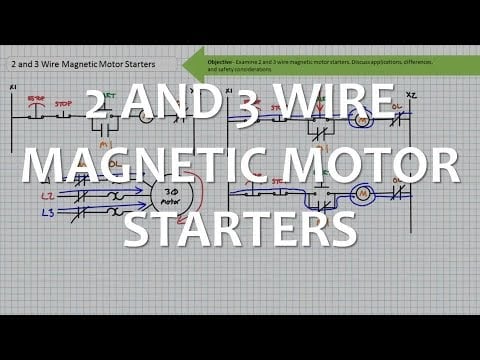
Jim Pytel’s lecture introduces two-wire and three-wire magnetic starter control. It supports the distinction between a control command and power switching discussed here. It is educational background and does not show the internal service procedure for this soft starter.
No. Preserve the event record and have the authorized service team distinguish the command, actuation, power contacts and feedback before choosing a repair.
A click confirms only an observed sound. The service report must explain how the required switching function was assessed under the approved equipment-specific method.
Do not force operation or defeat the control and protection arrangement. Refer the fault to the responsible service team and follow the machine owner’s safe-work process.
Send equipment identification, the application and drawings, complete fault code, configuration backup, start history, recent changes and the timeline around the expected bypass transition.