A soft starter is usually worth evaluating when a motor runs at one normal speed and the main problem occurs during starting or stopping. A variable frequency drive (VFD) is the appropriate technology to evaluate when the process needs adjustable motor speed during operation. The soft starter vs VFD decision therefore starts with the machine’s operating cycle, not with the motor’s kilowatt rating. Both options still need enough starting torque, suitable protection and a compatible installation. This guide compares conventional industrial three-phase induction-motor applications; specialist motors and packaged equipment require their manufacturer’s approval.
Write down what must change. Is a conveyor starting too abruptly, or must its running speed follow production demand? Does a pump always deliver the same required duty, or does the plant throttle flow for much of the shift? Those are different engineering tasks, even when the motors have identical nameplates.
A conventional soft starter adjusts the voltage applied during acceleration, without producing a variable-frequency supply for continuous speed regulation. A VFD changes output frequency and voltage to operate the motor across an approved speed range. IEEE’s soft-starter overview explains this distinction. For the underlying starter terminology, see our guide to motor soft starters.
Do not select a drive merely because it offers more settings. Equally, do not specify a soft starter for a process that depends on sustained low-speed operation. Define the required result before comparing products.
| Requirement | Soft starter | VFD |
|---|---|---|
| Normal running speed | Motor runs at its normal line-frequency operating speed after starting | Can vary running speed within approved motor and machine limits |
| Starting behavior | Voltage/current control must still produce sufficient accelerating torque | Frequency and voltage control must suit the load and drive overload capability |
| Bypass arrangement | May use built-in or external bypass according to the selected design | A separate engineered bypass changes the operating mode to line operation |
| Demand that changes during a shift | Does not provide continuous frequency-based speed adjustment | Can support speed-based process control when the system permits it |
| Engineering checks | Start duration, current, hot restarts, bypass and protection coordination | Output current, overload, speed range, cooling, motor cable and braking requirements |
| Commercial comparison | Quote the complete starter circuit and required starting duty | Quote the complete drive system, including necessary accessories and commissioning |
The control distinction above follows IEEE’s explanation. The remaining rows are an application-review checklist, not a claim that every model has identical functions. Actual ratings, protective-device combinations and installation conditions must come from the selected manufacturer’s documentation.
Consider a machine that starts, reaches its normal operating speed and then performs essentially the same duty until it stops. If direct starting creates unacceptable mechanical shock or a supply disturbance, a suitably selected soft starter may address the problem without adding continuous speed control.
Examples worth investigating include a fixed-duty fan, an unloaded-start compressor or a conveyor whose normal production speed is constant. These examples do not establish suitability by themselves. A loaded conveyor can need substantial breakaway torque, while a compressor can have restrictions on restart pressure and minimum off-time.
Review the worst starting condition, not only an easy demonstration with an empty machine. Ask whether the motor starts cold or hot, whether material remains in the process and how many starts occur during the busiest hour. A starter that completes one cold start may not have the thermal capacity for repeated hot starts.
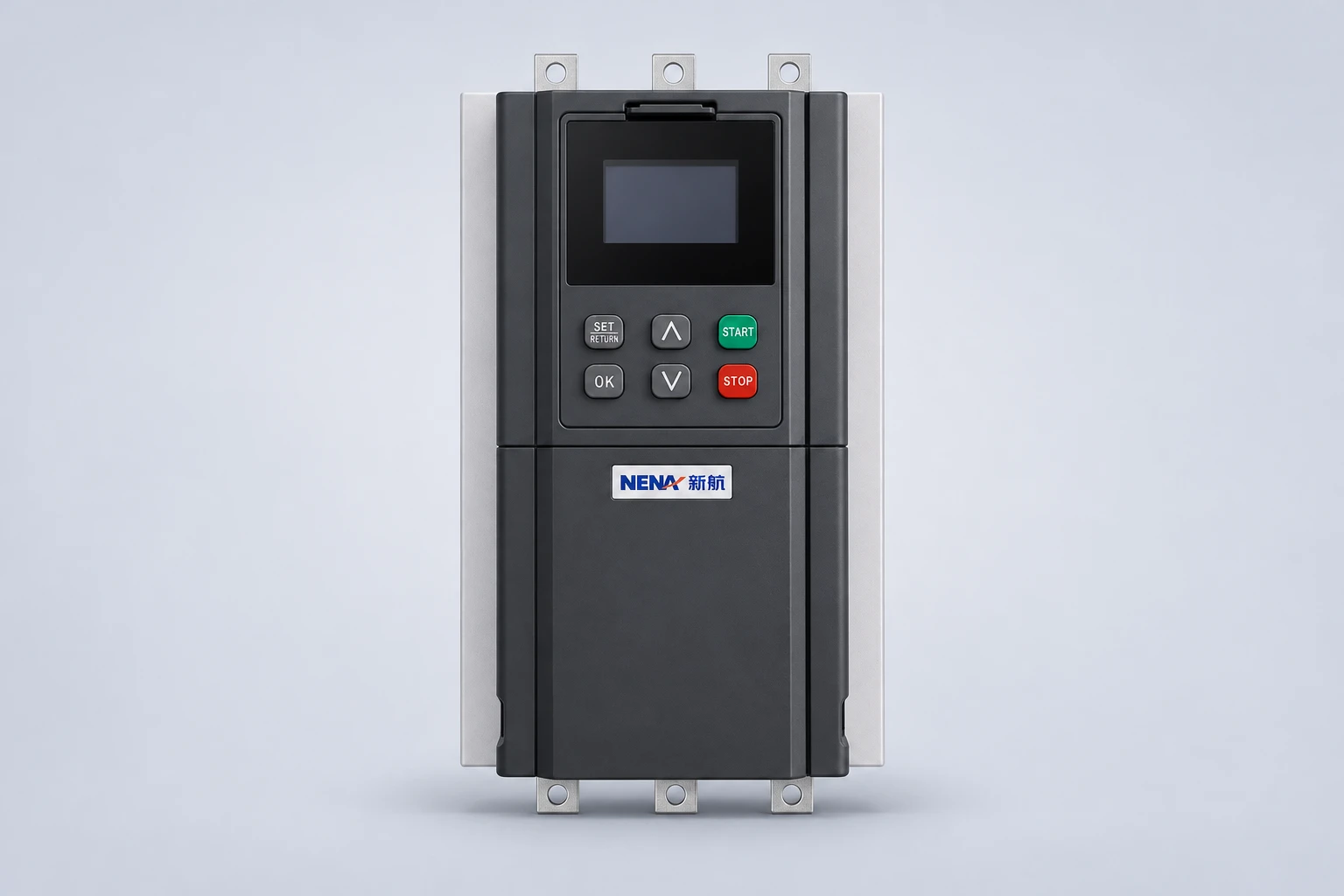
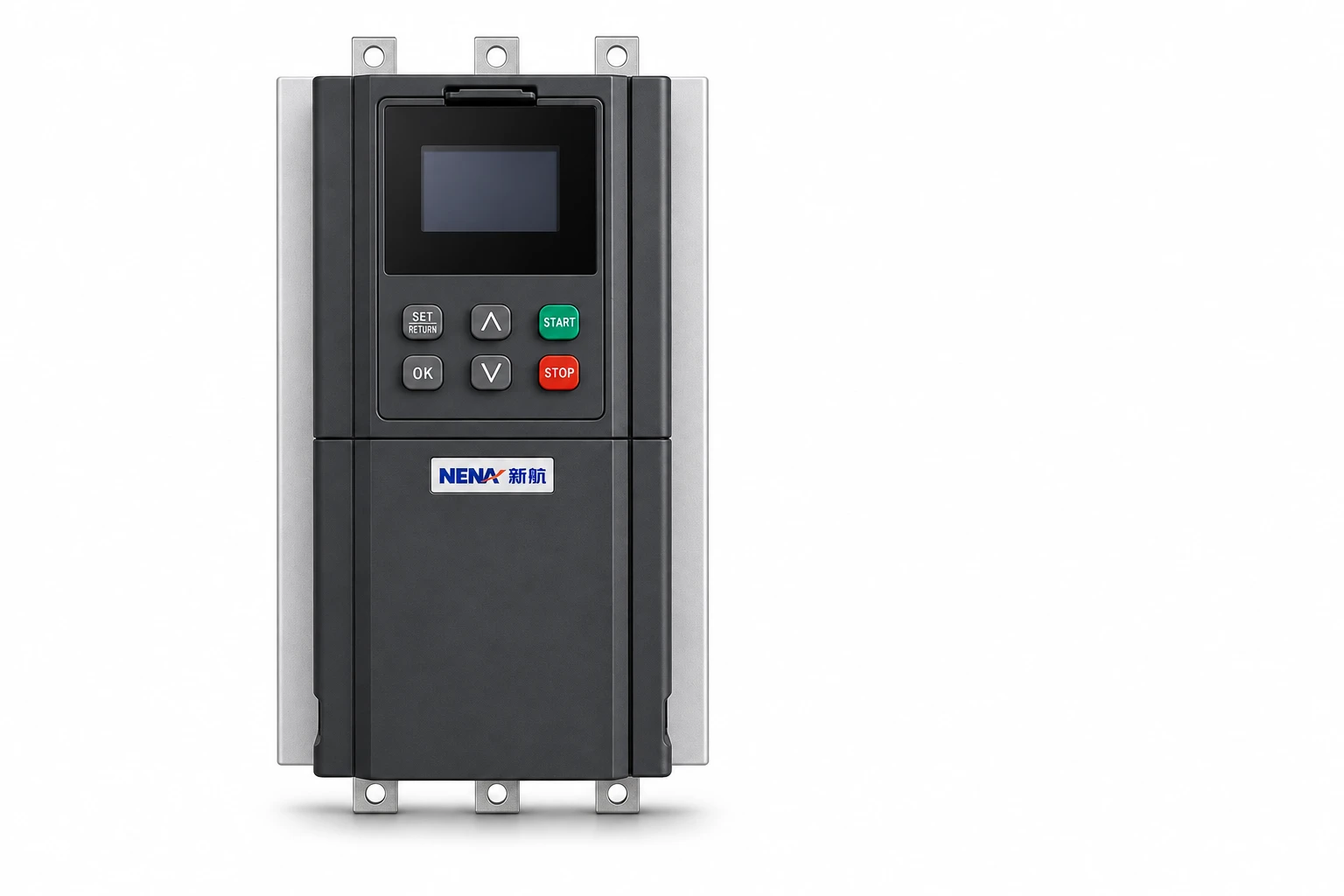
For a product reference, NENA’s built-in bypass soft starter shows one available equipment arrangement. Its photograph identifies the product family; confirm the exact model’s current rating, start-duty capability and bypass provisions before specifying it.
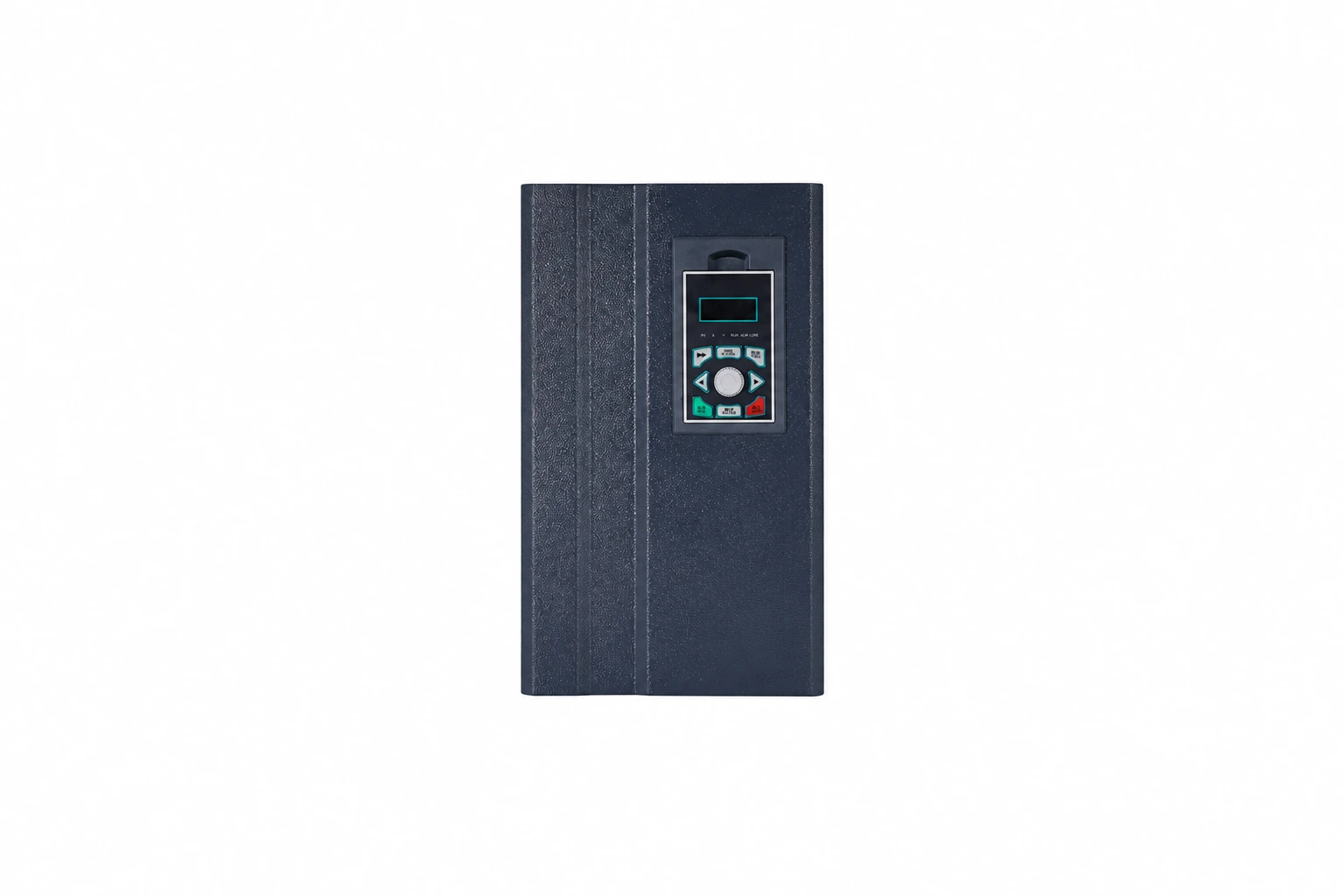
A VFD becomes a stronger candidate when the machine needs different running speeds, controlled changes between production rates or feedback-based regulation. Examples include a fan following ventilation demand, a pump responding to a permitted pressure-control range or a conveyor coordinating with another production stage.
The speed range must be acceptable to the entire machine. Check the motor’s cooling at low speed, the driven equipment’s operating limits and any resonance or lubrication restrictions. A drive capable of commanding a frequency does not prove the motor can carry the required load there continuously.
For a centrifugal pump, ask how flow is controlled today and how often demand falls below design duty. A VFD may reduce wasted energy where speed reduction replaces throttling, but it cannot promise savings simply by being installed. Static head, required pressure, operating hours and the actual duty profile affect the result.
Natural Resources Canada’s motor reference guide discusses variable-speed applications, motor cooling and installation considerations. Use that system perspective rather than applying a generic energy-saving percentage to every machine.
A lower starting-current target is useful only if the motor still accelerates the load. Reducing voltage also affects available induction-motor torque. An aggressive current limit can leave the motor accelerating slowly or failing to reach operating speed; simply increasing the time allowed does not create the missing torque.
Request the motor and load torque-speed information where the application demands it. Identify breakaway torque, load inertia, allowable acceleration time and supply-voltage behavior. Then compare these requirements with the starter’s duty limits or the drive’s current and overload capability.
For a VFD, avoid assuming that a matching power label guarantees the required overload performance. The quotation should identify the applicable duty rating and any derating conditions. For either technology, acceptance should include a successful start under an agreed representative load, with the relevant electrical and operating observations recorded.
A bypass contactor in a soft-starter arrangement can carry running current after acceleration. Confirm which protective functions remain active in that state and how the circuit responds to a fault. Built-in and external arrangements require their own approved diagrams and component coordination.
A VFD maintenance or service bypass has a different consequence: the motor may run directly from the supply at normal line-frequency speed. That can be unsuitable for a process designed around reduced-speed operation. Any bypass sequence, interlocking and permitted operating mode must be engineered for the machine.
Also define what “controlled stop” means. A voltage ramp-down from a soft starter is not equivalent to active braking or holding a load. A VFD’s deceleration capability depends on the load, DC-bus energy management and any specified braking equipment. Neither device should be treated as a mechanical holding brake merely because it has a stop command.
Ask suppliers to price the same scope: equipment, enclosure, cooling, protective devices, control interfaces, wiring accessories, commissioning and required documentation. A bare-device price compared with a complete panel price does not establish which technology is economical.
Include maintenance access, spare-parts strategy and the cost of an interrupted process. For the drive option, identify whether output filtering or other compatibility measures are required. For the starter option, include the starting duty and bypass arrangement rather than assuming these are incidental details.
The U.S. Department of Energy’s motor-system guidebook recommends assessing the motor, driven equipment and operating needs together. Build the financial comparison from measured run hours and an agreed baseline. Separate a reduction in the starting peak from a reduction in energy used throughout the operating shift.
Electrical checks and modifications require qualified personnel. A keypad stop is not energy isolation. Follow the site-specific procedure for isolation, stored energy and verification before service, as explained in CCOHS guidance on lockout/tag out.
If the real choice also includes other reduced-voltage starting methods, review our separate comparisons of soft starter versus star-delta starting and soft starter versus autotransformer starting. Those methods have different motor-connection and torque implications.
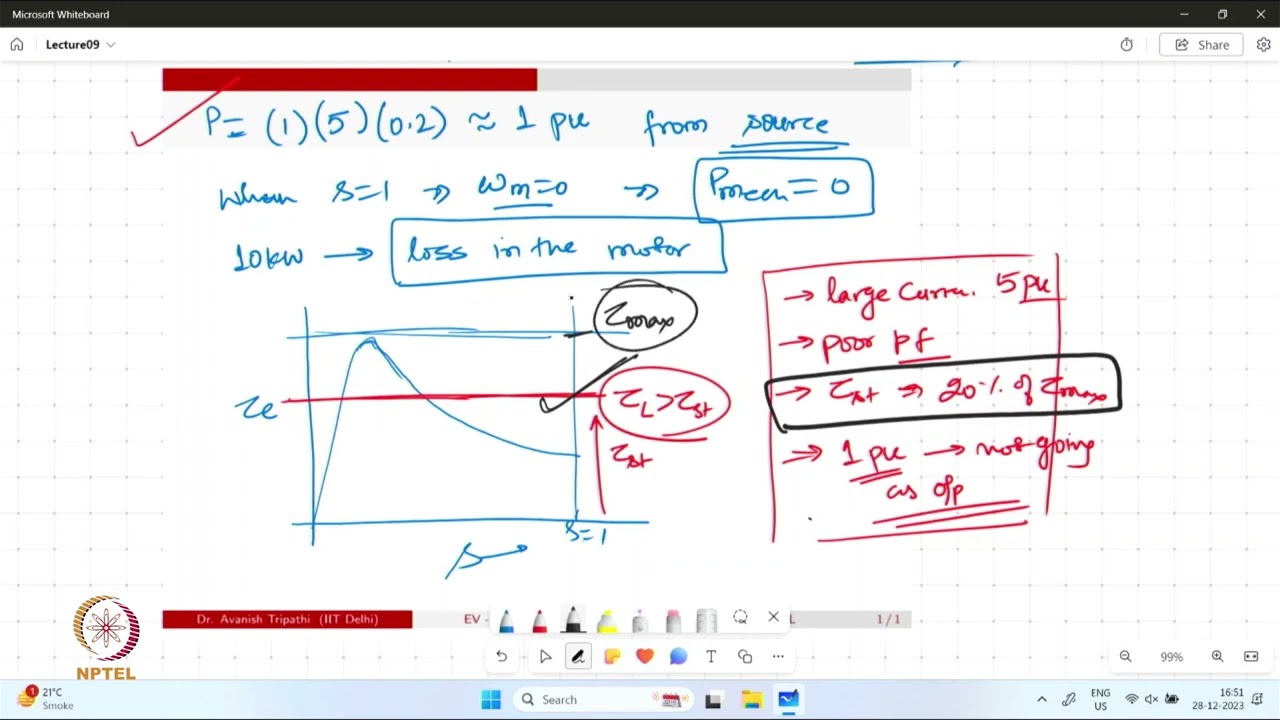
This NPTEL IIT Delhi lecture explains induction-motor starting and speed control. It provides educational background, not a wiring instruction or approval for any particular NENA model.
Watch on YouTube — NPTEL IIT Delhi
A conventional soft starter does not provide continuous variable-frequency speed control. It manages the starting or stopping interval while normal running remains at supply frequency. If the process needs sustained adjustable speed, evaluate a compatible VFD system.
It may perform the starting function, but replacement requires a full application review. Verify motor compatibility, output current, overload duty, controls, protection, cable requirements and stopping behavior. It is not automatically a direct exchange of devices.
That depends on the operating duty. A suitable VFD can reduce energy consumption where approved speed reduction matches lower process demand. A soft starter mainly addresses starting behavior. Compare measured operating profiles rather than assuming either option guarantees a saving.
No. Confirm voltage, motor current, load requirements, starting duty, environment and installation conditions. A power rating is a starting reference, while the exact model selection must satisfy the complete application.