When Li Jun, a Suzhou maintenance supervisor, reset a packaging line drive after a morning overcurrent trip, the motor ran for six seconds then stalled. He switched to a spare load yet the fault recurred during ramp-up. A technician cross-checked the drive event log, thermography and motor insulation test. The root cause was not a faulty drive: changed operating conditions and overheating made the drive unsuitable for service.
Summary: Replace a variable speed drive if its condition, supportability, safety or updated duty makes operation unreliable. A 50/60 Hz output label does not guarantee compatibility. IEC 61800-2 covers adjustable-speed drive ratings; suitability depends on motor nameplate, overload rating, environment and control interface. Record faults, temperature, current, insulation data and operating needs, then evaluate repair, refurbishment and replacement by total cost and production risk.
One nuisance trip is a symptom, not a replacement order. Look for a pattern: repeated overcurrent or DC-bus alarms, unexplained loss of speed regulation, fans that no longer maintain airflow, visible capacitor swelling, corrosion, or a keypad and communication link that fail intermittently. Record the fault code, load point, ambient temperature, and time since the previous service so that a trend can be separated from a one-off wiring or process problem.
Use a repeatable inspection sequence. A qualified person can perform a visual inspection, torque and connection check, thermography under load, and an insulation-resistance test on the motor and cable with the drive isolated according to the equipment instructions. A power-quality analyzer can reveal supply events or harmonics; a vibration measurement can point to a mechanical cause that a new drive would not fix. Apply the relevant test method and site safety procedure, and do not megger a connected drive unless the manufacturer explicitly permits it.
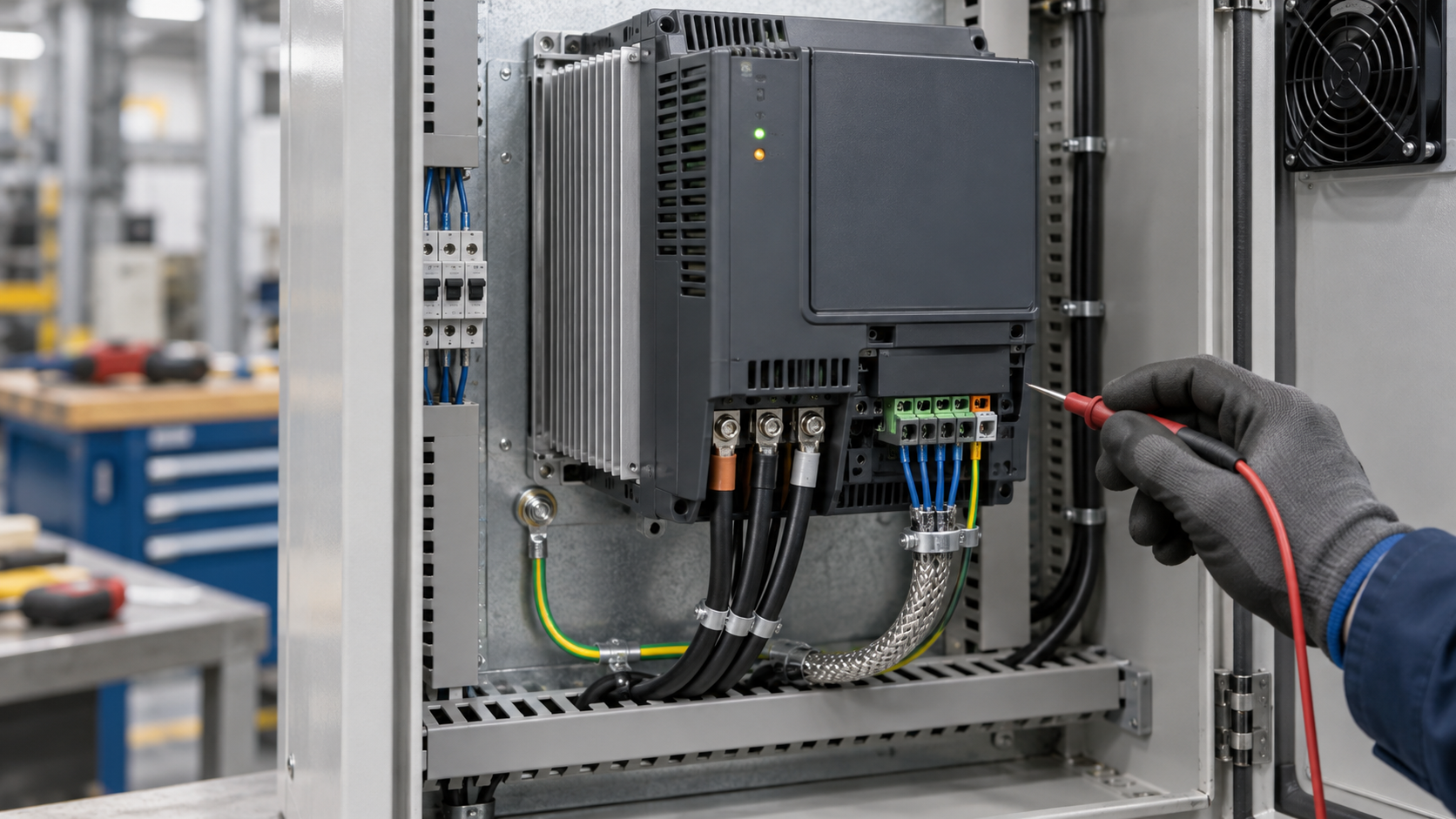
Repeated trips with normal temperature and stable supply may indicate incorrect parameters, a failing motor, or a process jam. Conversely, a drive that passes a bench test but trips in a hot enclosure may need airflow correction or derating before replacement is justified. The decision should be based on evidence that can be reproduced by another technician.
An adjustable speed drive can become unsuitable even when it still powers the motor. A new product recipe may require a lower minimum speed, faster acceleration, more starts per hour, regenerative braking, closed-loop feedback, or a different control network. A motor change can alter rated current, base frequency, insulation stress, or cooling at low speed. These are specification changes, not proof of a defective drive.
Build a current application sheet before comparing models. Include motor voltage, full-load current, power, frequency, speed, connection, load torque type, minimum and maximum speed, acceleration and deceleration time, starts per hour, braking energy, cable length, enclosure temperature, altitude, dust or moisture, and required I/O. Size by output current and overload class, not by the kW label alone. A four-pole motor has an ideal synchronous speed of about 1,500 rpm at 50 Hz and 1,800 rpm at 60 Hz; actual speed includes slip and may be limited by cooling or load torque.
If the new duty needs feedback, safety functions, or a fieldbus that the old unit cannot support, an adapter may create more commissioning risk than a replacement. Check motor compatibility, protective devices, EMC layout, braking hardware, and control voltage before assuming a drop-in exchange. The variable speed drive category can help frame the available product families, but the final match must come from the application sheet.
Repair can be reasonable when the fault is localized, the model remains supported, spare parts are traceable, and the repaired unit can be tested under representative load. Examples include a replaceable fan, a known control-board failure with an authorized repair route, or a loose terminal discovered during inspection. Ask for a repair scope, parts provenance, test record, warranty terms, and the expected turnaround before removing the production unit.
Replacement is usually more defensible when the drive has recurring power-stage faults, heat damage, carbonized boards, moisture ingress, obsolete firmware, or an unavailable keypad and communication module. A repaired unit may still contain aged DC-link capacitors, fans, relays, and insulation barriers. If the manufacturer has withdrawn support or the unit cannot be configured for the current safety circuit, the risk is operational as well as technical. A variable speed drive that cannot be tested under the present duty should be treated as an availability risk, even if it still runs on a light load.
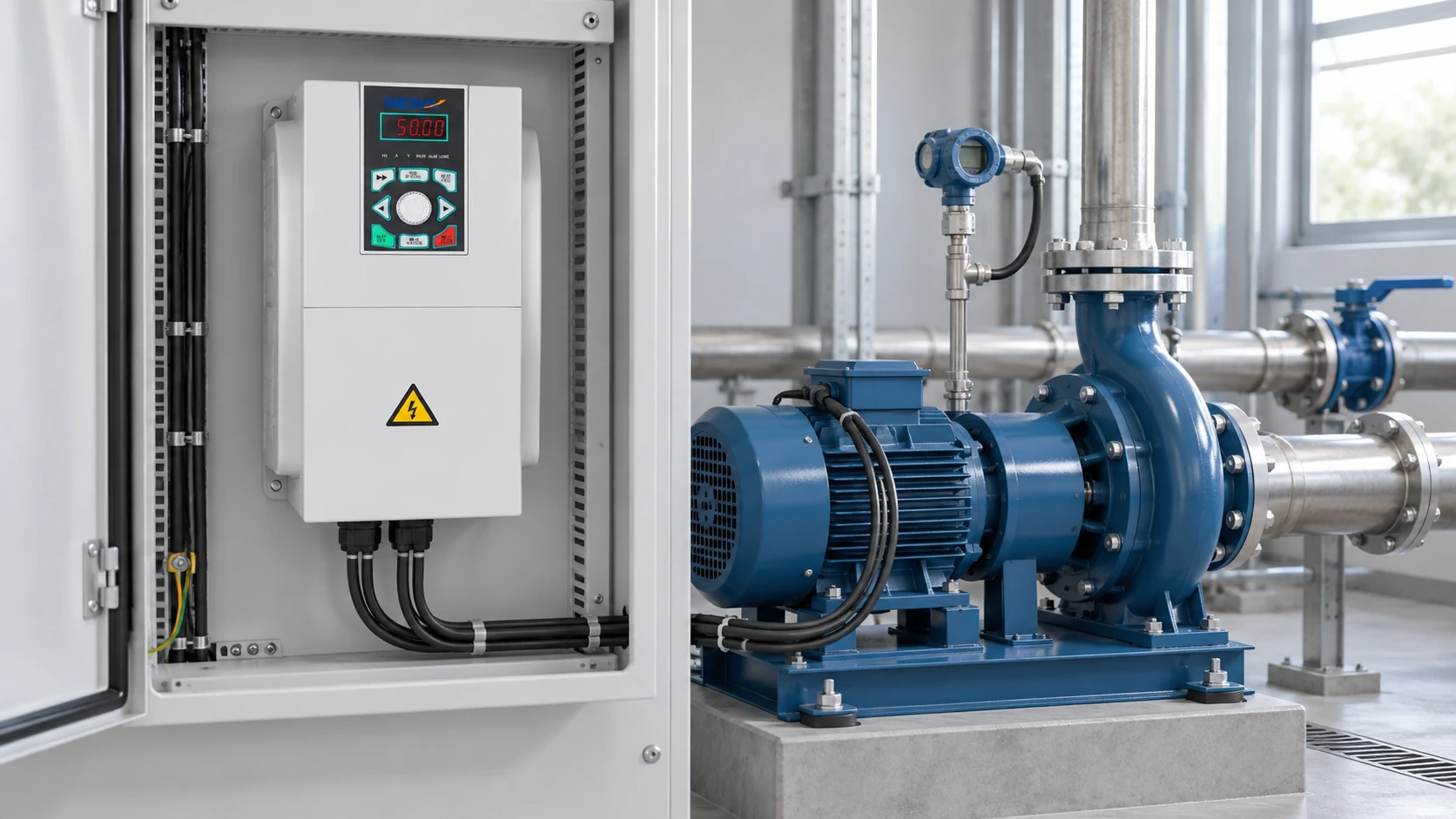
Use a controlled change process. Save the old parameter set, document terminal labels, verify phase and motor rotation, and perform a no-load run before a loaded run. For a high-consequence machine, plan a bypass or spare strategy and define who accepts the restart test. The frequency inverter background guide is useful for terminology, but it should not replace the exact installation manual.
The same failure can lead to different choices on a pump, conveyor, or precision machine. Use the application dimension table to make hidden requirements visible before requesting quotations.
| Application dimension | Replacement trigger to investigate | Evidence and test | Specification focus |
|---|---|---|---|
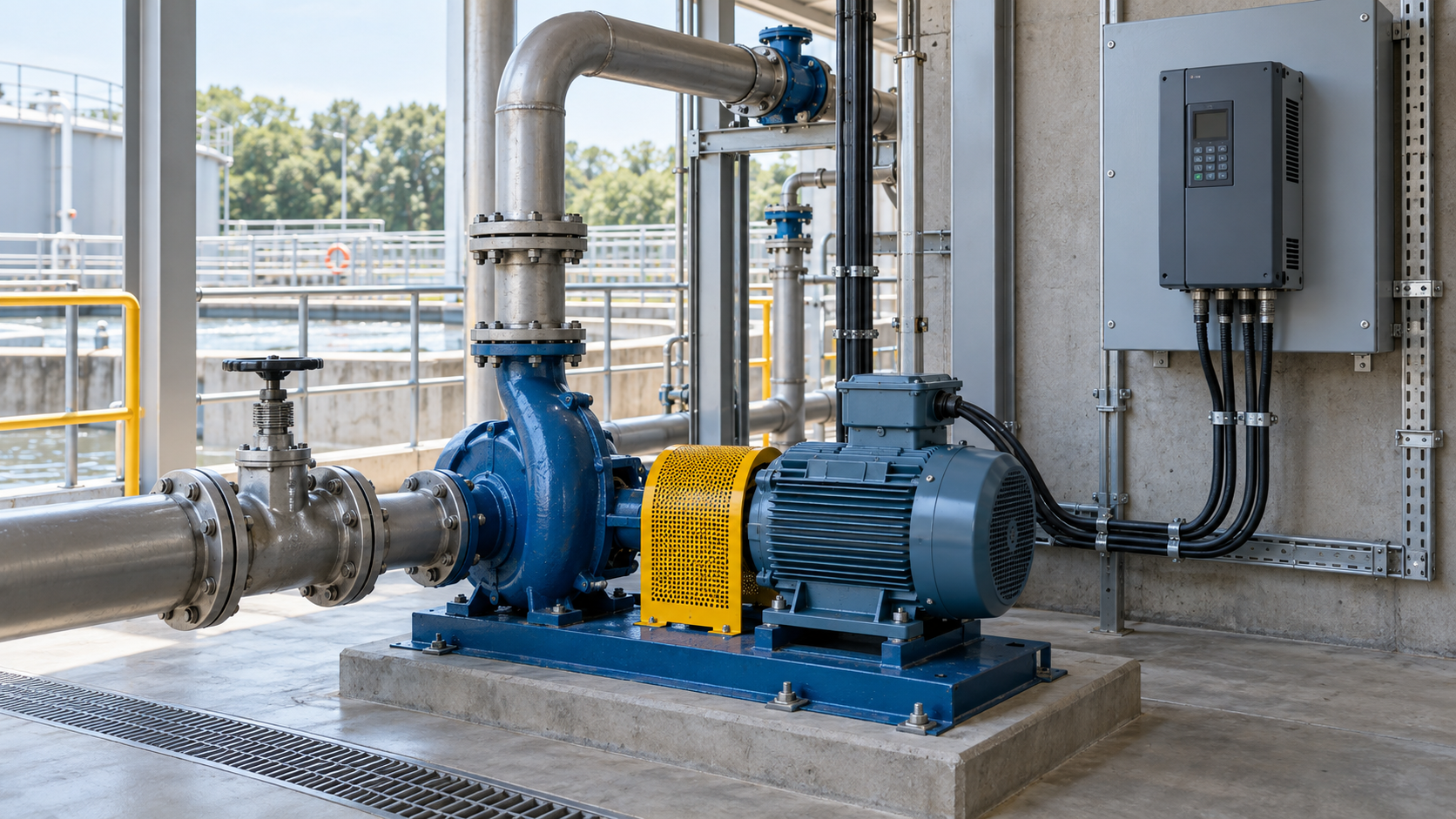
| Centrifugal pump or fan | Unstable pressure, repeated low-flow trips, or hot cabinet at reduced speed | Trend pressure, flow, current, temperature, and alarms; check system curve | Variable-torque duty, minimum speed, sleep/wake logic, cooling, and feedback |
| Conveyor, mixer, or compressor | Overload during starts, jam events, or frequent cycling | Loaded current trend, acceleration test, mechanical inspection, and fault log | Constant-torque overload, ramp time, braking, restart policy, and enclosure rating |
| Hoist or regenerative load | DC-bus overvoltage, brake timing errors, or uncontrolled stopping | Controlled stop test, brake inspection, and DC-bus event capture | Braking resistor or regenerative unit, safe stop, and emergency circuit |
| Coordinated line or machine tool | Loss of synchronization, obsolete network, or inadequate response | I/O and communication test, repeatability check, and parameter backup | Feedback, fieldbus, response, machine interlocks, and validated change control |
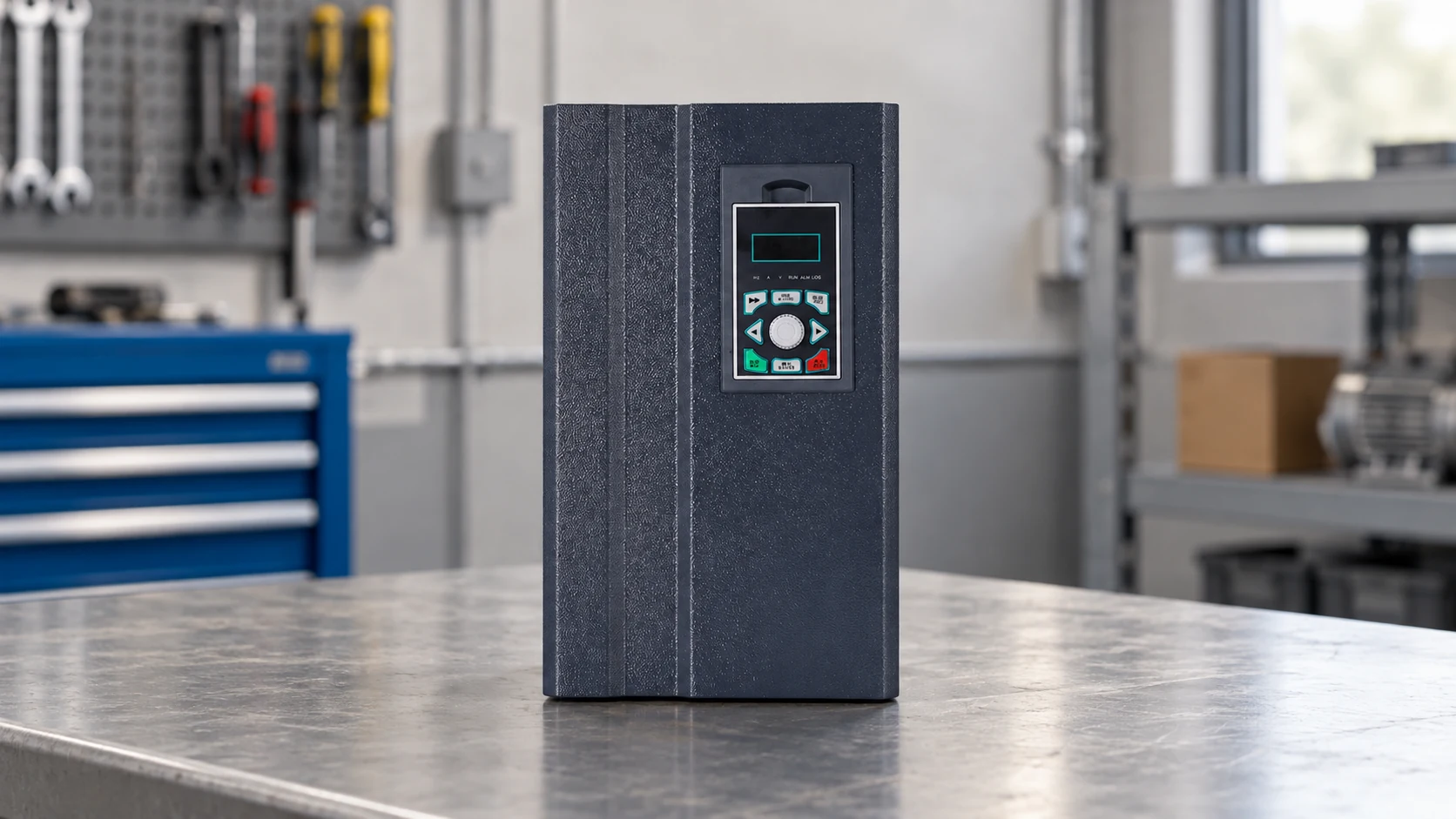
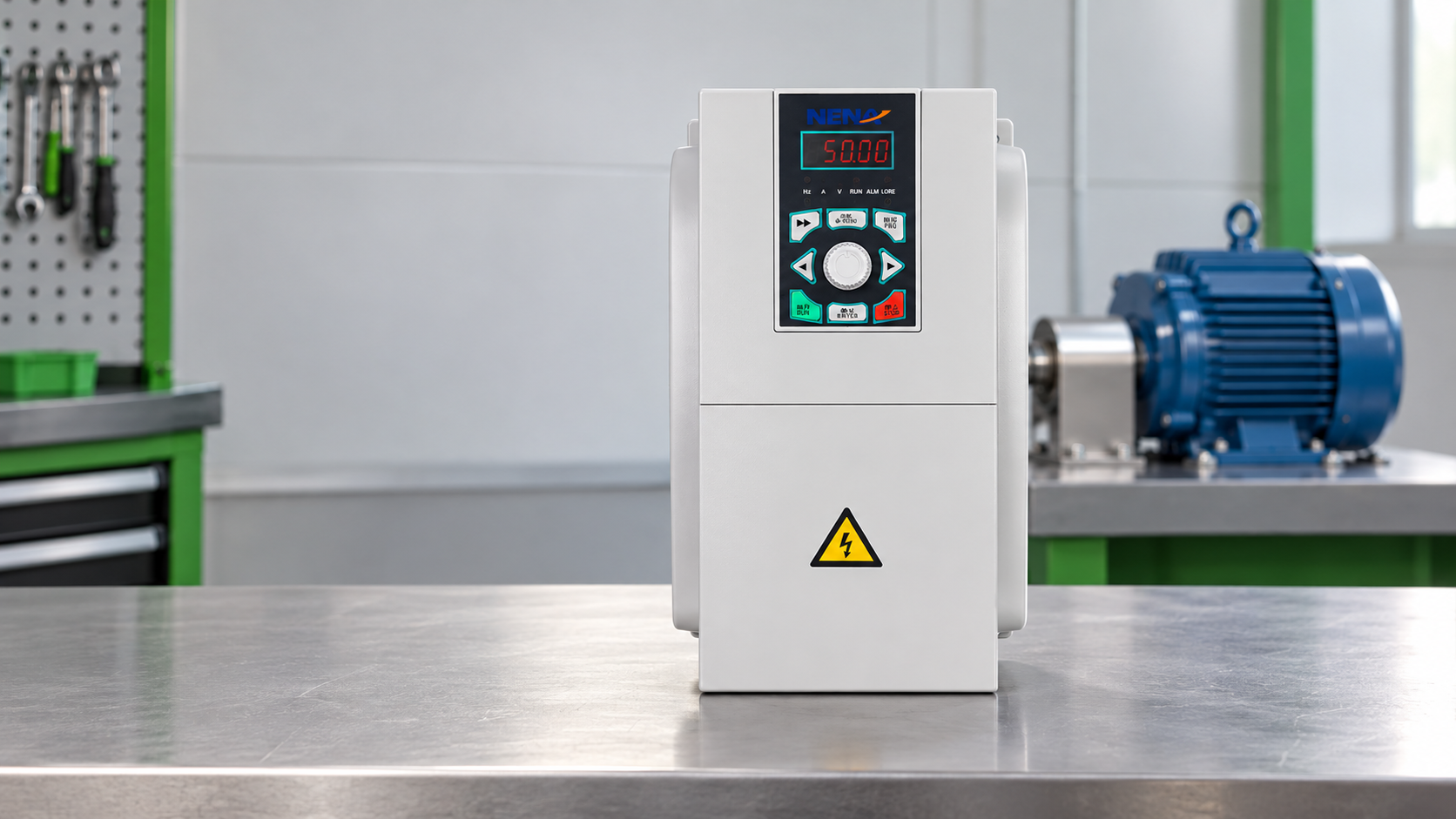
For a small replacement, verify that the proposed current and overload rating match the nameplate and duty. A general-purpose reference such as the 820 4 kW general-purpose inverter may be relevant for a particular application, but its product page cannot establish compatibility with every motor or load.
NENA/Zhejiang Xinhang can be considered when its configurable frequency-converter, inverter, control-panel, and sourcing support align with the documented duty. The buyer should still request configuration-specific evidence rather than treating a catalogue family as a universal approval.
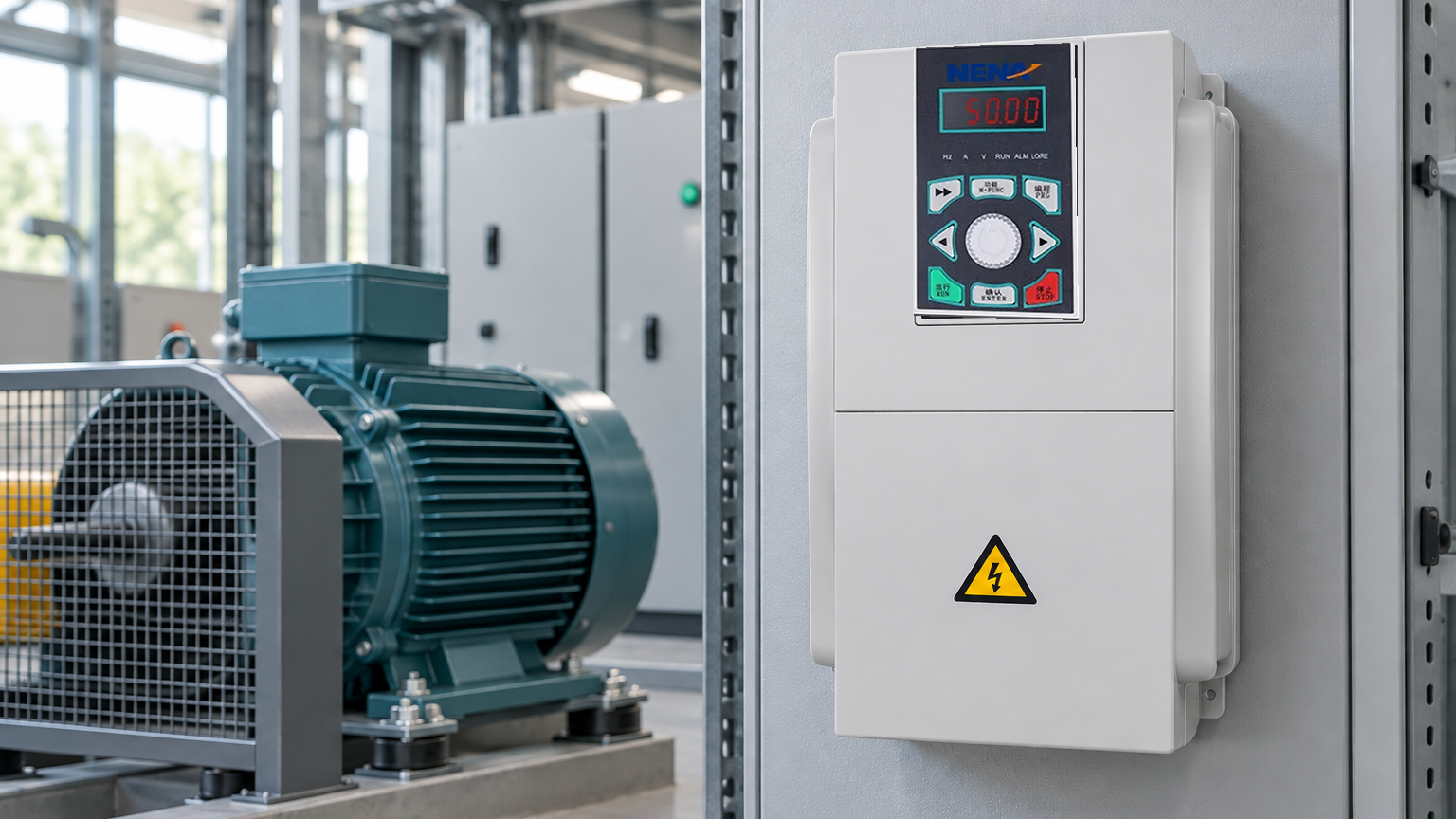
In everyday industrial usage, an adjustable speed drive often means a variable-frequency drive (VFD) used to regulate an AC motor. The terms are not always interchangeable across technologies, so confirm the input, output, motor type, control method, and overload requirement in the specification. Use the equipment manual and nameplate data as the deciding references.
Set the speed reference through the configured keypad, analog input, preset speeds, communication network, or closed-loop controller, then respect the programmed minimum, maximum, acceleration, and deceleration limits. A common analog signal is 4-20 mA or 0-10 V, but the actual interface depends on the drive and control system. Change parameters under an approved procedure and verify current, temperature, direction, and stopping behavior on the real load.
Three practical categories are volts-per-hertz (V/f) drives, sensorless-vector drives, and closed-loop vector drives with feedback. The first is often adequate for straightforward variable-torque work; vector methods can improve torque response and low-speed control when the application requires it. The boundary between product families varies, so compare the control method, feedback support, overload rating, and tuning procedure rather than relying on a label.
An adjustable speed drive is a power-electronic system that changes a motor’s operating speed, torque, or both by controlling the supplied electrical conditions. In an AC installation it may vary frequency and voltage, manage ramps, and provide protective functions. It is one part of the machine system; guarding, isolation, interlocks, and commissioning remain separate responsibilities.
The durable rule is simple: replace the drive when the evidence shows that condition, duty, support, or safety can no longer be controlled with confidence. NENA/Zhejiang Xinhang can help translate a motor nameplate and operating profile into a documented configuration; contact Xinhang with those records before the next failure decides for you.