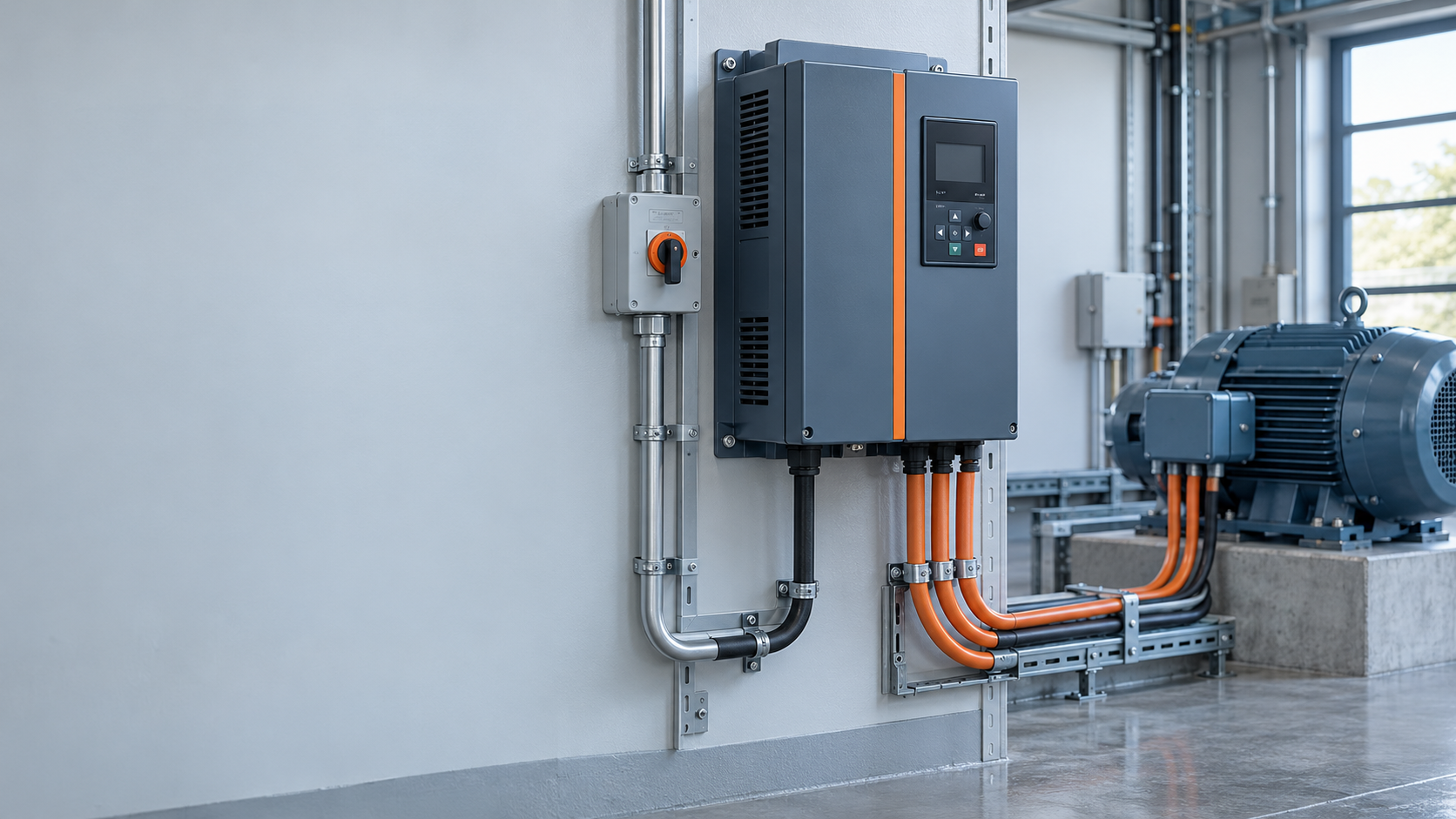
When a facilities engineer named Mara in Rotterdam encountered unstable pressure in an office cooling loop, she throttled a discharge valve while the pump kept running at full speed. Pressure settled briefly, then the valve hunted and the pressure gauge swung again. This is an illustrative scenario, not a customer case: the important question was whether the pump curve, minimum-flow requirement and control method suited a varying load, not whether the pump was simply defective.
Summary: A vfd pump is a pumping arrangement in which a variable-frequency drive adjusts an electric motor’s running speed to meet a flow or pressure requirement. It is not a distinct hydraulic pump type. For a suitable centrifugal system, ideal shaft power at 80% speed scales to about 51.2% of the full-speed value under the affinity laws; actual electrical savings depend on the system curve, static head, efficiency and duty hours. Obtain the pump and system curves, then check the motor, drive, controls and minimum safe operating flow before specifying speed control.
A vfd pump commonly combines a centrifugal pump, compatible motor, drive, pressure or flow instrument, and a controller or control logic. Some installations use a packaged pump controller, while others place the drive in a separate cabinet. The US Department of Energy’s pumping-system sourcebook treats efficiency as a system question: controlling an oversized or throttled pump may help, but variable speed cannot correct a poorly selected hydraulic duty by itself.
The drive rectifies the incoming AC supply, uses a DC link, then switches an inverter stage to supply the motor at a commanded frequency and voltage. In an induction-motor installation, frequency primarily sets the attainable speed; actual shaft speed also reflects slip and control settings. A pressure transmitter may send a signal to a controller that changes speed to hold a setpoint as demand varies. The drive does not directly measure flow unless the necessary measurement and logic are installed.
For a geometrically unchanged centrifugal pump, the affinity laws approximate flow proportional to rotational speed, developed head proportional to speed squared, and shaft power proportional to speed cubed at corresponding operating points. At 80% speed, the ideal corresponding head ratio is 0.64 and the power ratio is 0.512. These are scaling relationships, not guaranteed site results: static lift, minimum-flow recirculation, changing pump efficiency and drive/motor losses alter the operating point. Compare actual pump and system curves before using a cubic estimate in an ROI case.
A closed-loop vfd pump should have a verified pressure-sensor location, stable control tuning, high- and low-pressure limits, and a response to signal failure. Hydraulic Institute standards and guidance provide a framework for pump performance and system evaluation; an instrument reading alone does not demonstrate that the pump remains in its acceptable operating region.
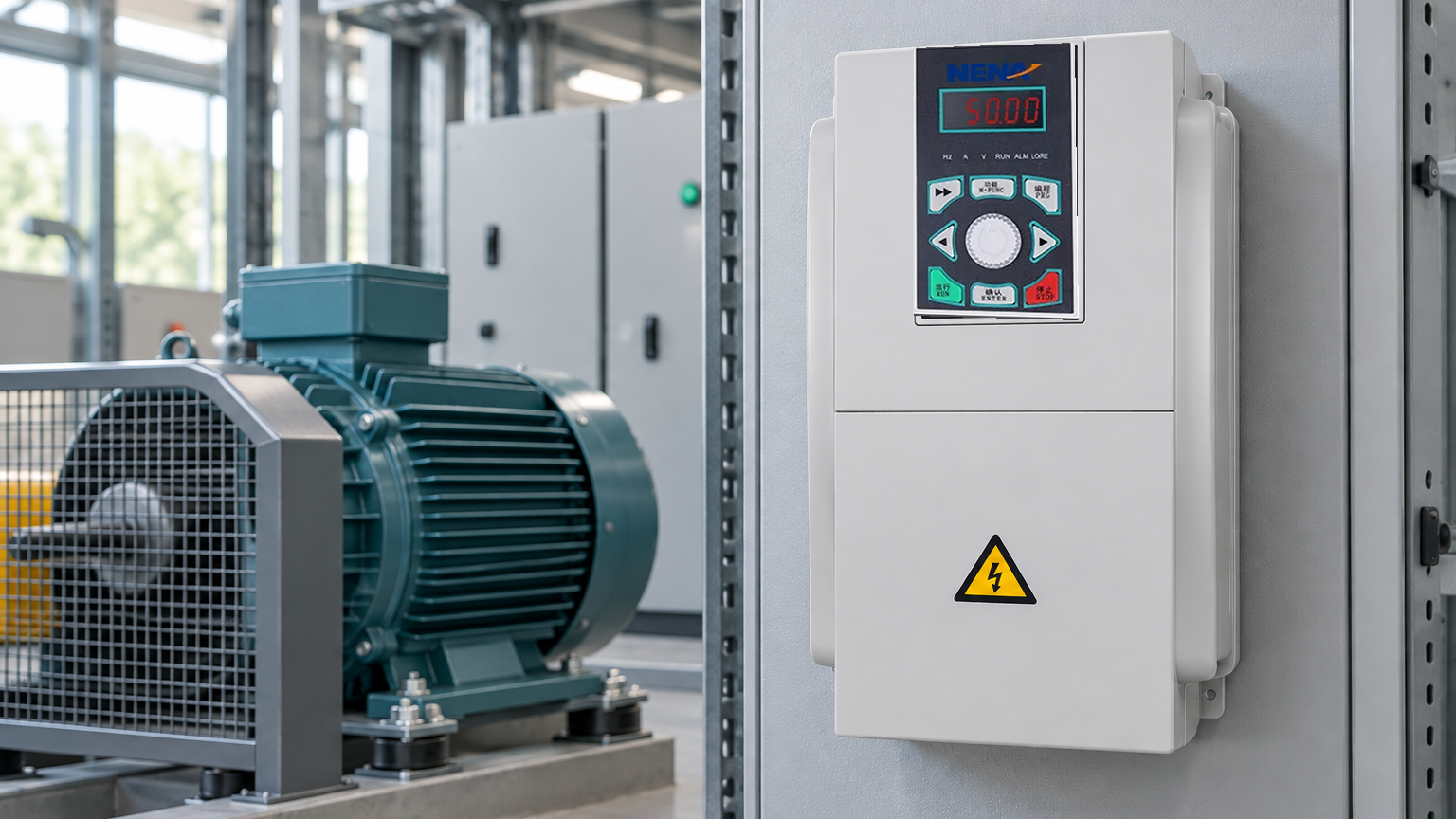
The hydraulic side includes the pump, impeller, seals, suction/discharge piping and valves. The electrical side includes the motor, variable-frequency drive, upstream protection, wiring and grounding. The control side may include a transmitter, controller, check valves and interlocks. A pump VFD is the electrical speed-control device, not the pump casing, wet end or complete assembled system.
Match the drive’s output-current rating and overload duty to the motor nameplate and required operating envelope, rather than selecting solely by pump kilowatts. Then verify input supply, motor insulation, cooling at low speed, cable length, enclosure temperature and the drive manufacturer’s instructions for output filtering. The DOE motor-and-drive sourcebook emphasizes evaluating the motor and drive together; IEC 61800-5-1 addresses safety requirements for adjustable-speed electrical power drive systems, while installation safety still depends on the complete design and local rules.
Minimum speed is a hydraulic and thermal limit, not merely a keypad setting. Confirm minimum continuous flow, seal flushing, bearing lubrication, net positive suction head available versus required, and any process cooling needs with the pump manufacturer’s data. A stopped or slow pump cannot meet a demand above its available head, however capable the drive’s control electronics are.
Variable speed is most compelling when the required flow or pressure changes for substantial operating hours and the pump can stay inside its permitted region. A fixed-speed pump may instead be the simpler fit for a nearly constant duty near its best-efficiency point. A soft starter reduces starting stress and limits starting current according to its design, but normally does not vary running speed after the motor reaches line frequency. It is not an energy-saving substitute for continuous speed control in a variable-flow process.
Lifecycle economics need the measured load profile, electricity tariff, pump and motor efficiency curves, run hours, controls, installation and maintenance. Include possible drive cooling, harmonic mitigation, filtering and downtime costs. For an illustrative comparison, operation at 80% speed for only a short weekly interval cannot justify multiplying 48.8% ideal shaft-power reduction by annual full-speed hours; energy must be integrated over the actual duty cycle. NEMA MG 1 offers relevant motor guidance, but consult its applicable edition and the motor manufacturer’s inverter-duty limits.
| Selection factor | Fixed-speed pump | Fixed-speed pump with soft starter | VFD-controlled pump |
|---|---|---|---|
| Running flow control | Typically throttling, cycling or bypass | Typically throttling, cycling or bypass | Motor speed changes within pump and motor limits |
| Starting behavior | Depends on starter and supply | Controlled voltage ramp during startup | Programmable acceleration within drive capability |
| Variable-demand efficiency | Depends on hydraulic control losses | Same running-speed constraints as fixed speed | Potential benefit where speed reduction displaces throttling; site-dependent |
| Design and maintenance | Fewer electronic controls | Adds starting device and settings | Adds instrumentation, tuning, cooling and electrical compatibility checks |
| Total ownership cost | Lower initial-control complexity may offset energy cost at steady duty | Starting-stress benefits depend on duty | Higher controls scope must be justified against measured energy and process benefits |
Pressure regulation, variable HVAC loads and changing process-flow demands can be suitable candidates; a process with a high, constant static-head requirement may offer less speed-reduction opportunity. The table is a specification checklist, not an assertion that any drive model fits every service. Record the operating points and inspect pump performance against manufacturer curves and relevant Hydraulic Institute methods before buying hardware.
| Application | Demand and hydraulic evidence | Controls and selection checks |
|---|---|---|
| Building water pressure | Peak demand, overnight minimum and pressure at the critical fixture | Sensor location, setpoint, sleep/wake logic and dry-run protection |
| HVAC chilled-water circulation | Design and part-load flow, coil-valve behavior and minimum chiller flow | Differential-pressure reset, minimum-flow route and operating hours |
| Industrial process transfer | Fluid properties, elevation, suction condition and allowable process range | Seal limits, interlocks, acceptable speed range and fault response |
| High static-head service | Static head versus friction head across duty points | Whether reduced speed can still meet required head; verify on curves |
IEC 61800-5-1 concerns safety of adjustable-speed electrical power drive systems; IEC 61800-3 concerns their electromagnetic compatibility requirements and test methods. Neither designation by itself proves that a particular drive, cabinet or pump assembly is certified. For pump-side performance, use the applicable Hydraulic Institute/ANSI pump test or system-assessment guidance, together with the manufacturer’s curves and guaranteed duty points. A method for measuring pump performance is not a certification of every installed system.
NEMA MG 1 addresses motors and generators and provides an important reference when evaluating motors on inverter supplies. Specify the destination market and intended installation so qualified parties can determine applicable electrical code, machinery safety, EMC and documentation requirements. Ask for product-specific declarations or test evidence rather than repeating an unsupported compliance claim; gaps can delay acceptance or require cabinet, filter or wiring changes after procurement.
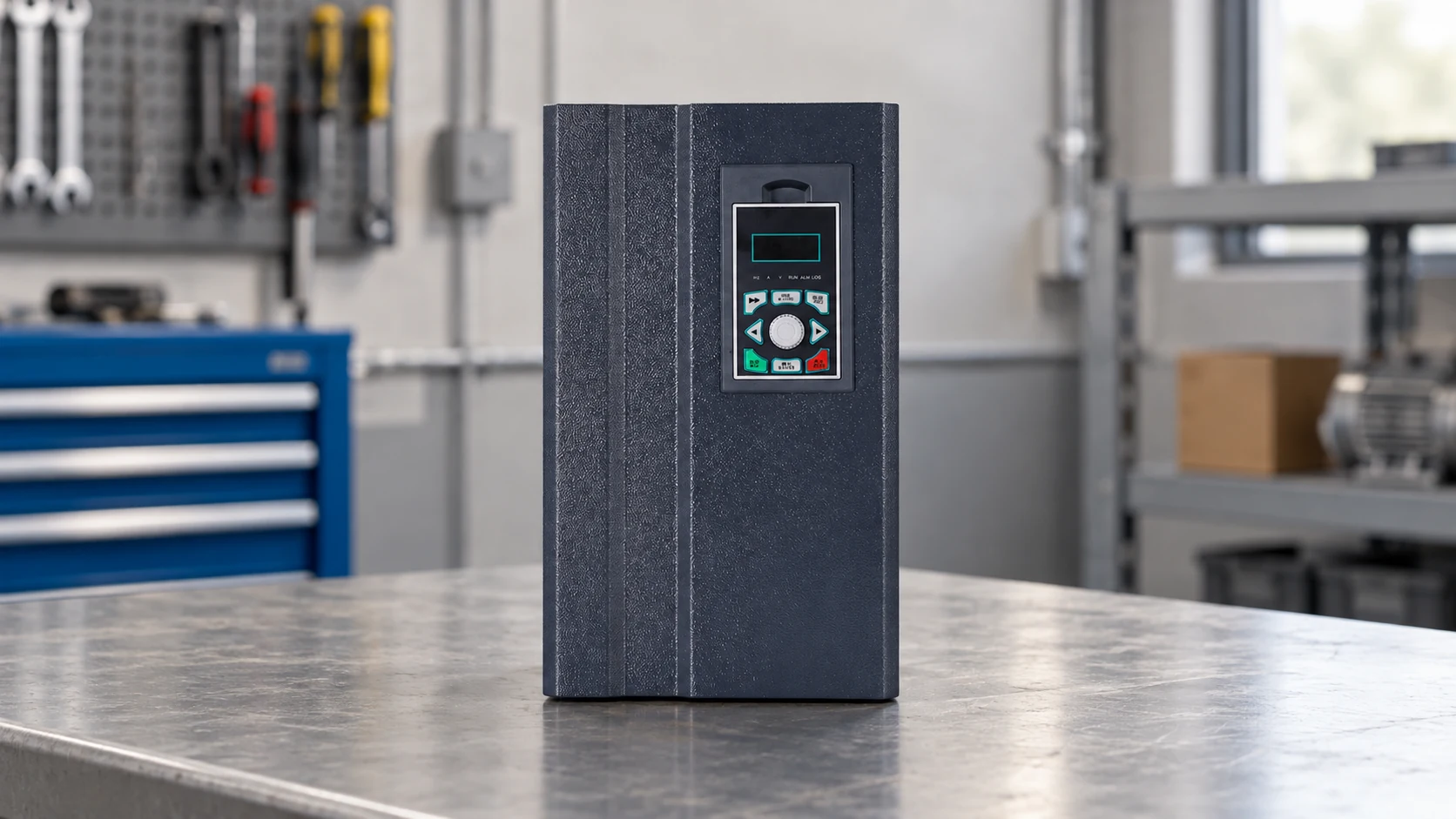
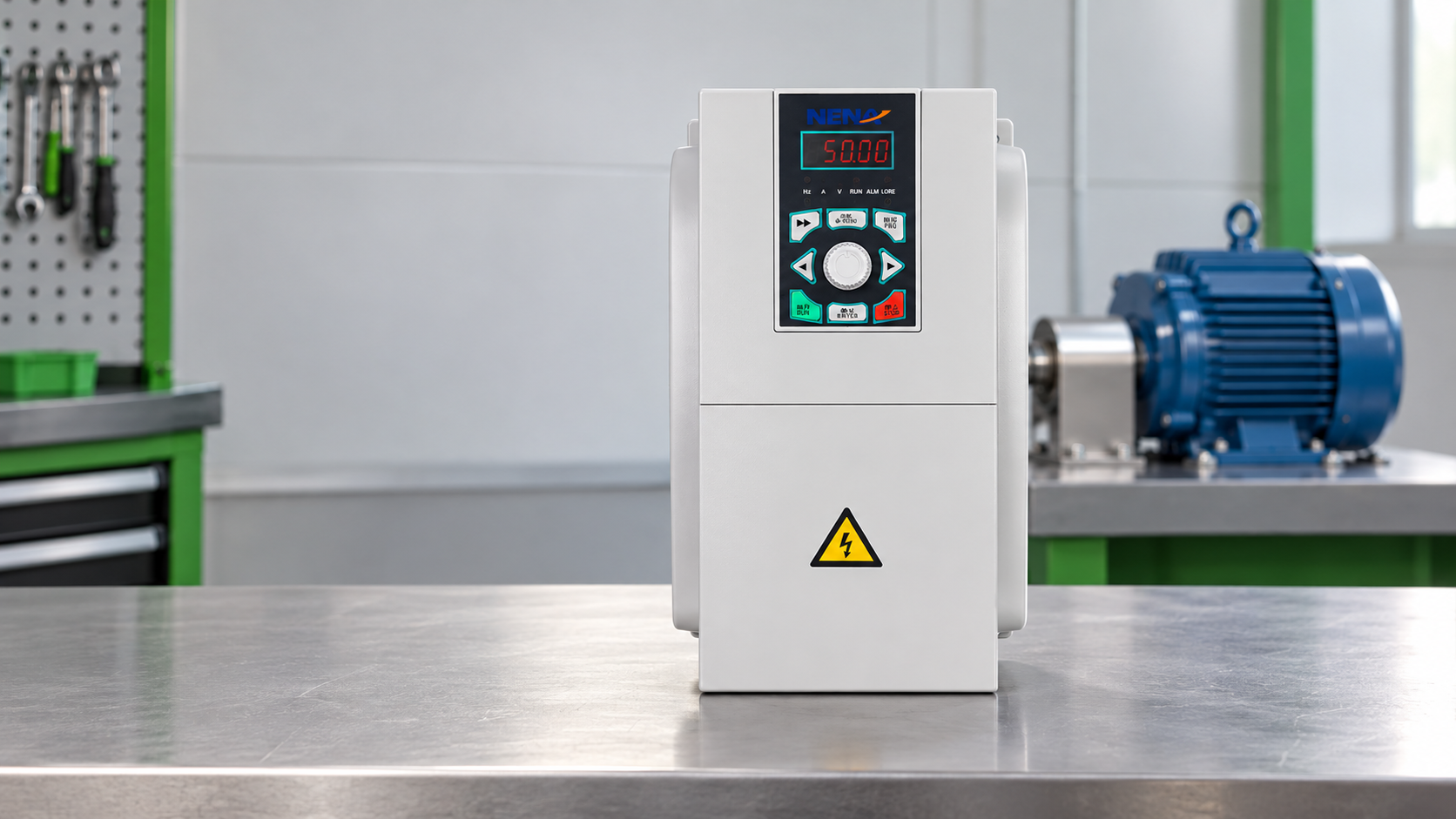
Begin a vfd pump specification with the pump manufacturer’s allowable operating region and duty-point curves, then give the drive supplier a motor nameplate and measured demand profile. The linked NENA listing is for a variable-frequency drive component, not a complete pump. A pump drive choice follows the hydraulic duty; it does not define that duty. NENA (Zhejiang Xinhang Electrical) supplies variable-frequency drives/frequency converters, soft starters and electrical control cabinets, not a complete pump under this selection discussion.
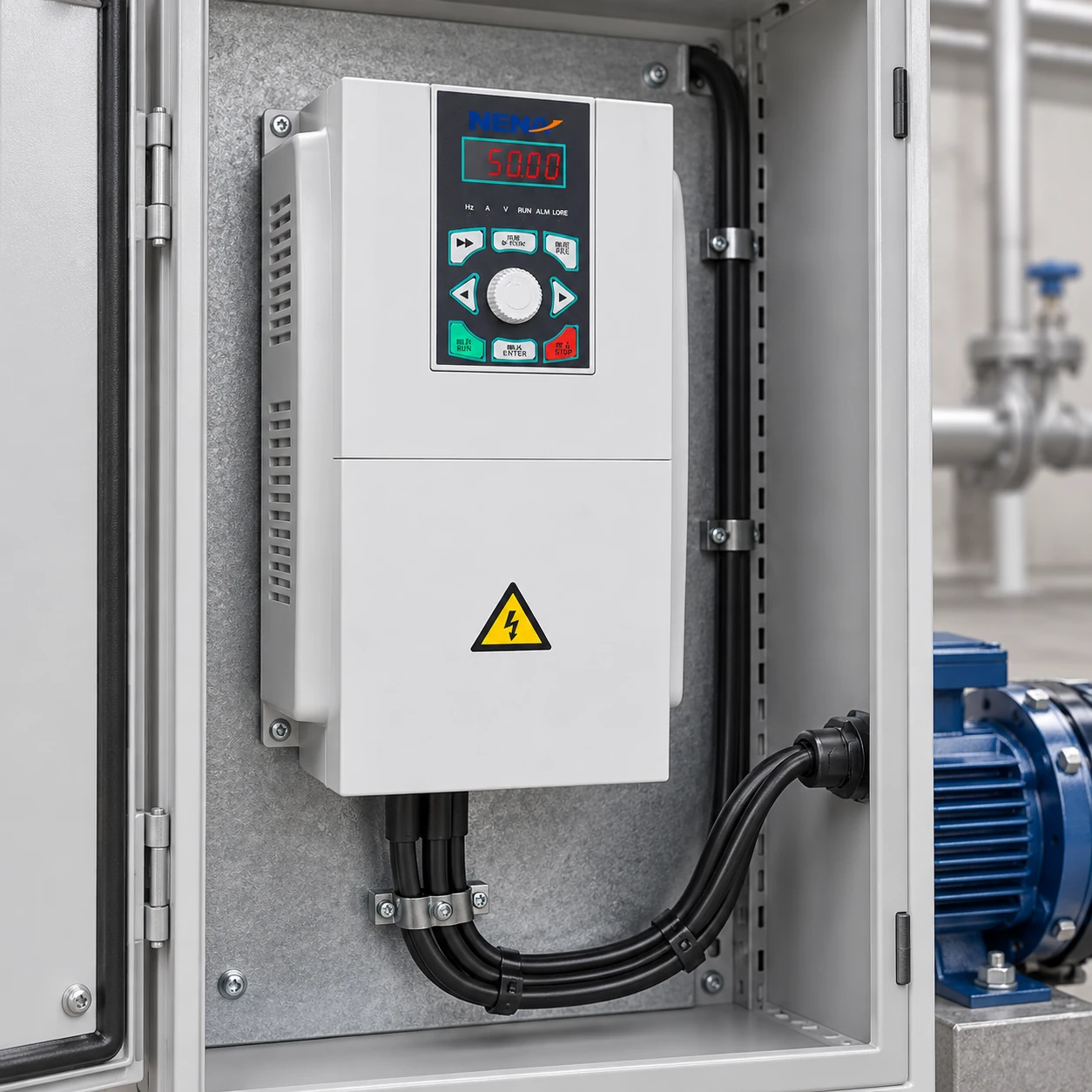
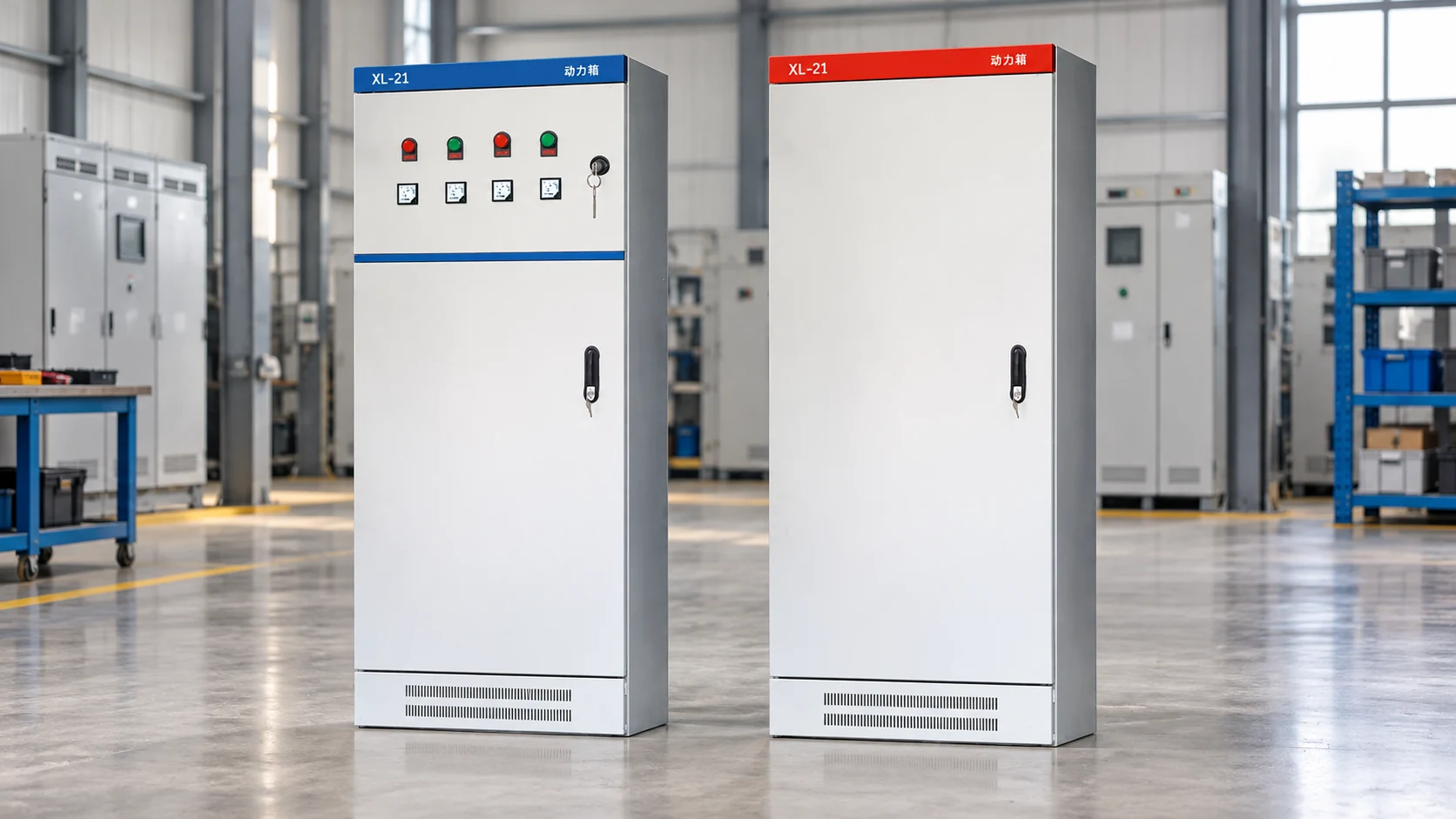
Compare the NENA electrical control product range only after the pump-system requirements are documented. A cabinet may package components, but its exact protection, wiring and compliance scope must be confirmed in the offered design.
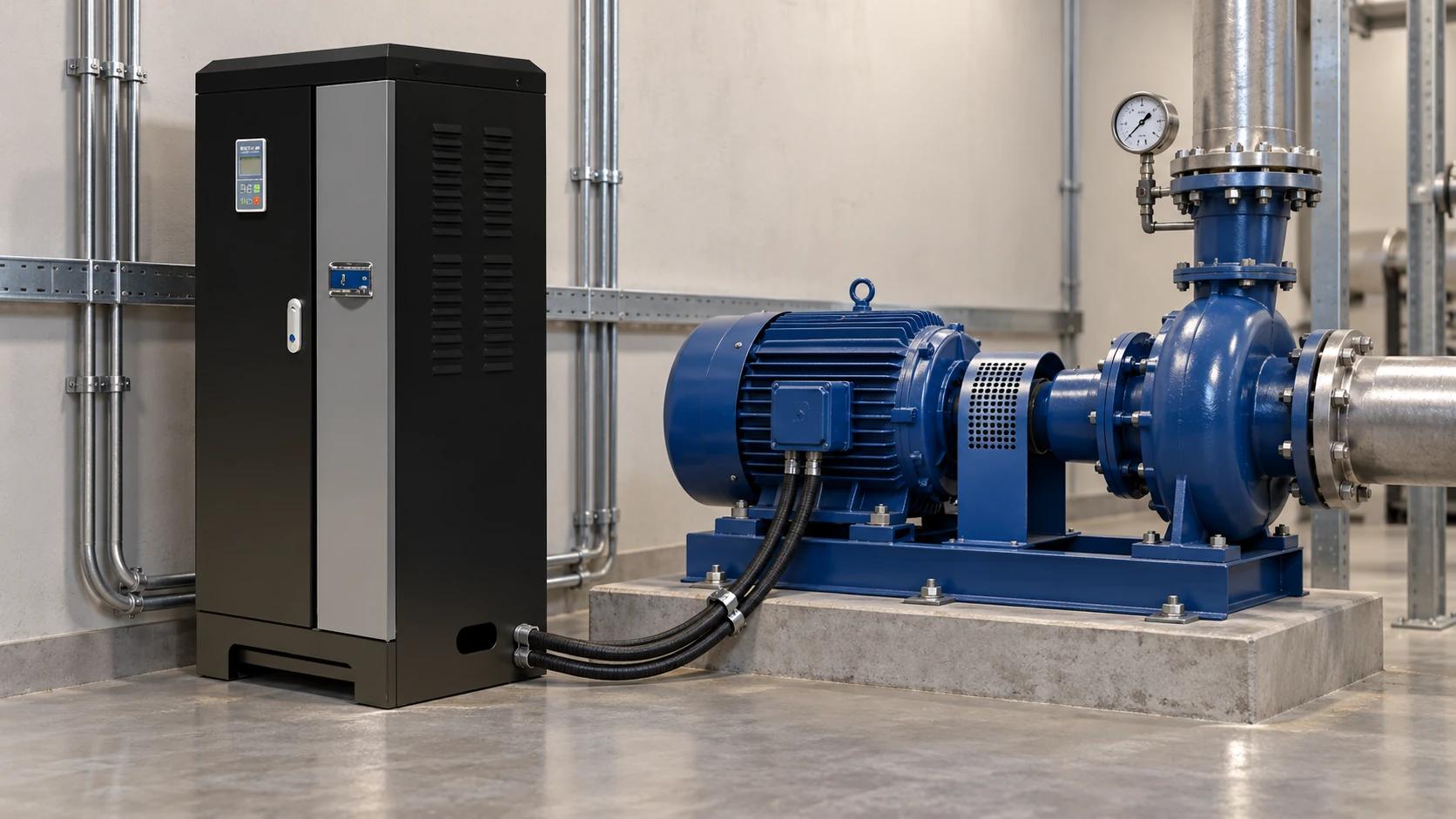
It is a pump driven by a motor whose speed is controlled by a variable-frequency drive. The phrase describes an operating arrangement, not a special pump hydraulic design. Confirm the pump’s permitted operating range before reducing speed.
There is no universal canonical set of three. One discussion distinguishes input-conversion architectures, such as voltage-source, current-source and cycloconverter designs; another distinguishes motor-control modes, such as scalar V/f and different vector-control approaches. Ask which classification and application are meant before comparing products, because a control mode is not a separate physical drive architecture.
A VFD is a drive that varies motor supply frequency to regulate speed, but the broader word “drive” can also mean other motor-control devices or even a mechanical transmission. In a pump specification, identify the exact electrical drive, motor and control duties rather than relying on the shorthand alone.
It is the complete functional arrangement: pump hydraulics, motor, VFD, piping, sensors, controller and necessary protective devices. The integration determines pressure stability, minimum-flow protection and real energy use. A drive purchase alone does not establish a working pumping system.
The dependable answer to “what is a vfd pump?” starts with the system curve, not a drive label. For a discussion of the electrical drive or starter portion of a documented pump duty, contact NENA with the motor nameplate, operating points and control requirements.