When a facilities manager in Columbus encountered repeated trips at a small storefront, she requested a replacement quote, then watched the new equipment plan stall at the first site walk. In this illustrative scenario, the problem was not a defective breaker: the proposed replacement had ignored service capacity, conductor condition, and the utility’s meter requirements. The revised scope needed a load review and coordination before anyone could give a dependable installed price.
Summary: The honest answer to “how much to replace electrical panel?” is a site-specific, itemized installed quote, not the cabinet price alone. An illustrative quote of $1,200 for equipment and materials, $1,800 for labor, $300 for permit and inspection, and $700 for service-conductor and meter work totals $4,000 USD; these are hypothetical inputs, not a U.S. market average or a price promise. Ask a licensed local contractor to inspect the existing service, calculate the actual load, and confirm permit and utility scope before authorizing work. NFPA 70 supplies the U.S. electrical-installation framework, while the locally adopted edition and authority having jurisdiction determine the applicable requirements [1].
A service panel distributes power to building circuits within a particular service arrangement. “Replace” may mean exchanging damaged equipment while retaining a suitable service, or may involve new conductors, meter equipment, and circuit corrections. Those scopes cannot be priced as the same item. A 100-amp-to-200-amp change is not automatically necessary because a panel is old; evaluate the building’s loads.
Start by defining the boundary: panel and compatible breakers, disconnecting means as applicable, labeling, labor, testing, permit, inspection, and restoration of service. Ask whether the contractor will reuse existing branch wiring only after evaluating its condition and compatibility. A lower equipment-only figure can exclude the labor and approval work that make the installation usable. NFPA 70 is a safety standard for electrical installations, not a national price list [1].
Request a scope stating service ratings, location, circuit count, breaker types, and treatment of damaged conductors. The electrical panel may be small, yet tracing and reconnecting circuits can dominate labor. Assign responsibility for permit, inspection, utility scheduling, shutdown, and finish repair. For commercial space, specify outage hours and after-hours charges.
The illustrative $700 service-work allowance changes if the meter moves or conductors require more work. Compare included tasks, and require written change-order terms for concealed defects.
Capacity must follow the actual load assessment and the supply arrangement. A 100 A panel and a 200 A panel are ratings, not automatic recommendations or comparable prices: the latter may require changes beyond the enclosure, including service conductors, meter equipment, utility coordination, or grounding and bonding review. Ask the electrician to document the load calculation and the basis for the proposed rating under the locally adopted electrical code [1]. A building with an all-electric renovation may have a different future-load profile from one replacing a damaged panel without adding load.
Location also alters effort. Restricted access, exterior exposure, an obsolete or incompatible breaker arrangement, corrosion, damaged insulation, and insufficient working space can force a larger scope. A service relocation may involve utility rules and building work that a simple swap does not. For a workplace installation, OSHA’s electrical requirements address the suitability, installation, and use of equipment in covered employment settings; they do not set a homeowner’s installed price [2]. Identify the occupancy and jurisdiction instead of applying workplace language indiscriminately to a dwelling.
Two “200 A replacement” bids may differ because only one includes conductors and inspection. Compare exclusions, approved design, and verification before choosing.
Replacement is a technical decision, not a response to age alone. An electrician may find a correctable loose connection or failed compatible breaker; evidence of heat damage, water intrusion, damaged buswork, unavailable listed replacement parts, or a design that cannot serve planned loads may support a broader replacement. Do not diagnose by repeatedly resetting a tripping breaker or installing a larger breaker to silence it. Have the cause and affected circuit evaluated before defining the electrical panel scope.
Separate like-for-like replacement, repair, and capacity upgrade in the proposal. Where a project adds major electrical loads, obtain the load assessment before selecting a service rating. Where the issue is an individual circuit, document the fault and whether panel replacement would actually solve it. NFPA 70 and its local adoption inform safe installation, but the standard’s existence does not establish that every old enclosure fails or that 200 A is required for every home [1].
Do not assume a rebate. DOE describes Home Energy Rebates as state- and territory-administered programs with specific timing and eligibility [3]. Check whether panel work qualifies locally and whether prior approval is required; an unconfirmed incentive does not reduce the contractor’s price.
The names overlap, but a building service replacement is a permitted site installation; an industrial cabinet is selected and integrated for a defined system. This is a scope comparison, not a cross-category price comparison.
| Decision dimension | Building service replacement | Industrial control or distribution cabinet |
|---|---|---|
| Primary purpose | Distribute and protect building branch circuits from a service arrangement | Distribute industrial power or operate a defined motor/process load |
| Specification basis | Load assessment, service rating, circuit schedule, local installation requirements | Process duty, motor data, control sequence, supply, enclosure and integration needs |
| Quote boundary | Site survey, permitted installation, utility coordination, inspection and restoration | Equipment configuration, documentation, factory scope, shipping and site integration separately |
| Cost and maintenance tendency | Labor and site conditions may drive installed cost; service access matters | Components and customization drive equipment cost; commissioning and spare parts matter |
| Substitution test | Must suit the building service and locally approved installation | Not a substitute for a residential service panel or its permit |
Use actual bids in the same currency and mark exclusions. This worksheet contains hypothetical U.S.-dollar arithmetic, not estimates for any property.
| Cost driver | Illustrative amount | Question for the written quote |
|---|---|---|
| Panel, breakers and materials | $1,200 | Which exact components and circuit capacity are included? |
| Disconnect, reconnect, label and test labor | $1,800 | What outage window and verification are included? |
| Permit and inspection | $300 | Who applies, pays, and resolves inspection comments? |
| Service conductors or meter-related work | $700 | What does the utility require and what is excluded? |
| Illustrative total | $4,000 | What triggers a written change order? |
NFPA 70, the National Electrical Code, provides installation requirements that jurisdictions adopt in particular editions, potentially with amendments [1]. Confirm the applicable local edition, equipment suitability, clearances, conductor and protection selection, grounding and bonding, and labeling. Citing NFPA 70 is not product certification or proof of inspection approval.
OSHA 29 CFR 1910.303 governs electrical installation and use in covered U.S. workplaces [2], not every home. It does not replace local permits. Utility rules and the authority having jurisdiction also affect approval; unsupported compliance claims can delay inspection and energization. Obtain model-specific documentation.
Zhejiang Xinhang Electrical’s NENA range serves separate industrial procurement. Its industrial electrical panel listing describes an XL-21 distribution cabinet, not a residential service replacement. The SZ900 soft-starter cabinet serves motor starting. Request configuration and model-specific documents matched to the duty and destination; neither listing prices a home’s permitted service work.
A pump control panel houses equipment for operating and protecting one or more pumps, potentially including starters, drives, relays, sensors, and control logic according to the application. Its exact functions depend on the hydraulic process and specified controls. It does not replace the building’s service equipment; provide pump and motor data when requesting an industrial cabinet.
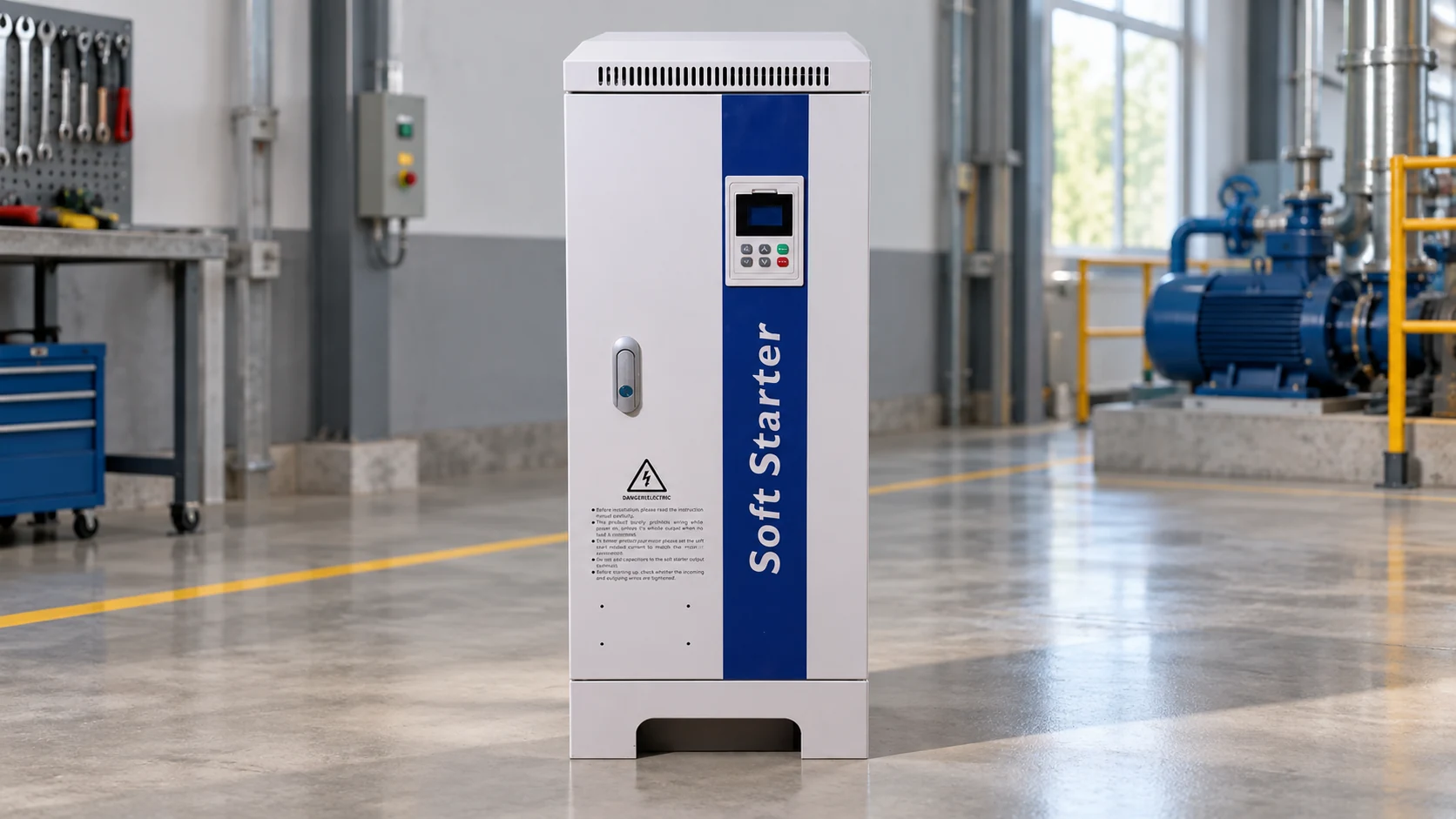
A motor control panel combines control and protective components for a motor or group of motors, potentially with a starter or variable-frequency drive. An SZ900 soft-starter cabinet illustrates the industrial motor-starting category, not a home service replacement. Selection depends on motor ratings, duty, power supply, enclosure conditions, and control sequence; quote its integration separately from building service work.
One useful distinction is between a motor-control panel, built around motor operation, and a process-control panel, built around instrumentation and logic for a wider sequence. These are functional descriptions, not an exhaustive code classification; a real cabinet can combine both. Specify the actual loads and control tasks instead of ordering by a broad label.
An electrical control panel is an enclosure containing components that monitor, switch, protect, or coordinate an electrical process or machine. Its contents can include contactors, protective devices, controllers, and operator interfaces, depending on the design. That industrial meaning differs from the residential service equipment typically intended by a homeowner asking about replacement cost.
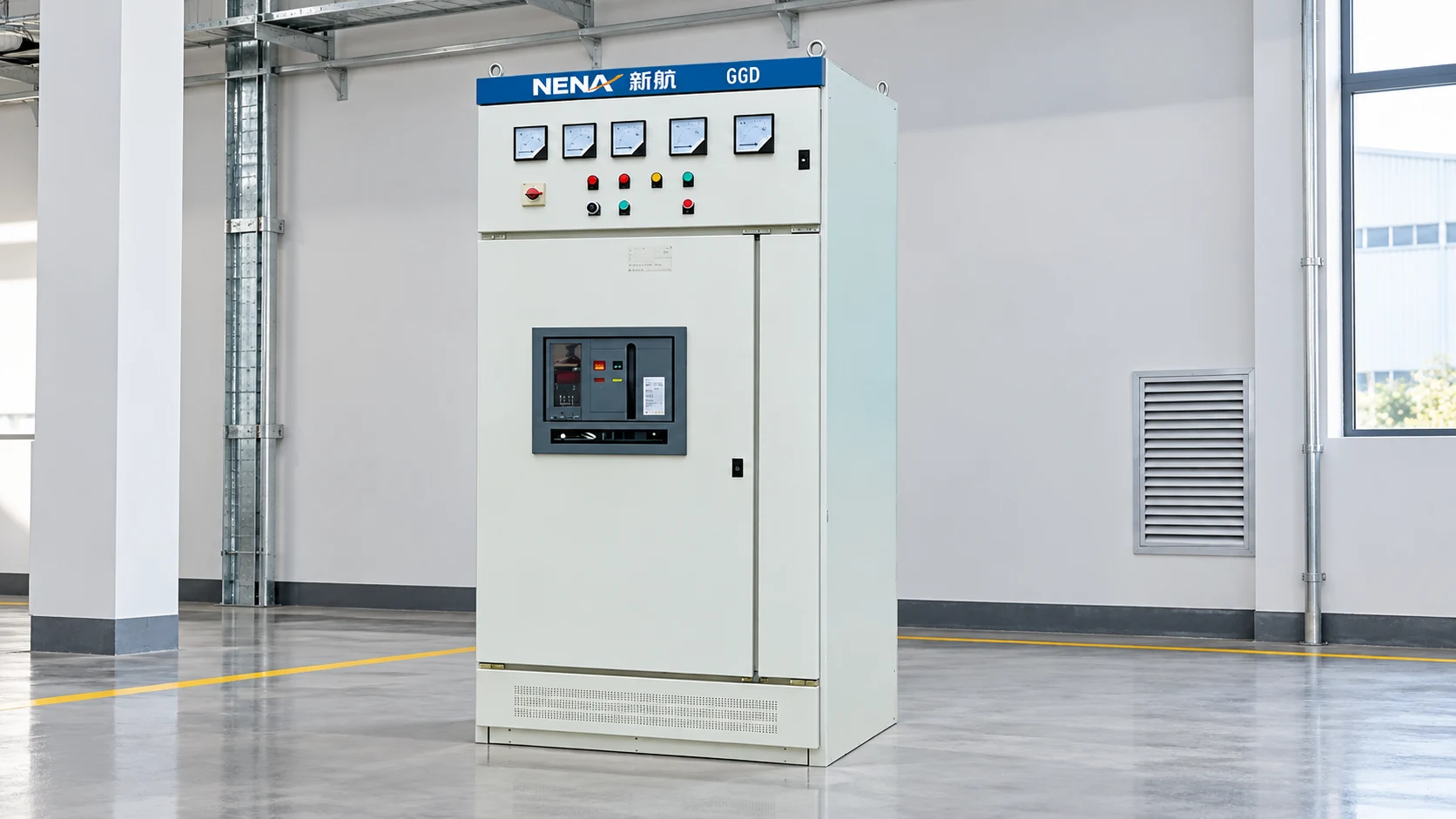
A credible price begins with a defined boundary: the same service, the same site work, and the same approval obligations on every bid. For building service work, engage a qualified local installer and compare itemized scopes. For a distinct industrial motor-control or distribution project, contact NENA with the load, supply, controls, and destination requirements; its industrial cabinets are not substitutes for residential service panels.