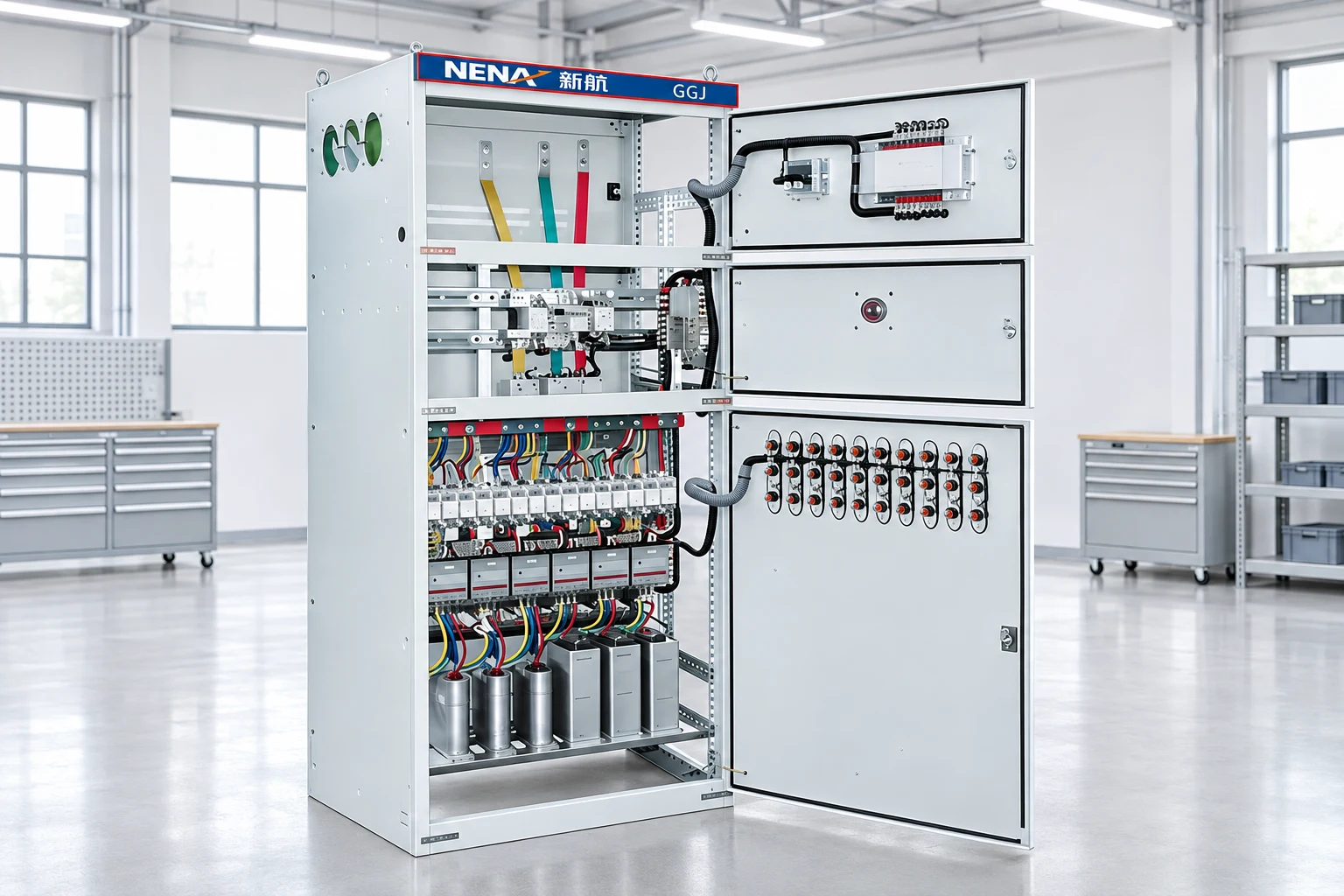
Soft starter starts per hour is a thermal-duty limit tied to starting current, acceleration duration, cooling interval, running duty and installation conditions. It is not a universal number for a particular motor power. Two starters carrying the same kilowatt label can support different starting sequences, and the motor itself may impose the tighter limit. Obtain a duty rating for the actual application and distinguish cold commissioning starts from repeated hot restarts. This guide shows how to describe that duty, compare offers and investigate a process that cycles too often.
During starting, the semiconductor path carries substantial current while the motor accelerates. The resulting heating depends on both current and time. Once running, a bypass arrangement may transfer current away from the semiconductors, but it does not erase the heat produced during acceleration. Another start shortly afterward begins from a different thermal condition than a first start after a long rest.
The motor has its own thermal behaviour. Repeated acceleration can heat the rotor and stator even when the starter has adequate capacity. A machine with substantial inertia, a difficult breakaway condition or an extended acceleration period may therefore need a different duty assessment from a freely accelerating motor of the same rated power.
Record starts in the busiest actual period, not only the daily average. A plant making twelve starts in one shift could make all twelve during a short recovery event. An average of a few starts per hour would hide that burst. The permitted sequence must accommodate the required operating pattern without relying on repeated protection resets.
IEC 60947-4-2 concerns semiconductor motor controllers, starters and soft starters. The relevant manufacturer’s declaration should identify the applicable rating and duty conditions. A standards reference alone does not establish a permitted number of starts, a current multiple or an acceleration time for a NENA product.
When reviewing AC-53 duty information, keep all the declared elements together rather than extracting a single ampere value. Manufacturers distinguish duty descriptions involving semiconductor conduction and bypass-related operation. Ask the supplier to explain the exact code used on the proposed model and show how it corresponds to the application’s start, run and rest sequence.
The procurement record should include motor rated current, starting-current requirement, measured or predicted acceleration duration, maximum starts, spacing between starts and the ambient conditions. Also identify the connection arrangement. A rating or current measured at one location cannot be transferred uncritically to another connection scheme.
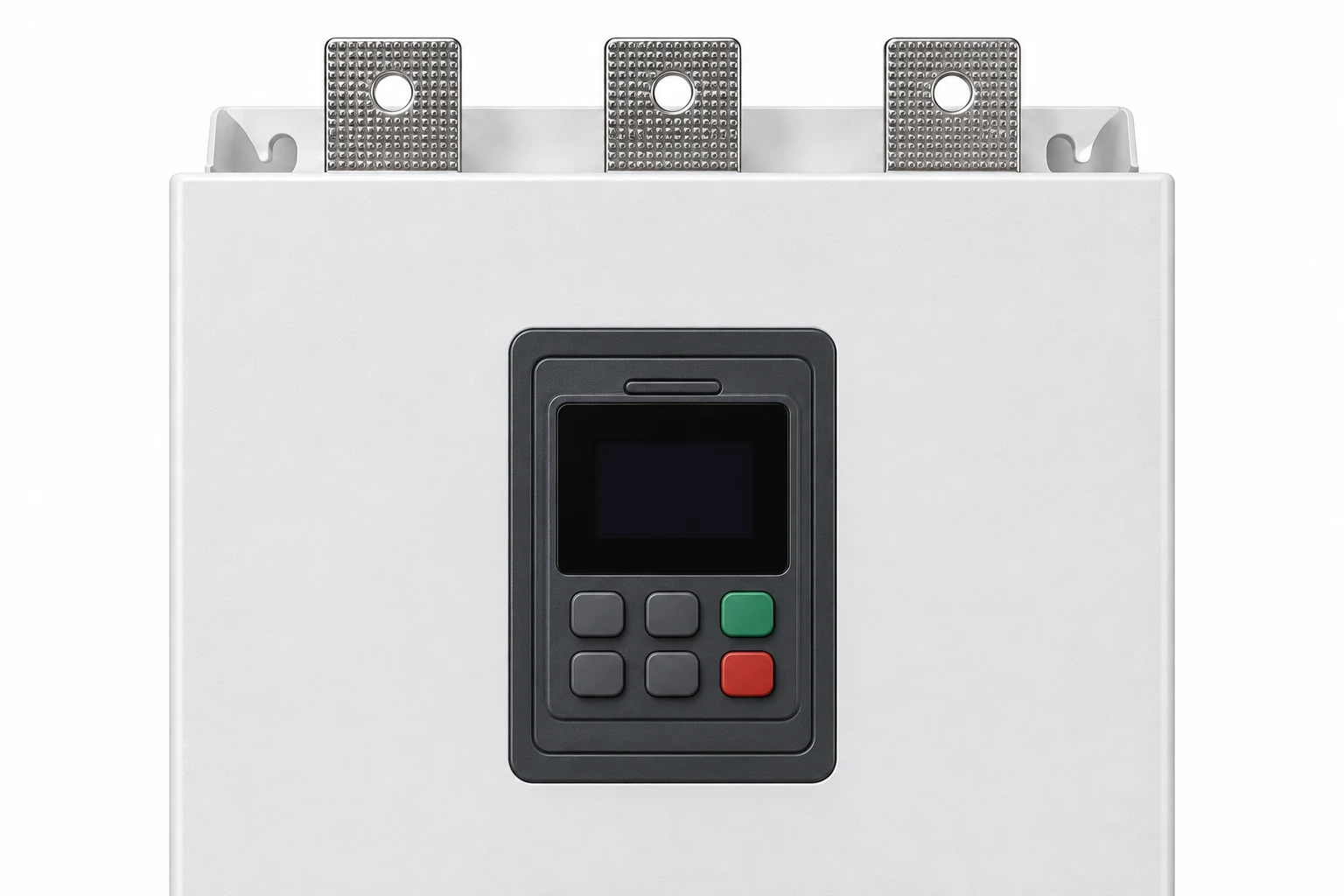
A programmed voltage ramp is a control setting, while the motor’s actual acceleration depends on load torque and available accelerating torque. The motor may reach speed before or after the nominal ramp behaviour suggests. Record current and relevant running feedback during a controlled start so that the duty assessment is based on what happens, not only on the value shown in a menu.
Current limiting also affects the result. Reducing starting current too far can prevent acceleration or prolong the high-current period. Increasing a current limit without checking the equipment and supply can introduce other problems. The engineer should evaluate current and time together with load behaviour instead of assuming the lowest current setting always gives the coolest start.
A simple comparison illustrates why time matters. If two hypothetical starts had the same constant current, one lasting twenty seconds would expose the current path for twice as long as one lasting ten seconds. Real current traces are not constant and device losses are more complex, so this example is not a sizing formula. It simply explains why a starts-per-hour claim must state the associated start duration.
A cold start follows enough time for the relevant equipment to return toward its initial thermal condition. A hot restart follows operation or another recent start. The permitted conditions depend on the motor and starter documentation. Do not define “cold” from a fixed waiting time taken from an unrelated model or assume that a cabinet fan has cooled the motor rotor.
Emergency recovery may require a burst of starts after a power interruption. Write that requirement explicitly and ask the supplier and motor manufacturer to confirm it. If the process cannot tolerate the required cooling interval, the solution may involve a different equipment selection or a change in operating strategy. Disabling a thermal lockout does not create additional thermal capacity.
Where temperature sensors or thermal models are available, document their roles and limitations. A thermal estimate does not replace all physical protection, and a successful reset does not prove that the cause has disappeared. Preserve the alarm history and current traces before changing settings so that an intermittent duty problem can be investigated.
| Duty input | Information to provide | What the supplier should confirm |
|---|---|---|
| Motor | Nameplate current, voltage, power and connection | Compatibility and the rating basis used |
| Load | Driven machine, inertia and starting condition | Suitability for the required acceleration duty |
| Starting event | Current profile and actual acceleration duration | Permitted start envelope for the selected model |
| Repeated operation | Maximum starts and minimum spacing, including bursts | Hot-start and recovery limitations |
| Running period | Load current, duration and bypass arrangement | Thermal duty of the complete assembly |
| Environment | Cabinet temperature, altitude and cooling conditions | Required derating and installation measures |
The schedule supports right-sizing rather than maximizing the nameplate power. Natural Resources Canada’s motor guide provides background on motor selection and operating characteristics. A complete starter selection must retain that same distinction.
On a pump application, closely spaced starts may result from a small effective control volume, a narrow pressure band, unstable sensing or an operating valve problem. On a conveyor, repeated start attempts may reflect a mechanical blockage or an unsuitable loaded-start sequence. These are different causes, and a larger starter does not correct all of them.
Review the command history together with the trip history. Determine whether the controller requested a normal cycle, lost an input or automatically retried after a failure. Repeated unsuccessful starts are particularly important because the motor may remain at low speed while drawing elevated current. Define an allowed retry policy in the approved control sequence.
If the process needs regular speed variation rather than occasional full-speed starts, reconsider the control architecture. The soft starter versus VFD comparison explains the functional difference. This is a process-selection question, not a reason to assume every VFD can satisfy an unlimited starting duty.
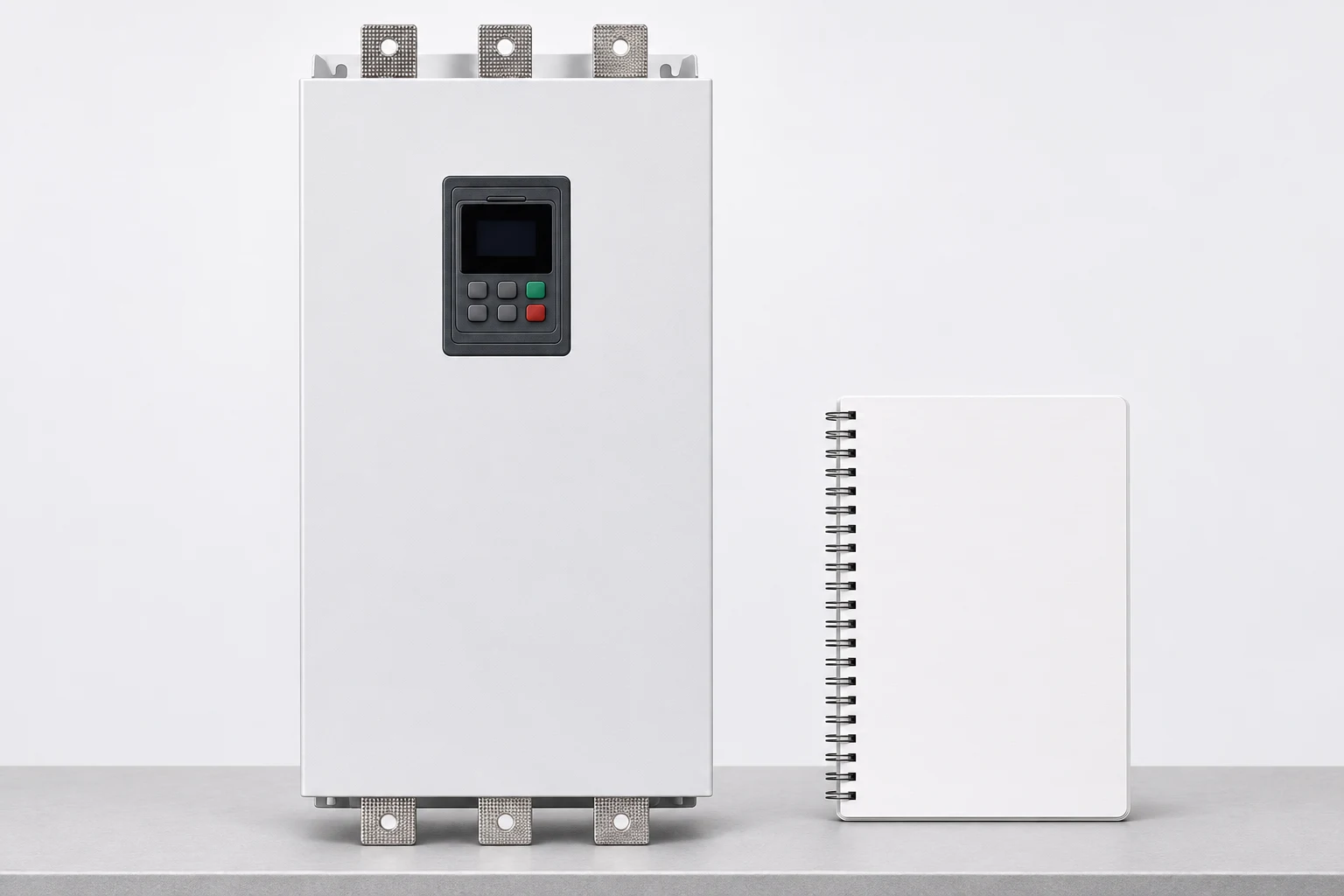
The built-in bypass soft starter product family is a relevant starting point for a duty enquiry. Its visible six-terminal structure identifies the product pictured; it does not establish a maximum starting frequency. Provide the duty schedule and ask for a documented model recommendation with its applicable conditions.
Use the three-phase soft starter selection guide for the broader equipment review. The ramp-time guide addresses acceleration settings, while the fault-checking guide helps separate command, supply and load problems. None of those checks should be replaced by a generic starts-per-hour value.
Agree on a safe test plan within the documented limits. Record ambient conditions, starting current, acceleration time, bypass transfer and the interval to the next start. Confirm the motor manufacturer’s constraints as well as the starter’s. Do not deliberately exceed a protective limit simply to demonstrate that a trip occurs.
Keep the accepted settings and duty record with the machine documents. If production later increases the cycling rate, reassess the duty before changing restart delays. A clear baseline makes it easier to recognize whether a later thermal alarm comes from changed process demand, degraded cooling, a load problem or an incorrect parameter change.
A machine might normally start once per hour but attempt several restarts within minutes after an upstream interruption. Submit both sequences to the supplier. The normal pattern may be acceptable while the recovery burst exceeds the permitted hot-start duty. A restart delay or revised recovery sequence can be part of the approved solution when the process permits it.
Include unsuccessful attempts in the record. A start that never reaches running speed still places thermal demand on the equipment. Counting only completed cycles can therefore understate the duty that caused the alarm. Preserve timestamps and current traces so the motor and starter suppliers can evaluate the same event history.
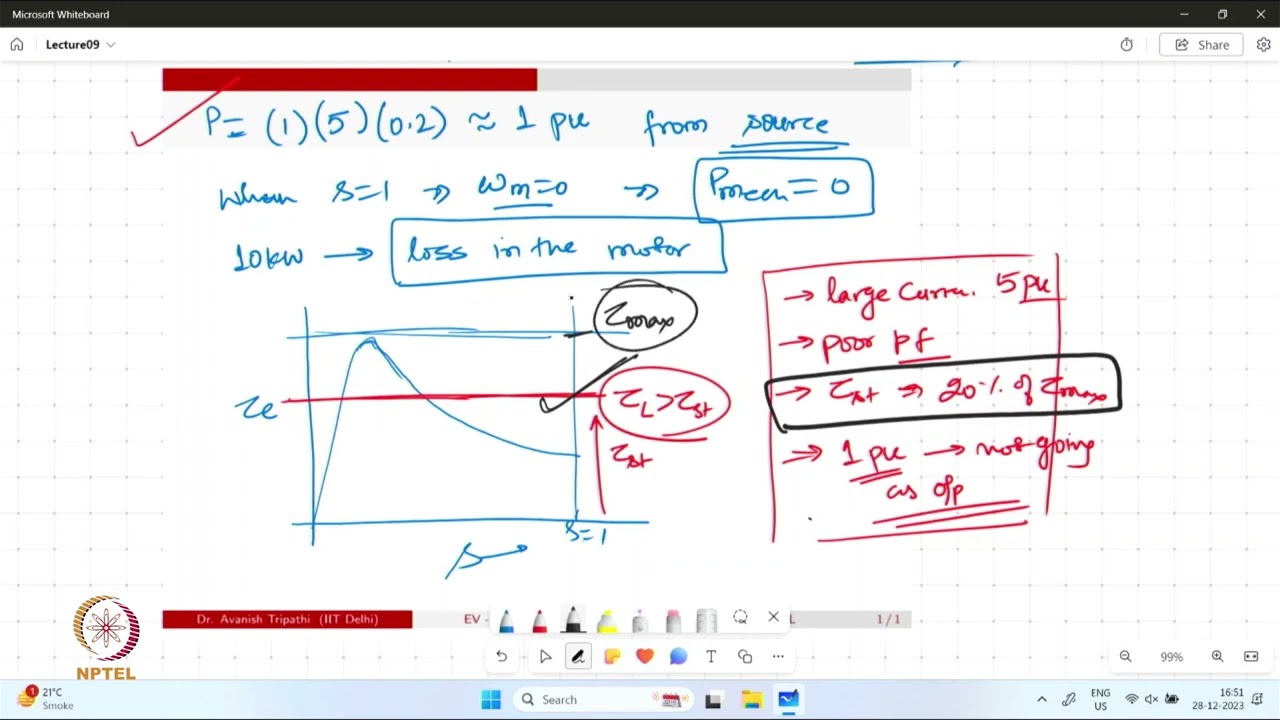
The NPTEL lecture below explains motor starting and speed-control principles. It helps explain why load and acceleration conditions matter; it does not assign a thermal rating to the illustrated starter.
Watch on YouTube — NPTEL IIT Delhi
The permitted number depends on the selected model’s declared duty, starting current, acceleration duration, cooling interval, running duty and environment, together with the motor’s limits.
No. Bypass can reduce semiconductor heating during normal running, but starting still produces heat and the motor has its own repeated-start limitations.
Not necessarily. A longer high-current acceleration can increase heating. Evaluate the actual current and acceleration trace with the load and equipment documentation.
Repeated resets are not a duty-rating solution. Preserve the fault information, follow the required cooling and reset conditions, and investigate the cause before further operation.