Prefabricated substation condensation occurs when moisture in the air meets a surface cold enough for water to form. Prevention starts with identifying the moisture source and the cold surface, then coordinating enclosure integrity, drainage, heating, dehumidification and necessary ventilation. Simply fitting a larger fan or heater can leave the original cause unresolved. For a new project, specify the site conditions and require an environmental control proposal matched to the supplied equipment. For an existing installation, record when and where moisture appears before changing settings. This guide gives procurement and maintenance teams a practical framework for that review.
Water inside a station can follow several routes. Rain may enter through damaged roof joints or poorly maintained openings. Groundwater or wet cable trenches may introduce moisture from below. Humid air can enter a relatively cold enclosure and deposit water on metal or insulation. These mechanisms can coexist, so a photograph of a wet floor does not establish a single cause.
Begin with a dated location record. Note whether the moisture appears after rainfall, during a change in weather, after the equipment has been idle, or during normal operation. Record the affected compartment and surface, not just the overall station temperature. A dry transformer compartment does not prove that a separate switchgear or cable compartment is dry.
This is a different task from calculating heat removal. The existing prefabricated substation ventilation guide addresses the relationship between heat losses and airflow. Here, the question is whether moisture can reach a surface under conditions that produce condensation. Both reviews must eventually agree on one enclosure design.
The dew point describes the temperature at which water vapor in the local air can begin condensing. A nearby surface can be colder than the measured air, especially after an overnight temperature change or when warm humid air reaches previously cooled equipment. Relative humidity alone therefore gives an incomplete picture of the risk.
The NOAA condensation demonstration explains the basic physical process using moisture on the outside of a chilled glass. In a station, the engineering application is to compare local moisture conditions with relevant equipment surfaces, while also looking for liquid water entering by another route.
Ask the responsible engineer to define measurement locations, instrument suitability and the observation period. Instruments must be installed without compromising electrical clearances or enclosure performance. Do not open energized compartments to obtain a convenient measurement. Ambient records collected from a safe location can help plan a properly controlled inspection.
List the enclosure boundary from roof to foundation. Include door seals, joints, cable entries, ventilation openings and interfaces with trenches or building spaces. For each location, distinguish the intended function from its actual condition. An opening that must remain available for ventilation requires a different remedy from an unintended gap around a cable penetration.
Review the civil work as part of the electrical installation. Ponding near a foundation, a persistently wet trench or inadequate drainage may keep supplying moisture even after internal heating is installed. Record the condition and ask the appropriate designer to propose a remedy. Avoid improvised sealants or drainage holes that could affect fire separation, environmental protection or the station’s verified construction.
Also record recent changes. A replacement door gasket, altered cable entry, newly installed air conditioner or modified fan schedule can explain a change in behavior. Compare drawings and maintenance records with the actual installation. An environmental problem that begins after a modification deserves a specific review of that change.
The following table is a project review aid rather than a universal design specification. No heater size, humidity setpoint or airflow rate can be selected from the appearance of the enclosure. Each proposal needs the station manufacturer’s review and the site’s electrical, thermal and environmental requirements.
| Observation or concern | Review direction | Evidence to request |
|---|---|---|
| Water follows rain near a joint | Check weather protection and the intended enclosure interface | Inspection record, approved repair method and repeat observation after rain |
| Wet cable trench or foundation interface | Review drainage and moisture movement from below | Civil details, cable entry arrangement and responsibility for corrective work |
| Moisture appears during temperature transitions | Compare local dew point conditions with cold surfaces | Time-aligned temperature, humidity and operating records |
| Heater fitted but moisture persists | Check control operation, placement and continuing moisture supply | Approved circuit, functional test and before/after environmental trend |
| Dehumidifier proposed | Review condensate disposal, access and integration with heat removal | Control narrative, drainage design and maintenance plan |
| More ventilation proposed | Evaluate outdoor moisture and pollution as well as heat | Combined thermal and environmental assessment |
Heating changes surface and air temperatures; it does not by itself remove the incoming water vapor. Dehumidification is intended to remove moisture, but the installation still needs a reliable way to handle collected water. Ventilation exchanges indoor and outdoor air, so its effect depends on both environments. These functions should be assessed together rather than treated as interchangeable accessories.
A useful inquiry describes the installation location, weather exposure, pollution concerns, expected load pattern, shutdown periods, adjacent wet spaces and access arrangements. Include any known history of condensation. Ask the supplier to identify the assumed service conditions and the limits of the proposed enclosure and internal equipment.
The public scope of IEC TS 62271-304:2019 addresses indoor enclosed switchgear used under special conditions involving condensation and pollution. That scope is a reason to discuss the actual environment with the equipment supplier; it is not proof that every prefabricated station or every enclosed component has a particular classification.
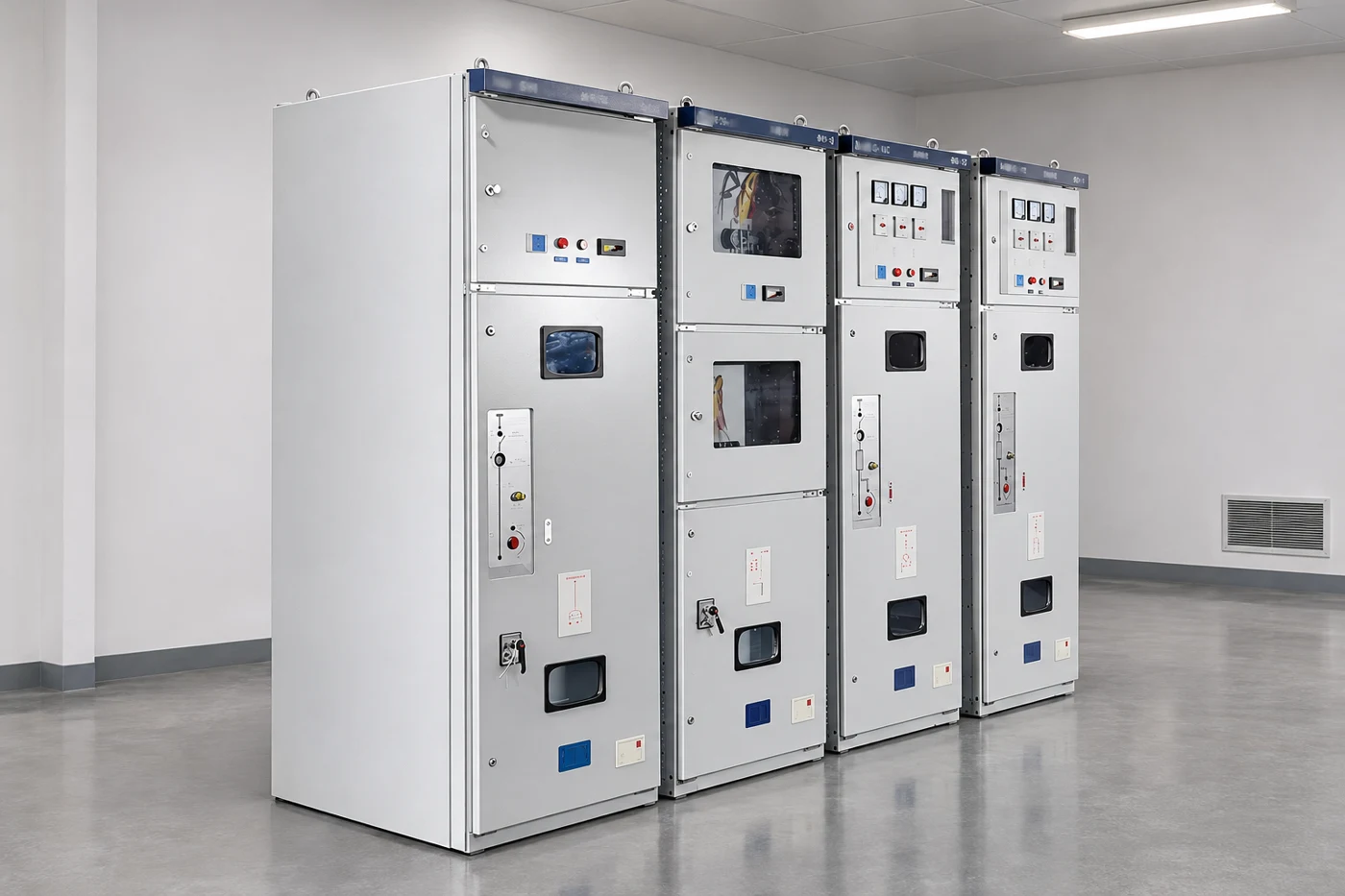
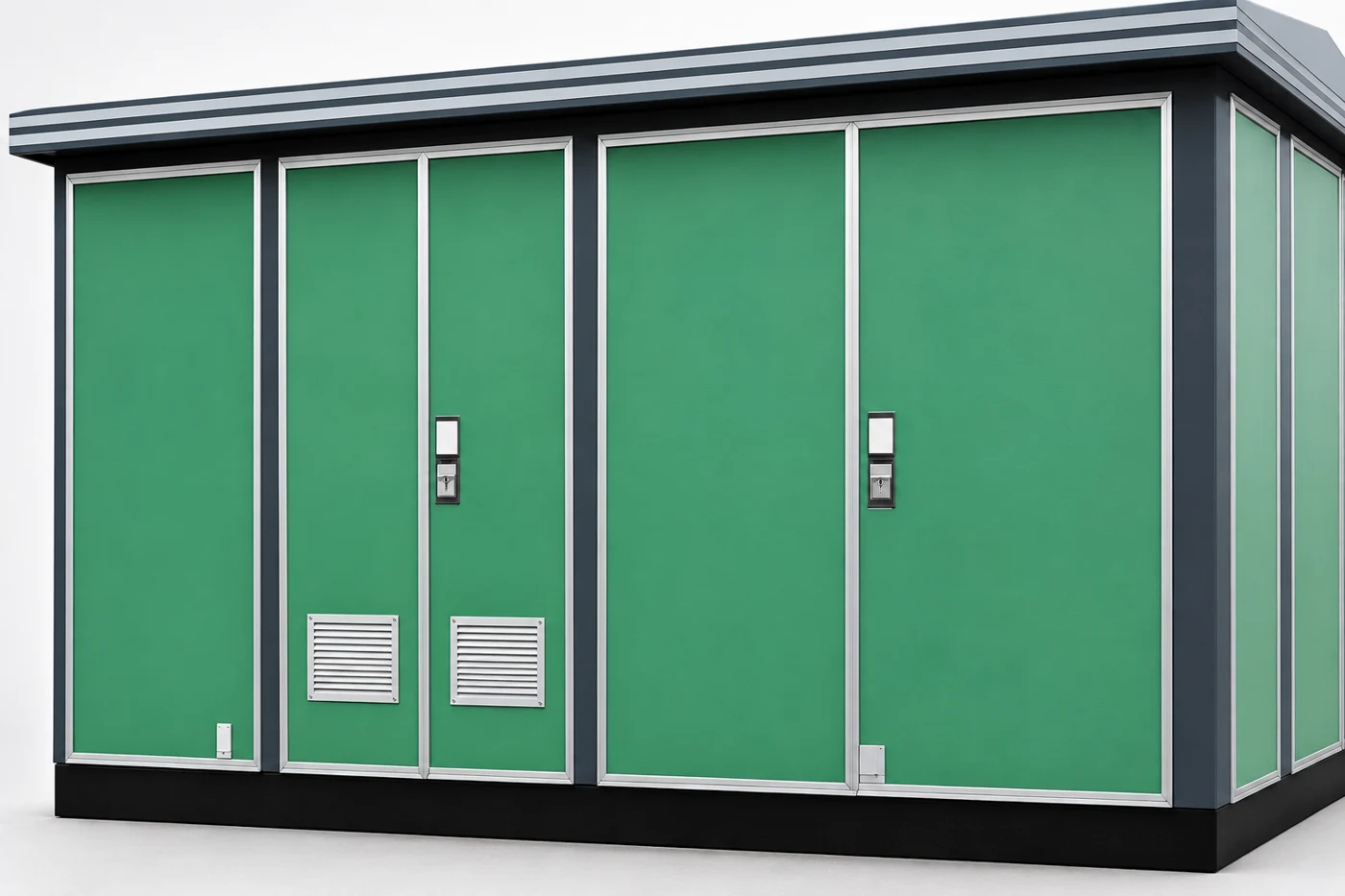
For a station such as the YB outdoor prefabricated substation family, request project-specific drawings, compartment arrangements and an explicit environmental proposal. Website photographs show the product family, not hidden heaters, moisture sensors, enclosure ratings or test results. Record which options are included in the offered configuration.
The acceptance plan should connect each proposed measure with an observable check. For a controlled heater, confirm the installed circuit, controller identification and approved functional test. For drainage work, inspect the completed interfaces against the approved details. For monitoring, confirm that recorded values have meaningful timestamps and location labels.
Short factory checks cannot reproduce every seasonal site condition. Divide acceptance into factory documentation, installation inspection, functional checks and an agreed follow-up period under representative conditions. State who reviews the environmental trends and what evidence triggers corrective action. This prevents a short dry inspection from becoming an unsupported claim of permanent protection.
Retain the baseline data. Without it, a team may report that conditions improved while being unable to distinguish the effect of the modification from a change in weather or load. The comparison should describe the observed conditions and any limits of the trial, rather than promising that condensation can never recur.
Water near electrical equipment requires a competent assessment of the equipment condition and the work needed. Do not wipe internal components, defeat access controls or repeatedly energize equipment to see whether the moisture disappears. Follow the site’s isolation, access and restoration procedures and the manufacturer’s instructions.
The HSE electricity at work guidance provides the broader framework for managing electrical work. It does not replace the equipment-specific inspection criteria. If there is contamination, corrosion or suspected insulation deterioration, obtain a documented assessment before return to service.
The environmental review should also respect the access and operating constraints described in the RMU interlock review. A dry enclosure does not establish safe switching conditions, and an interlock does not prove that moisture damage is absent. Keep these acceptance records linked while preserving their separate purposes.
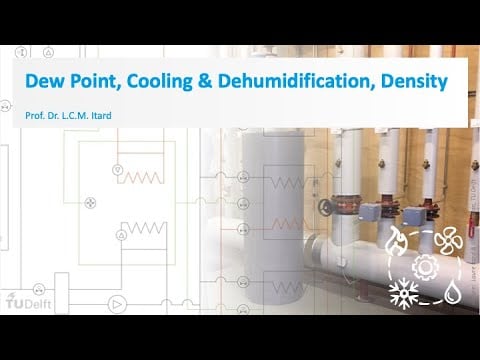
The TU Delft lesson below explains dew point, cooling and dehumidification. It is background education for interpreting environmental records, not a station installation procedure or a source of universal setpoints. Use the principle to ask clearer questions about why a specific surface becomes wet.
Watch on YouTube — ECObuild 4x Efficient HVAC Systems
Before approving the solution, assemble the site conditions, moisture location record, relevant drawings, control narrative, equipment options and acceptance responsibilities. Identify every assumption that still needs field confirmation. Include the person responsible for maintaining heaters, filters, drains and monitoring equipment after commissioning.
A planned review after unusual weather or an extended shutdown can be more useful than a vague instruction to check regularly. Set that review through the site’s maintenance program and equipment guidance. Where the project also includes low-voltage assemblies, coordinate enclosure changes with the documentation discussed in the control panel SCCR review; an environmental modification should not silently invalidate another part of the approved assembly.
The purchasing decision is ready when the proposed measures answer the observed mechanism, the installation responsibilities are clear and the verification method is agreed. If the evidence still consists only of a photograph and a suggested heater, the environmental design remains incomplete.
No. Heating may help manage cold surfaces, but continuing moisture ingress, unsuitable control or poor placement can leave the problem unresolved. Review the moisture pathway and operating conditions before changing heater capacity.
Yes. Water vapor can condense on a sufficiently cold surface even when rain is not entering. Investigate local temperature and moisture conditions as well as possible liquid water pathways.
No. Ventilation exchanges indoor and outdoor air, so the outcome depends on both environments. The design must address moisture, heat removal and pollution together.
Request stated service conditions, compartment drawings, the proposed moisture control measures, included options, maintenance needs and an acceptance plan matched to the installation.