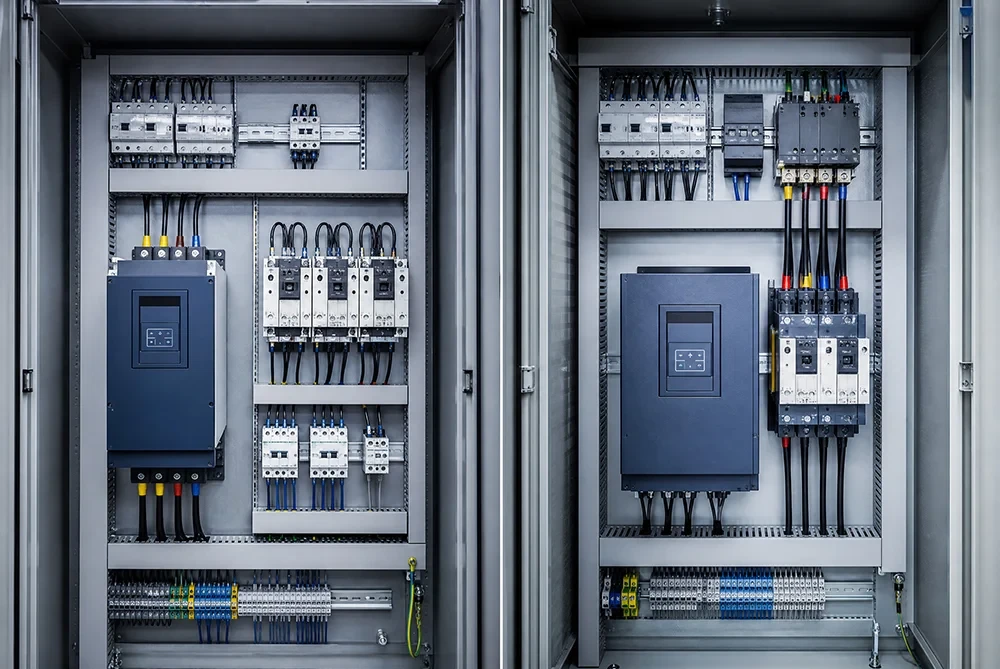
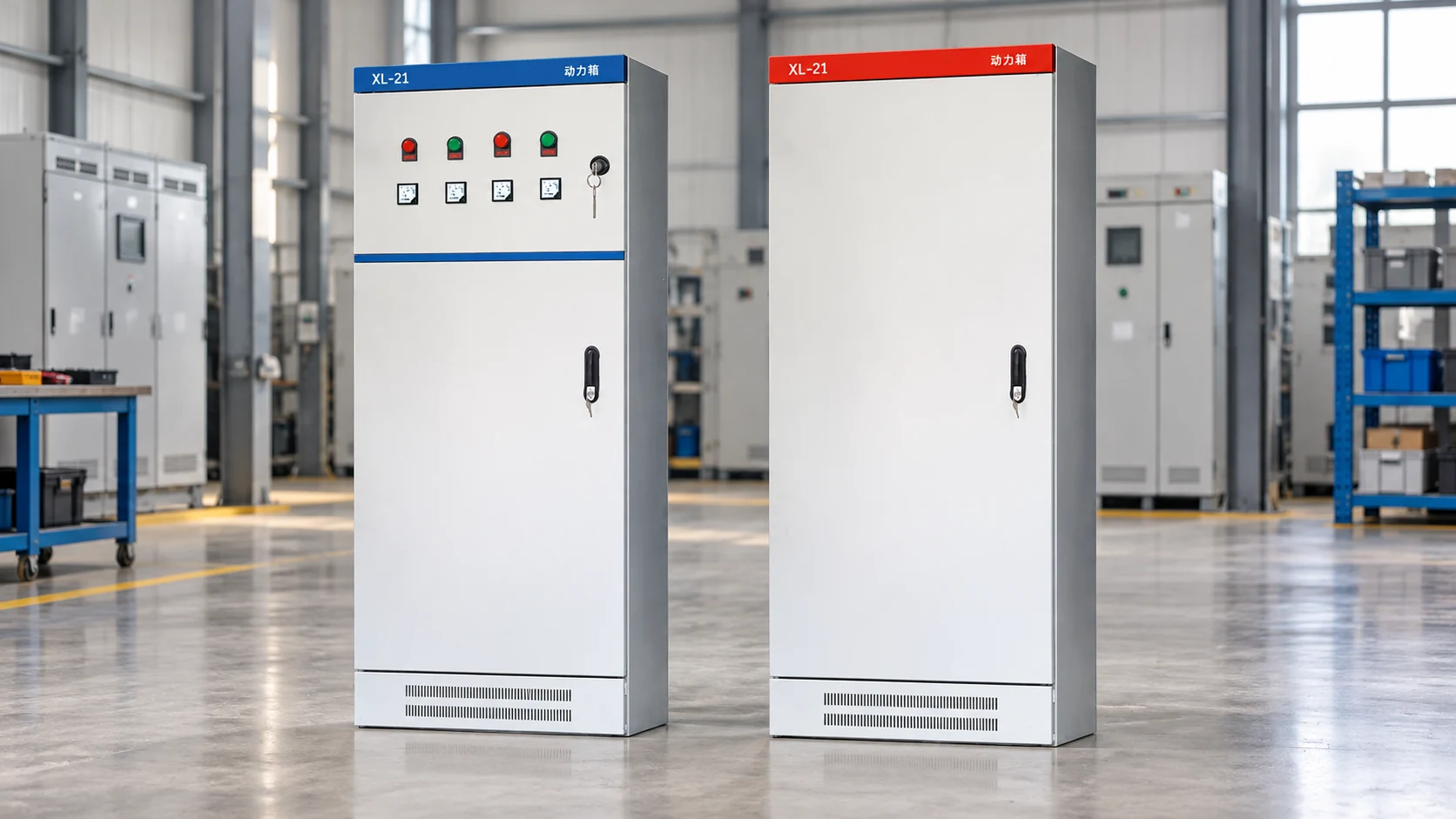
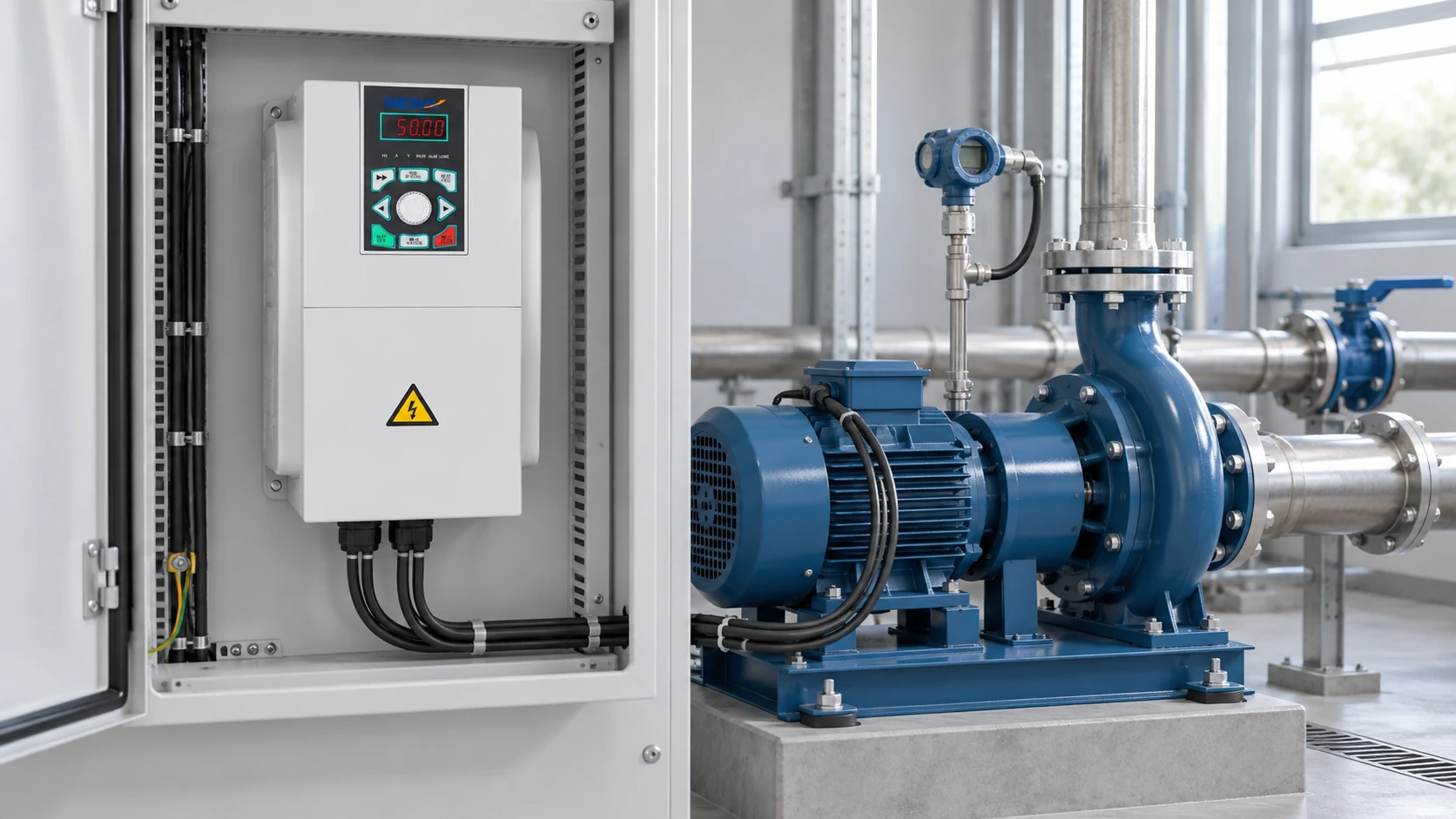
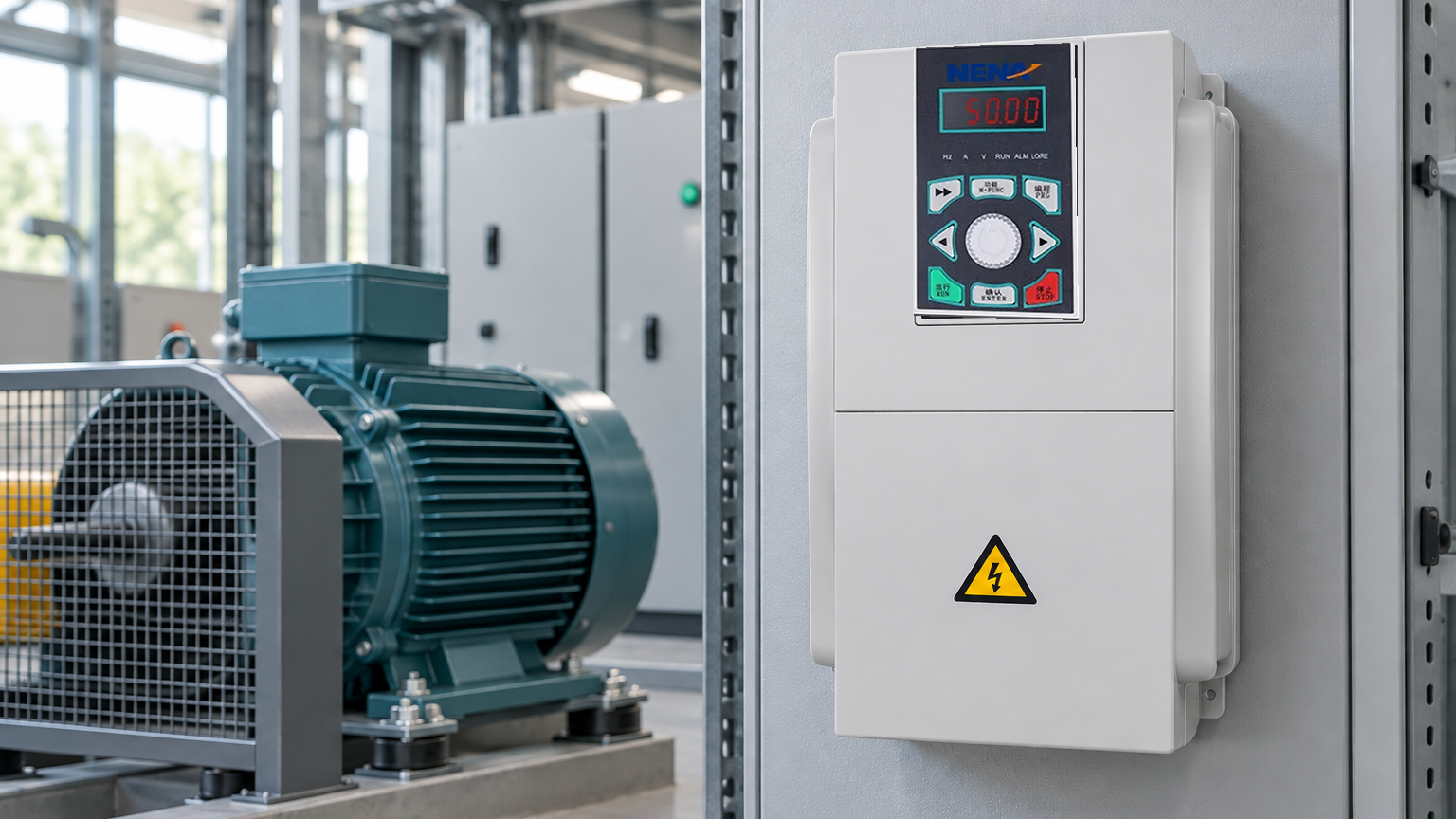
When a panel builder in Guangzhou encounters a conveyor that trips during acceleration, replacing its drive with another unit carrying the same kW label can leave the problem unresolved. In this illustrative example, the loaded conveyor needs more acceleration torque than the selected duty rating permits. The useful starting point is the motor current and load profile, followed by the drive’s overload capability.
Summary: A motor inverter for an industrial AC motor is normally specified as a variable frequency drive, or VFD. Match voltage, phase configuration and continuous output current before checking speed range, torque and installation conditions. For a four-pole induction motor, 50 Hz corresponds to 1,500 rpm synchronous speed; actual shaft speed is lower because of slip. A matching power label alone cannot establish suitability.
The U.S. Department of Energy’s Improving Motor and Drive System Performance explains why the complete motor-driven system matters. A useful specification includes the machine, motor, drive, electrical supply and operating schedule. This guide applies to industrial AC motor drives; a solar grid inverter or general-purpose backup-power inverter serves a different application.
Start with the motor nameplate and electrical supply
Record rated voltage, current, frequency, power, speed and the permitted winding connection. Then identify the available input supply separately. A drive intended for three-phase input must not be assumed suitable for single-phase input. Any such use needs an explicit manufacturer rating, including the resulting available output current.
For an induction motor, synchronous speed follows ns = 120f / p, where frequency f is in hertz and p is the number of poles. A four-pole motor therefore has synchronous speeds of 1,500 rpm at 50 Hz and 900 rpm at 30 Hz. These are calculated reference speeds, not guaranteed loaded speeds. The motor’s slip and the drive’s control method affect the actual result.
The continuous drive current available after temperature, altitude and other applicable derating must meet the motor’s required current. Check overload magnitude and permitted duration as a separate condition. The DOE sourcebook discusses motor–drive interactions because a motor that runs acceptably from the mains may need additional consideration when supplied by a PWM drive.
Keep voltage markings precise. For example, a 230/400 V delta/star motor and a 400/690 V delta/star motor do not use the same connection on a 400 V output. Follow the motor connection diagram and drive manual. A voltage class is not permission to guess the terminal links.
Match torque, minimum speed and stopping duty
A centrifugal fan operating against a variable demand is a different load from a loaded conveyor. Fans and centrifugal pumps often offer opportunities to reduce speed when the process allows it. Conveyors, mixers and positive-displacement equipment can require substantial torque even at reduced speed. Specify the actual machine and its operating envelope rather than selecting a generic “energy-saving” setting.
The DOE tip sheet When Should Inverter-Duty Motors Be Specified? discusses the relationship between speed range, motor cooling and inverter operation. A shaft-mounted fan provides less cooling at lower motor speed. Continuous low-speed operation under significant torque may therefore require motor derating, independent ventilation or a motor designed for that duty. There is no universal minimum safe frequency.
Below base speed, maintaining the appropriate voltage-to-frequency relationship helps maintain flux, subject to the motor and control limits. Above base speed, available voltage is limited and torque capability can fall. Do not assume that doubling a speed command doubles the machine’s usable output. Check bearings, couplings, balancing and the driven equipment’s permitted speed.
Stopping requirements also affect selection. A high-inertia load can return energy to the DC link during deceleration. A short stopping time may require a compatible braking arrangement or regenerative solution. A coast stop, ramp stop and safety-related stop perform different functions. Record the required stop behavior before selecting hardware.
Compare a motor inverter with starting-only options
A VFD changes the motor supply frequency during operation. A conventional soft starter controls the starting transition at the supply frequency and normally hands the motor over to full-voltage running. The DOE sourcebook distinguishes speed control from starting-current management; that distinction should guide the equipment choice.
| Option | Primary function | What to check | Cost considerations |
|---|---|---|---|
| Motor inverter / VFD | Adjust running speed and manage acceleration | Output current, torque control, cooling, braking and EMC installation | Drive, integration, filters or braking hardware where required |
| Soft starter | Manage starting voltage/current for fixed-speed running | Starting torque, start duration, starts per hour and bypass arrangement | Starter, protection, bypass and thermal management |
| Star-delta starter | Start a suitable motor at reduced winding voltage | Accessible winding terminals, delta running voltage and available starting torque | Contactors, timer/interlocks, wiring and transition behavior |
| Direct-on-line starter | Connect the motor to the supply for fixed-speed operation | Supply capacity, starting current, protection and mechanical starting duty | Simple control arrangement; system impacts still need assessment |
If the process only needs a smoother start and then continuous fixed speed, a VFD may add functions that the application does not need. If the process requires adjustable running speed, a soft starter cannot provide the same result. Select against the required behavior before comparing quotations.
Build an application specification that suppliers can use
A request for “one 11 kW inverter” leaves important engineering decisions open. The same nominal motor power can appear in applications with different current, starting duty and stopping requirements. Use the DOE system-assessment approach to describe both the motor and the work it performs.
| Application | Information to provide | Acceptance evidence |
|---|---|---|
| Centrifugal pump | Required flow/pressure range, minimum permitted speed, feedback signal and dry-running safeguards | Stable operation at agreed process points without hunting or loss of required flow |
| Fan or blower | Airflow demand, mechanical speed limits, resonance restrictions and control signal | Recorded speed/current at representative airflow demands |
| Loaded conveyor | Breakaway torque, loaded acceleration, speed range, stopping time and restart behavior | Successful loaded starts within motor and drive thermal limits |
| Mixer | Material conditions, starting load, continuous low-speed duty and overload events | Stable torque production with acceptable motor temperature |
| Replacement drive | Existing wiring, control logic, parameter backup, cable length and panel conditions | Verified control compatibility and documented commissioning results |
Assess the purchase over its operating schedule. As an illustrative calculation, an independently measured average input reduction of 1 kW over 3,000 operating hours equals 3,000 kWh per year before any change in production hours. Multiply by the applicable energy tariff to estimate the energy-cost effect. This is an arithmetic example, not a saving guaranteed by fitting a motor inverter. Include installation, shutdown time, commissioning and any additional cooling in the project cost.
Check installation, standards and commissioning
The DOE sourcebook identifies cable-related voltage stress and motor insulation as issues in PWM applications. Record cable length, earthing arrangement, nearby sensitive equipment and whether filters are required by the selected drive instructions. An EMC filter does not automatically resolve every long-cable or motor-insulation issue.
IEC 61800-5-1 addresses electrical, thermal and energy safety requirements for adjustable-speed electrical power drive systems. IEC 61800-3 covers EMC requirements and test methods for power drive systems. Their scopes are different. Request documentation for the actual drive and installation conditions rather than treating a standard number as proof that the assembled cabinet or machine is approved.
The DOE publications also refer to NEMA MG 1 Parts 30 and 31 for general-purpose motors operated from drives and inverter-fed motor applications. Check the relevant edition and the motor manufacturer’s limits. A drive supplier’s statement about its own equipment does not establish the insulation, cooling or bearing suitability of an existing motor.
Before energization, qualified personnel should verify protective devices, grounding, wiring segregation and safe isolation, including stored DC-link energy. During commissioning, record the motor parameters, direction, current, acceleration, deceleration, speed limits and restart response. A keypad stop command must not be treated as electrical isolation.
Request a motor inverter quotation with clear selection data
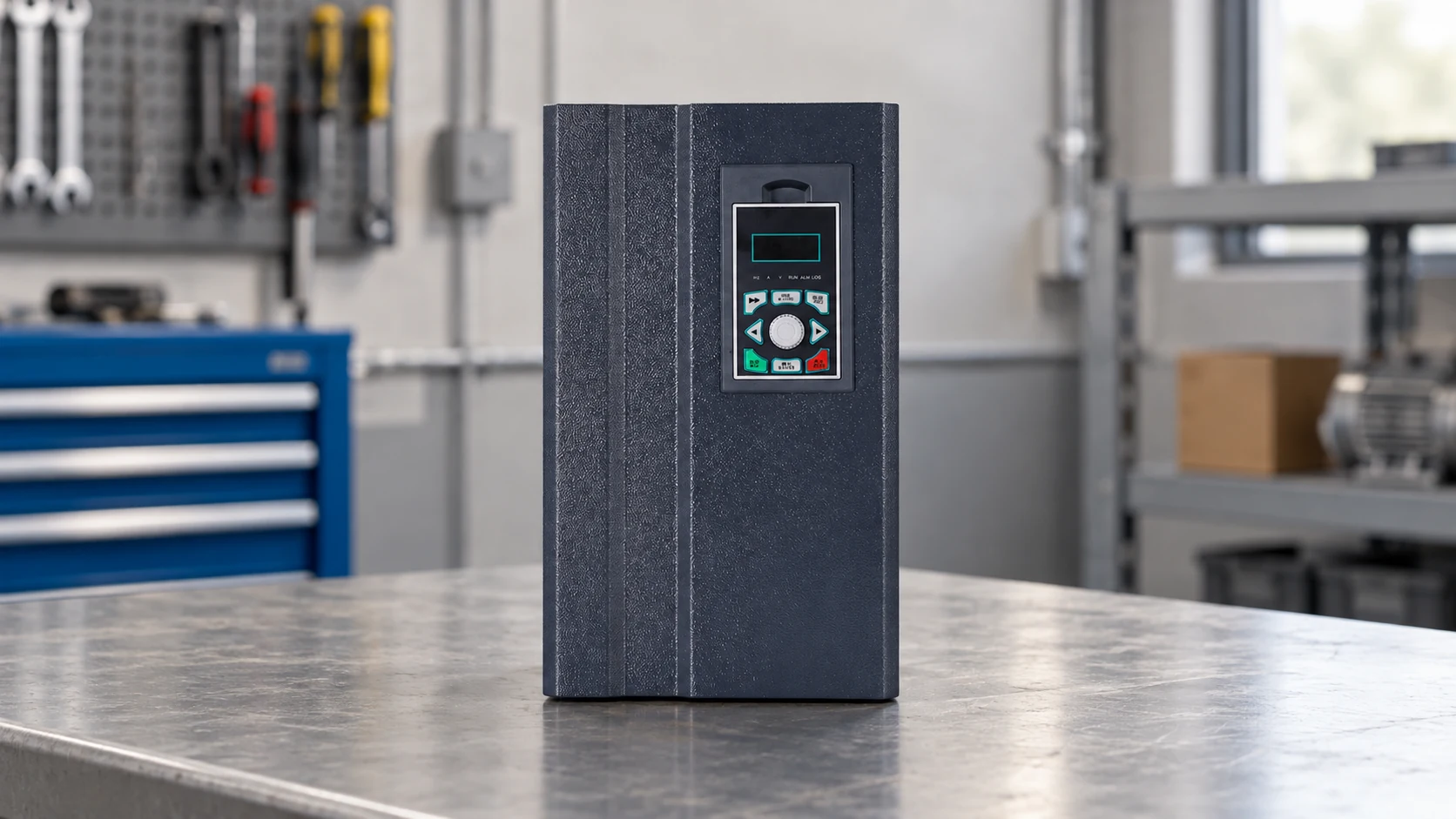
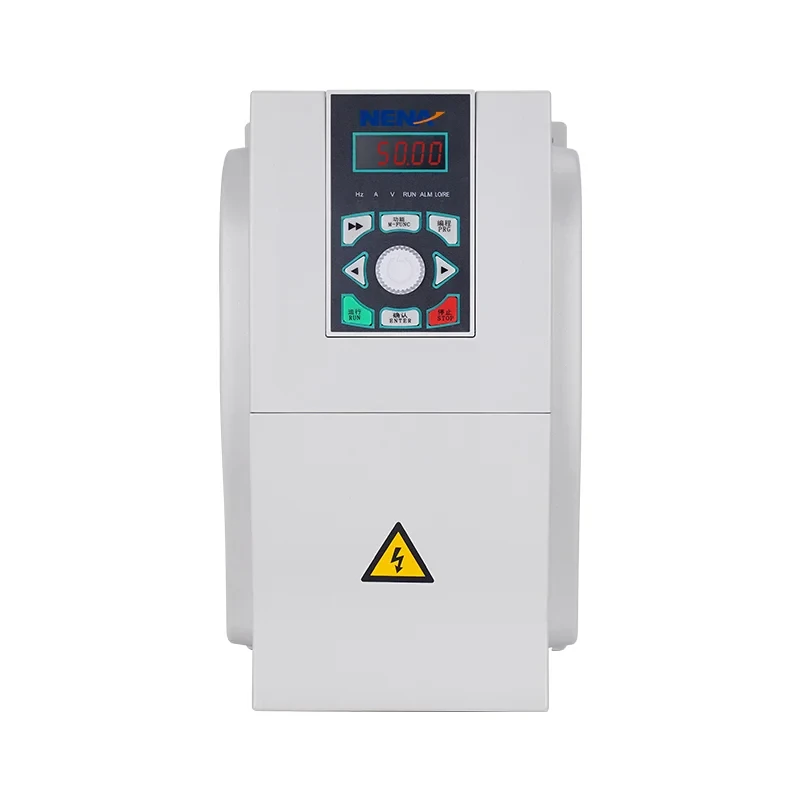
NENA, the motor-control brand of Zhejiang Xinhang Electric Co., Ltd., supplies frequency converters and related motor-control equipment. Its 820-series 5.5–11 kW inverter listing is a starting point for discussing that power range. Confirm the exact model, output current and duty rating against the application before ordering.
- Send a clear motor nameplate and the available input supply details.
- Describe the load, minimum and maximum speed, loaded starts and stopping requirements.
- State panel temperature, altitude, enclosure conditions and motor cable length.
- List control signals, communications, safety interfaces and required documentation.
- Agree on the commissioning record and acceptance conditions before supply.
For the subsequent installation stage, the guide to using a VFD with a three-phase motor covers related commissioning questions. Projects that only require controlled starting can instead explore the soft starter range.
Frequently Asked Questions
Is a motor inverter the same as a VFD?
In industrial AC motor applications, the terms commonly refer to a drive that varies the motor supply frequency and voltage. Technically, the inverter is the DC-to-AC output stage of a typical VFD. Confirm the intended motor application because “inverter” is also used for solar and backup-power equipment.
Can I choose a motor inverter by kW alone?
No. Verify voltage class, available continuous output current, overload duty and applicable derating. The motor’s rated current, actual load and required operating cycle determine whether a particular power-rated drive is suitable.
Can a motor inverter run any AC motor?
No. Confirm the supported motor type and control mode. Induction motors and permanent-magnet motors can require different configuration, and an existing motor’s insulation, cooling and permitted speed range also need checking.
Will an inverter always save energy?
No. Savings depend on the process demand, previous control method and operating hours. A variable-flow application can offer an opportunity, while a continuously full-loaded fixed-speed application may offer little energy benefit and still incurs drive losses.
Can one inverter control several motors?
Some installations use one appropriately selected drive for multiple motors, but only under supported control arrangements. Total current, individual motor protection and permitted switching behavior must be assessed. Independent speed control generally requires separate drives.
References
- U.S. Department of Energy: Improving Motor and Drive System Performance, especially motor characteristics and VFD applications.
- U.S. Department of Energy: When Should Inverter-Duty Motors Be Specified?
- IEC catalogue: IEC 61800-5-1 safety requirements for adjustable-speed drive systems.
A usable motor inverter specification explains the load as clearly as the motor. Contact NENA with the nameplate, supply details and operating requirements to request a model-specific quotation.