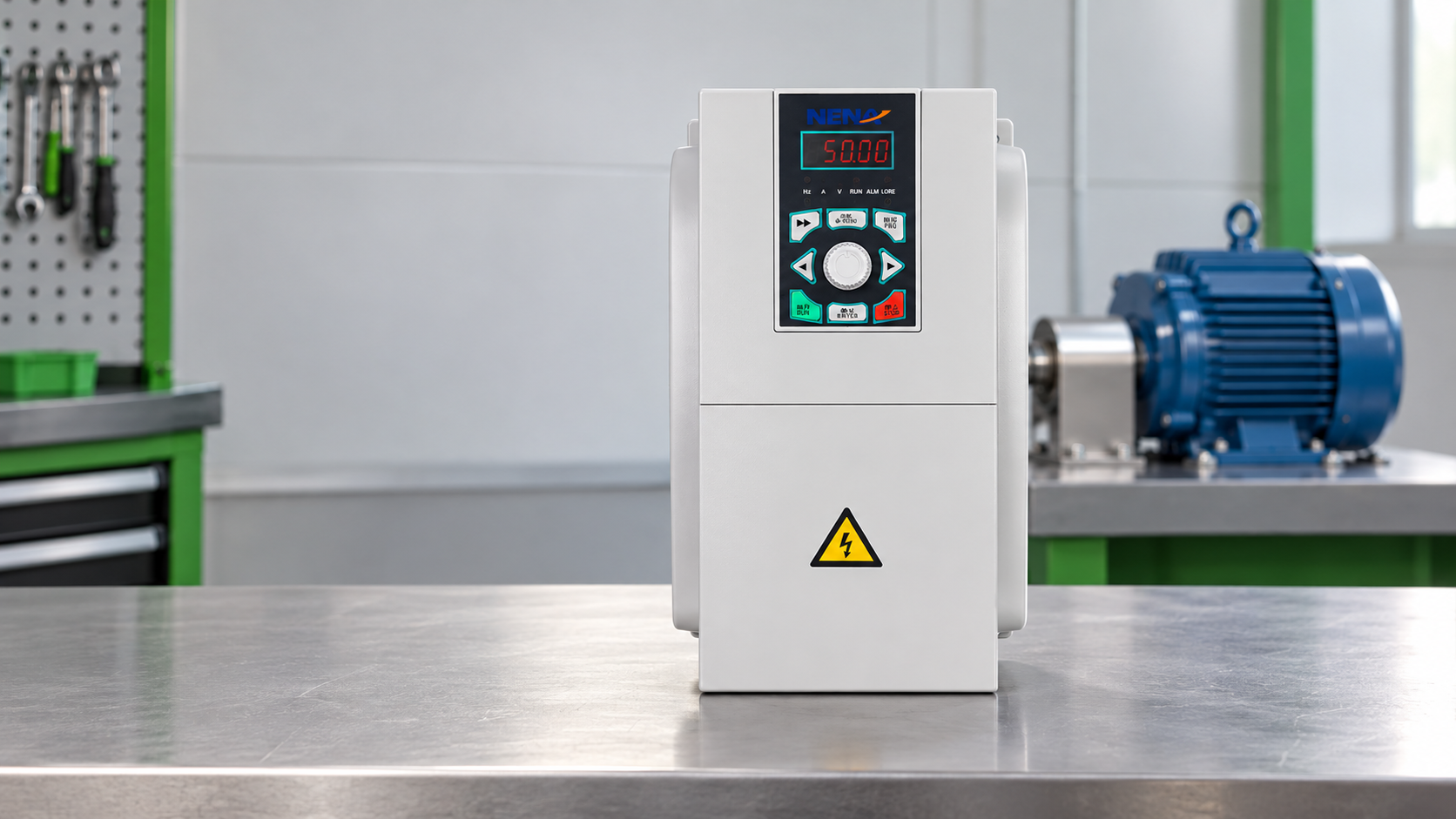
How a three phase inverter works in industrial power conversion
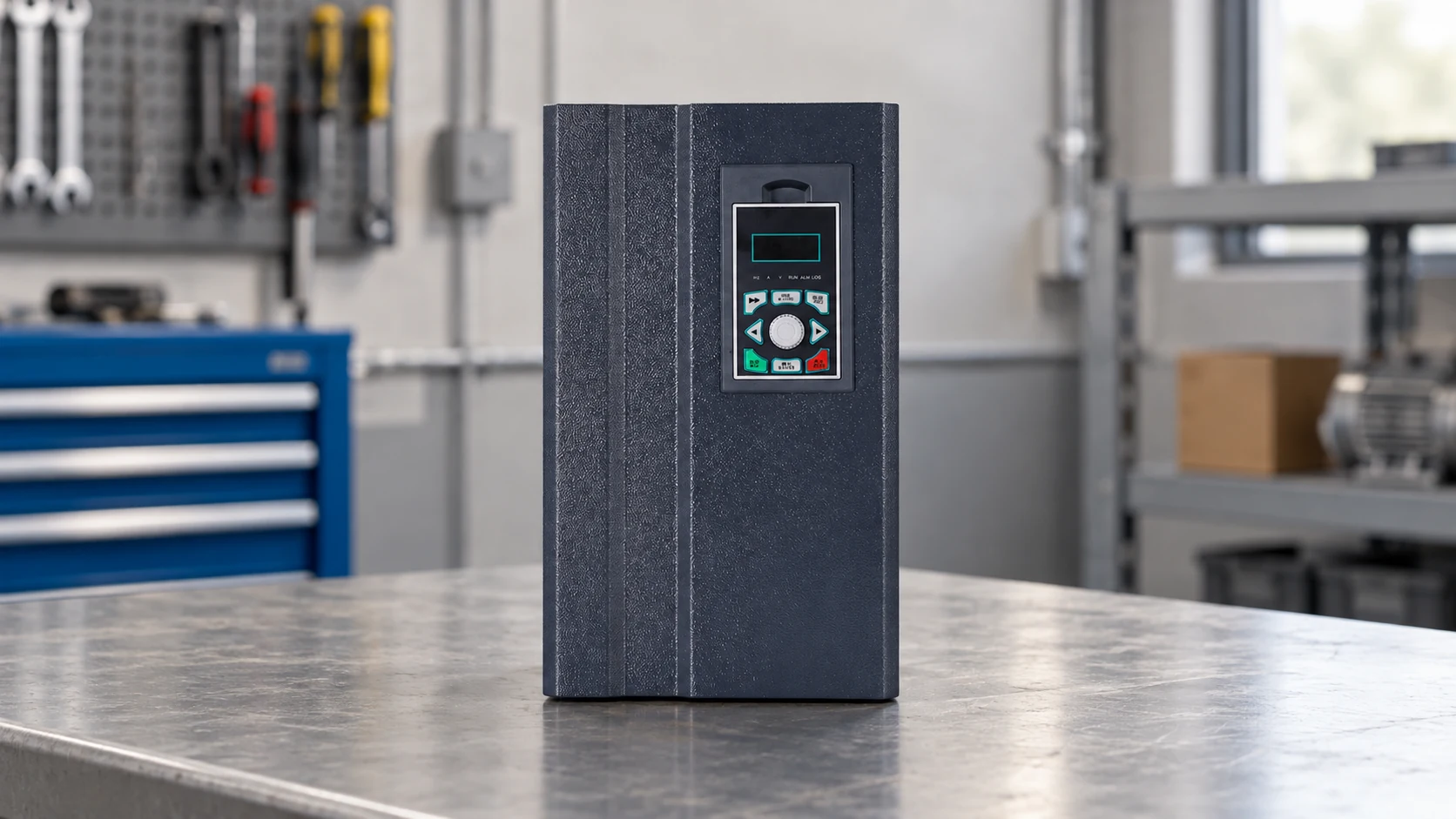
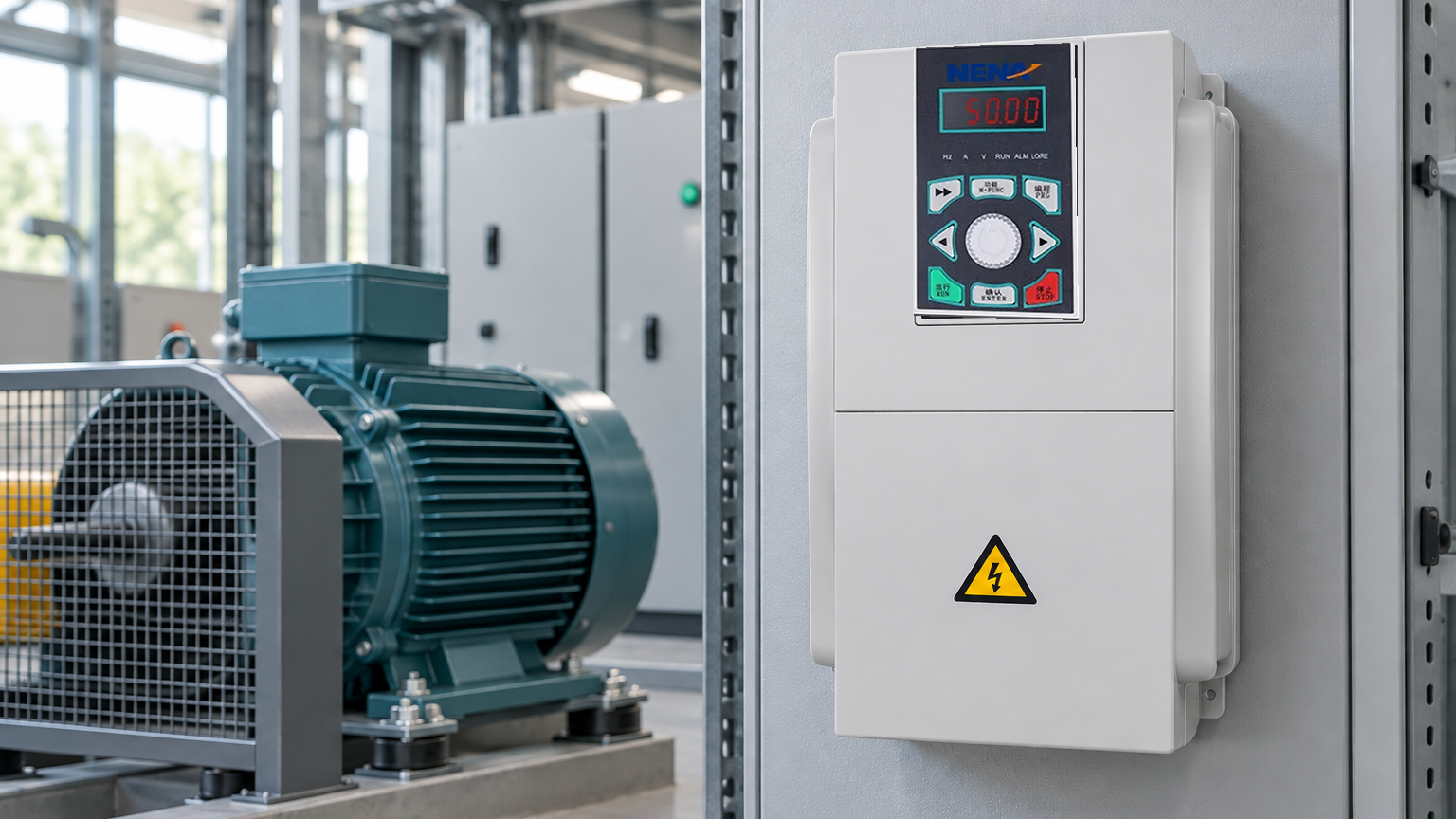
A three phase inverter normally rectifies AC or accepts DC input, stabilizes it on a DC link, then uses semiconductor switches to create three pulse-width-modulated output phases. The motor sees an adjustable fundamental voltage and frequency, while the drive manages acceleration, deceleration, current limit, fault response, and process signals. This is why a drive selected only by nameplate kilowatts can still fail in the field.
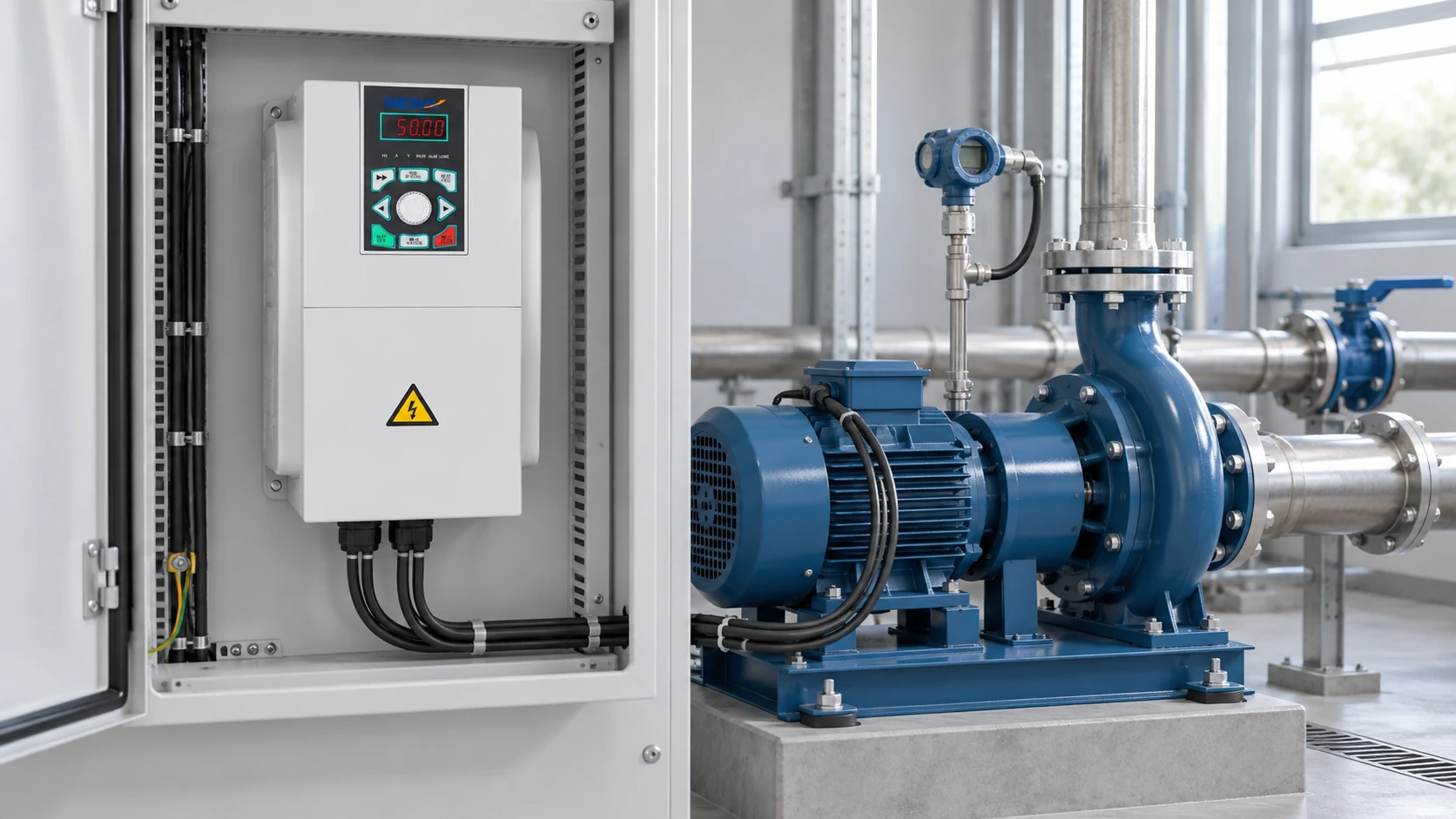
The 120-degree phase relationship matters because a balanced three-phase motor receives smoother rotating magnetic force than it would from a single-phase supply. In pump and fan duty, affinity laws make this control commercially important, although the real saving depends on static head, bypass losses, duty cycle, and process limits.
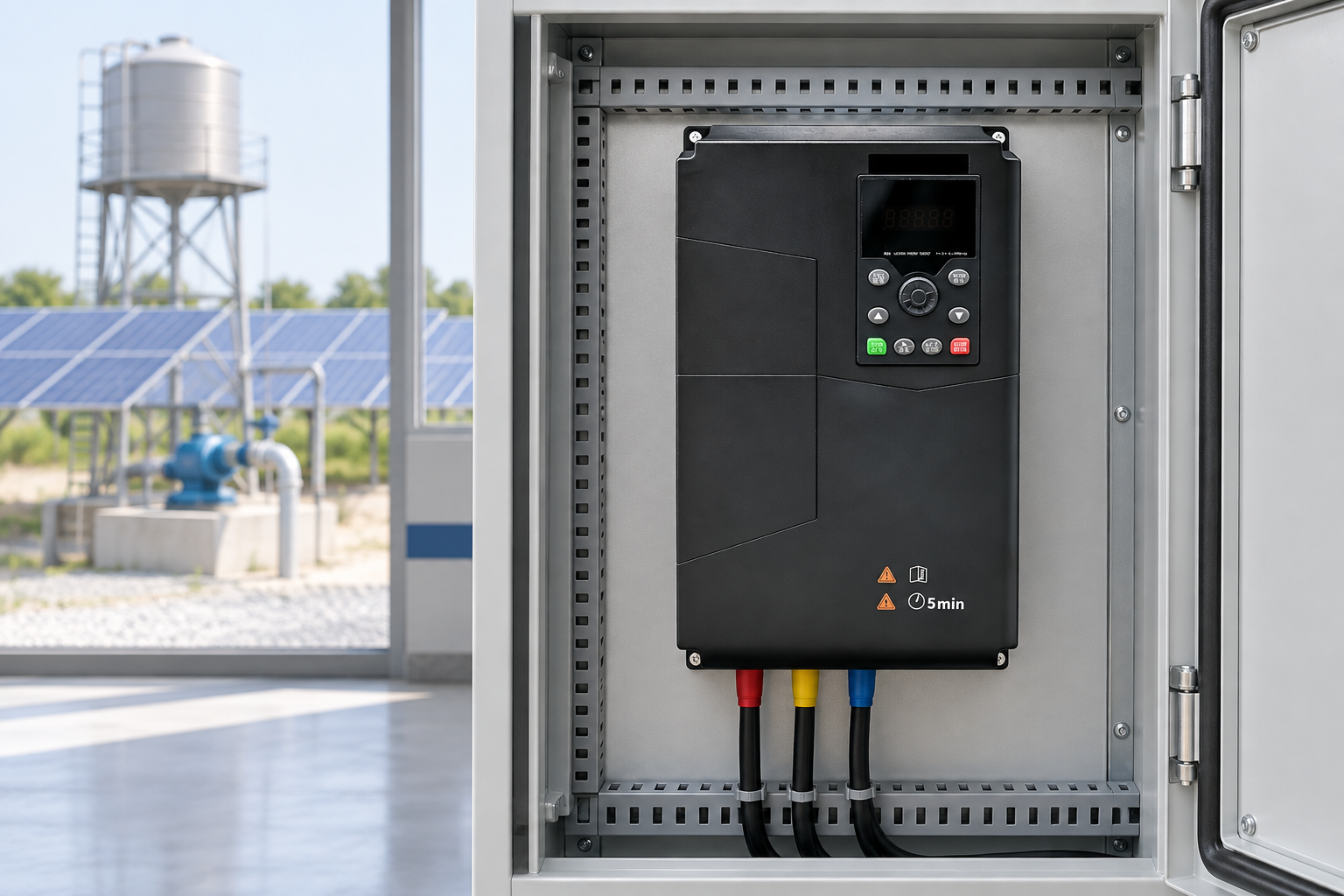
For industrial panels, the hidden details are the input reactor or DC choke, EMC filter class, braking method, carrier frequency, cooling path, and protection coordination. IEC 61800-3 addresses electromagnetic compatibility for adjustable speed power drive systems; it helps buyers separate a compliant installation plan from a simple catalog match.
Where a three phase solar inverter fits PV water pumping
A three phase solar inverter used for PV pumping is different from a grid-tie rooftop inverter in purpose. It converts variable PV array power into controlled three-phase motor output, often with maximum power point tracking, dry-run protection, low-irradiance restart logic, and pump-specific acceleration profiles.
The selection process starts with the pump curve and daily water demand, then works backward to motor voltage, current, lift, pipe losses, PV array window, and ambient temperature. If the project also connects to utility power or a generator, verify input modes, transfer logic, grounding, surge protection, and anti-islanding obligations. IEEE 1547 becomes relevant when distributed energy resources interconnect with an electric power system; it is not a generic certificate for every off-grid pump drive.
NENA’s NH133 solar water pump inverter line is relevant for buyers evaluating PV-driven pumping, including specific models such as the NH133 15-18.5KW Solar Water Pump Inverter. Treat the product page as a starting point for matching the PV array, pump motor, and site protections, not as a substitute for project sizing.
Three phase inverter comparison for common buyer scenarios
The same inverter topology can serve different commercial decisions. A factory buyer may prioritize uptime, overload behavior, spare availability, and cabinet integration. A solar pumping EPC may prioritize PV voltage range, restart behavior, surge exposure, and seasonal water delivery.
| Scenario | Primary decision factor | Typical technical check | Commercial risk if missed |
|---|---|---|---|
| Industrial pump or fan | Motor control stability and energy use | Motor FLA, overload curve, PID input, EMC plan | Nuisance trips, poor flow control, higher lifetime energy cost |
| Heavy process equipment | Torque and overload margin | 150% overload window, acceleration time, braking need | Undersized drive, stalled starts, unplanned downtime |
| PV water pumping | Daily water delivery under variable irradiance | PV voltage range, MPPT, pump curve, dry-run logic | Acceptable noon performance but weak morning or seasonal output |
| Water treatment pump station | System reliability and coordination | Duty/standby logic, pressure feedback, surge protection, bypass plan | Process interruption and avoidable maintenance calls |
For conventional factory duty, buyers can compare the broader frequency converter category with higher-power models such as the 820 90-280KW General-purpose Inverter. For municipal or process pumping, the application discussion should also include control philosophy, redundancy, and service access, as shown in water-treatment projects such as water treatment pump stations.
Application dimensions for three phase inverter sizing
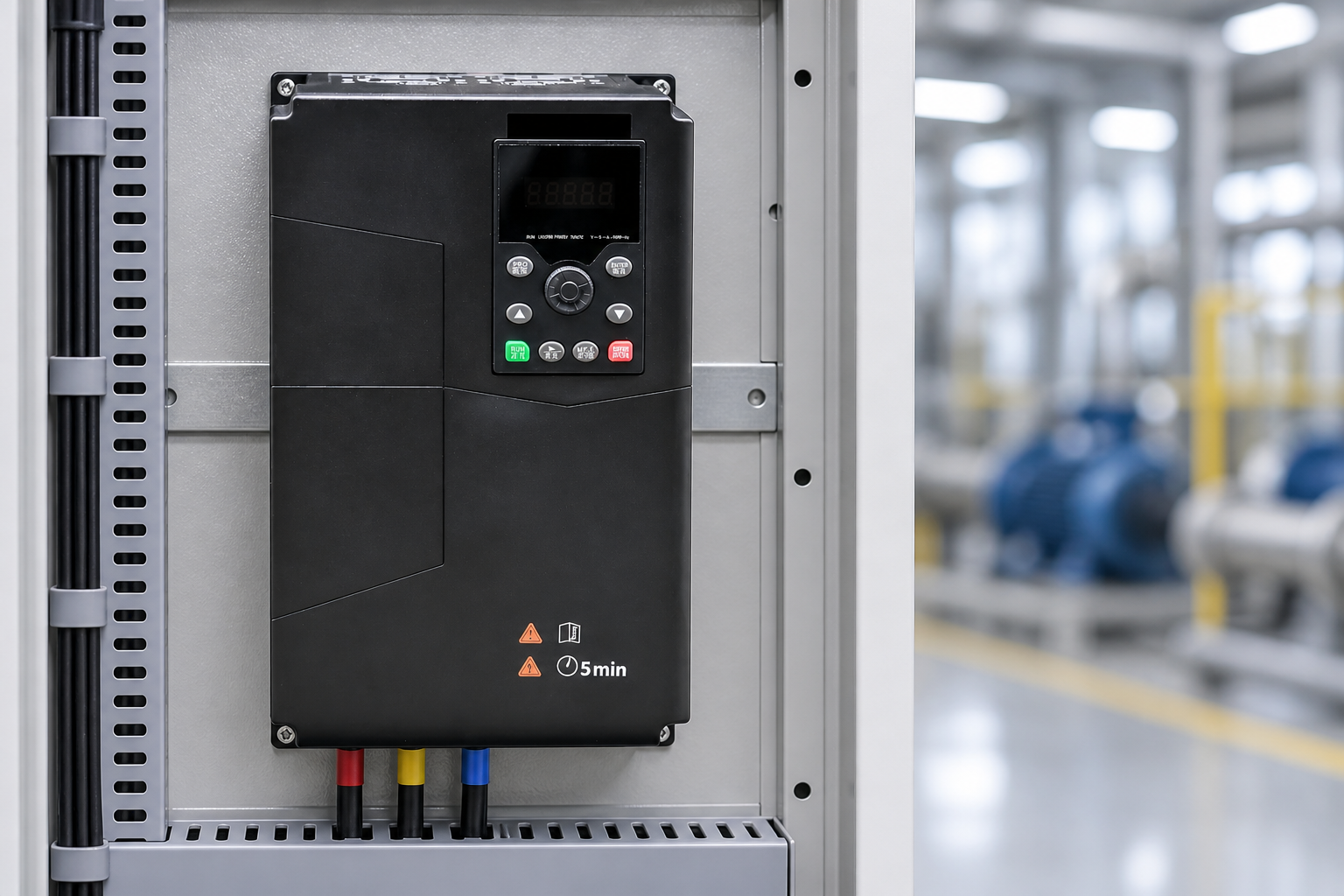
A sizing table should be more useful than a one-line catalog filter. Procurement teams should ask vendors to document the assumptions behind kW selection, because motor service factor, altitude, enclosure temperature, cable distance, and switching frequency can change the practical rating.
| Dimension | What to confirm | Why it matters | Document to request |
|---|---|---|---|
| Input power | Single/three-phase AC, PV DC, generator, or hybrid source | Input range and protection design change by source | Wiring diagram and allowable input specification |
| Motor load | Pump, fan, compressor, conveyor, mixer, or hoist profile | Variable-torque and constant-torque loads need different margins | Motor nameplate, load curve, duty cycle |
| Environment | Ambient temperature, altitude, dust, humidity, enclosure IP target | Thermal derating and cabinet ventilation affect service life | Derating table and enclosure plan |
| Power quality | Harmonics, EMC class, cable length, grounding, surge exposure | Noise, bearing stress, and nuisance faults often start here | EMC recommendation, reactor/filter guidance |
| Controls | PID, Modbus, analog I/O, multi-pump logic, remote monitoring | Panel cost and commissioning time depend on interface fit | I/O list, communication map, commissioning checklist |
Standards, compliance, and claims for three phase solar inverter projects
Standards should be handled with precision. IEC 61800 is a family for adjustable speed electrical power drive systems, with IEC 61800-3 focused on EMC requirements and test methods. IEC 61800-5-1 is commonly referenced for safety requirements in power drive systems. Citing those scopes is useful; claiming certification without a report, certificate, or destination-market requirement is not.
For a grid-connected three phase solar inverter, IEEE 1547 covers interconnection and interoperability requirements for distributed energy resources with electric power systems in relevant North American contexts. It includes topics such as abnormal conditions, power quality, islanding, interoperability, and test and verification requirements. Outside that scope, local grid codes, utility interconnection rules, CE/UKCA/UL pathways, and national low-voltage regulations may be more decisive.
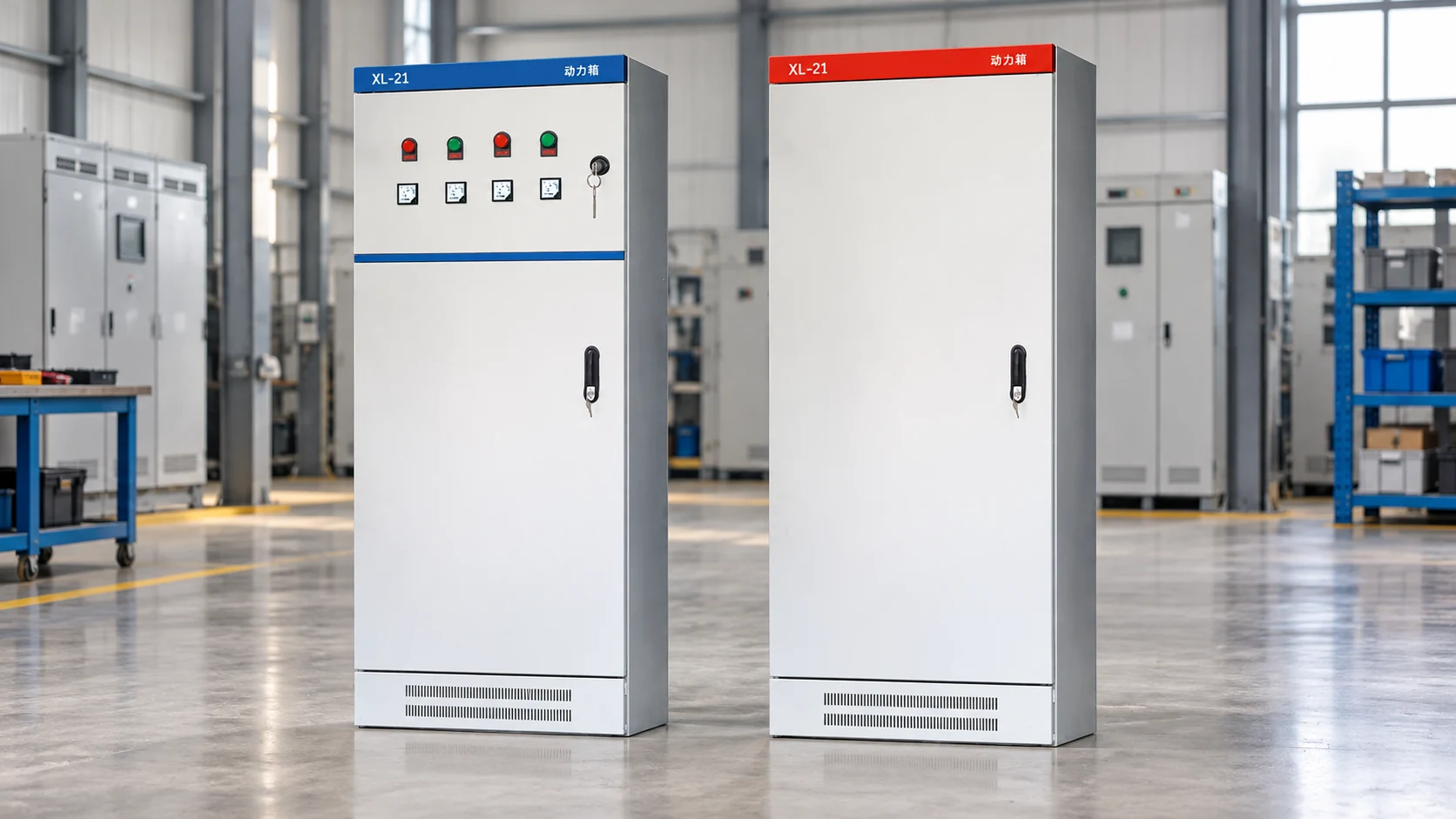
For motor installations, compliance also depends on the final assembled system: cabinet layout, protective devices, cable routing, earthing, heat rise, and commissioning records. A paid standard is a framework for design, testing, documentation, and risk allocation among the drive manufacturer, panel builder, EPC, distributor, and end user.
Selection guide for a three phase inverter procurement file
First, capture the motor and source data before comparing quotations: motor voltage, full-load current, power factor, load type, required speed range, start/stop frequency, ambient temperature, altitude, enclosure target, and control interface. For PV pumping, add total dynamic head, pump curve, daily water target, PV string voltage, and backup plan.
Second, ask for a duty-based model recommendation, not only a price. If the vendor cannot explain overload margin, derating, reactor/filter need, and protection settings, the lowest unit cost may move expense into commissioning and service.
Third, align documentation with the destination market. Require wiring diagrams, parameter backup, fault-code guidance, EMC notes, and available test or compliance documents relevant to the shipment. For NENA and Zhejiang Xinhang Electric Co., Ltd., the practical value is matching configurable inverter lines to the buyer’s motor, pump, and site conditions with clear documentation.
Frequently Asked Questions
What is a three-phase solar inverter?
A three-phase solar inverter converts solar PV DC power into three-phase AC output. In PV water pumping, it may drive a pump motor directly and adjust output as sunlight changes; in grid-connected applications, interconnection requirements and utility rules must also be checked.
How does a three-phase inverter work?
It creates a DC bus, then switches semiconductor devices to synthesize three AC phases with controlled voltage and frequency. The control board monitors current, voltage, temperature, and inputs so the motor can accelerate, decelerate, and trip under defined fault conditions.
Why does a three-phase inverter use three wires?
The three output conductors carry phase voltages separated by 120 electrical degrees, creating a rotating magnetic field in a three-phase motor. Some systems also require protective earth and, on the input side, neutral or additional conductors depending on the supply design.
What are the main benefits of a three-phase solar inverter?
The main benefits are controlled motor speed, better pump matching under variable sunlight, reduced mechanical stress from soft starting, and useful protections such as dry-run or low-power restart logic. The actual benefit depends on pump sizing, PV array design, and local water demand.
What equipment can a three-phase inverter support?
It can support three-phase motors used in pumps, fans, conveyors, mixers, compressors, and selected process equipment, provided the drive is sized for the load profile. For hoists, compressors, and high-inertia machines, torque, braking, and overload requirements need closer review.
References
- IEC Webstore, IEC 61800 series listings for adjustable speed electrical power drive systems, including EMC and safety-related parts.
- IEEE SA, IEEE 1547, standard scope for interconnection and interoperability of distributed energy resources with electric power systems.
- NREL, Research Roadmap on Grid-Forming Inverters, U.S. national-lab discussion of inverter-based resource needs and research priorities.
- Sandia National Laboratories, Advanced Inverter Functions to Support High Levels of Distributed Solar, overview of smart inverter functions for distributed PV integration.
For buyers comparing industrial drives, PV pump inverters, or motor-control panels, NENA can help review the application data and narrow the model range before procurement. Share the motor nameplate, load profile, supply source, and destination market through the contact page to request application support.