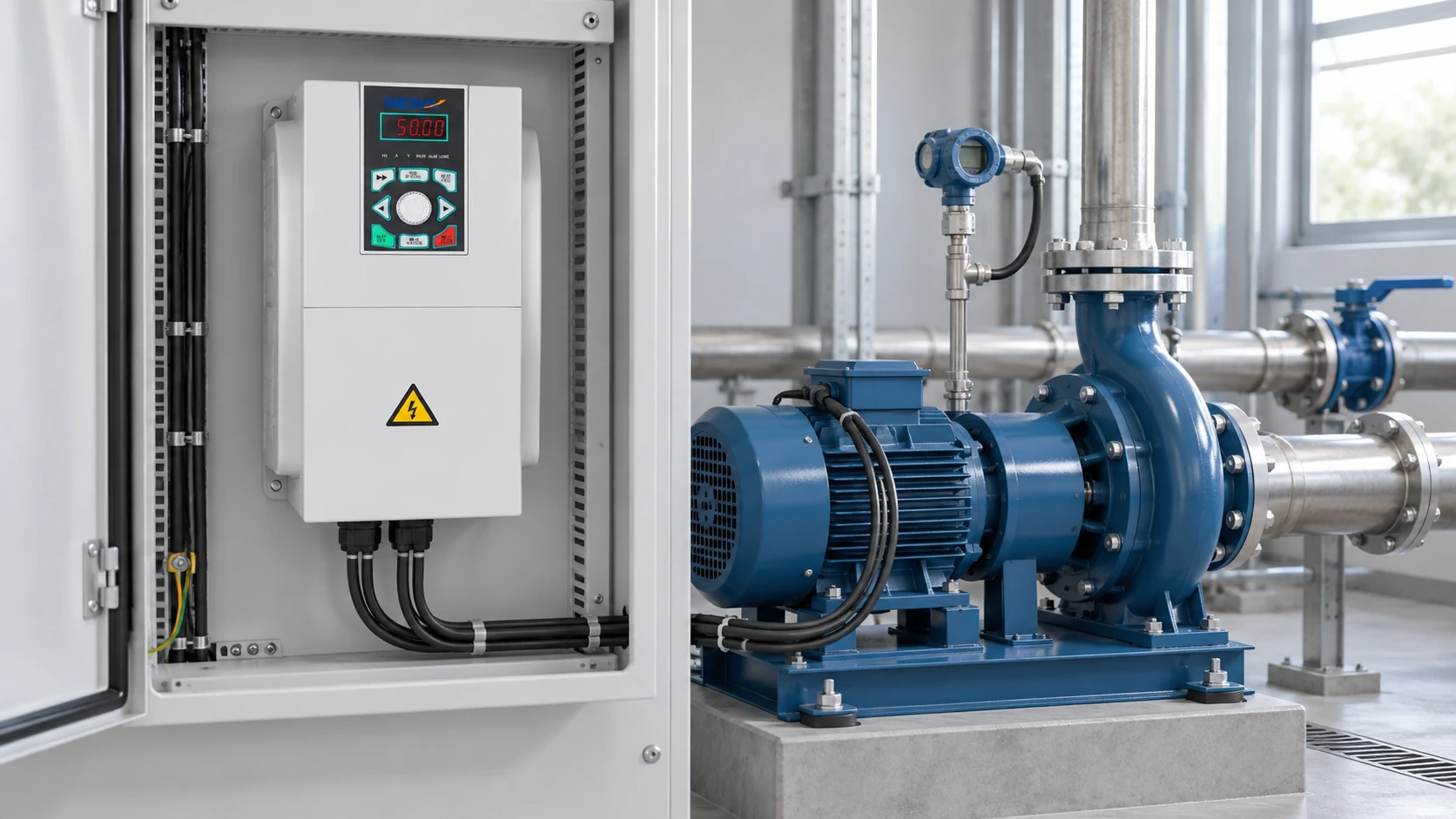
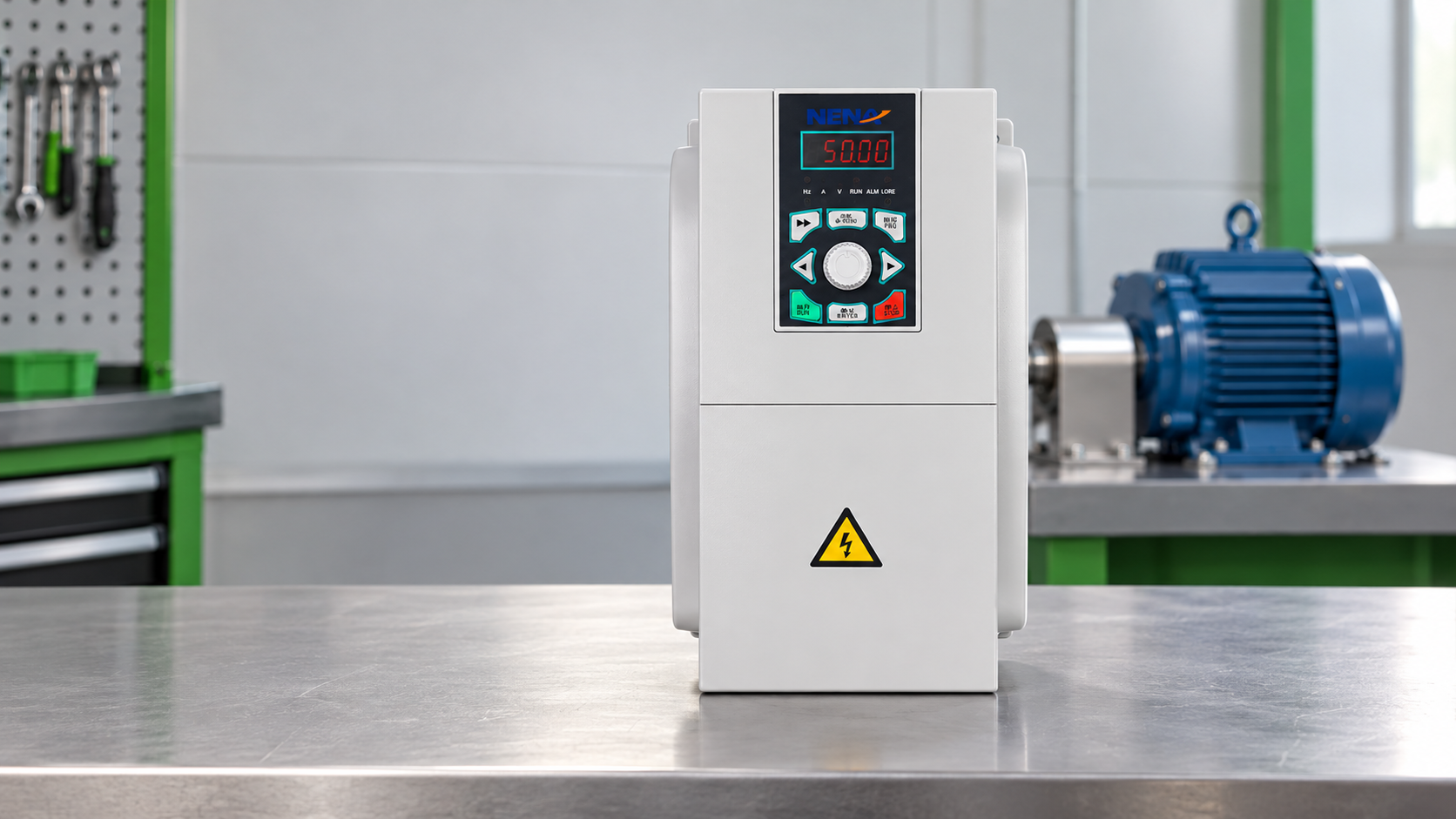
When Mei Chen, an electrical engineer in Suzhou, started a 110-kW cooling-water pump after a maintenance shutdown, the feeder tripped in less than a second. A second start made the pipework shudder and the pump miss its pressure setpoint. The motor was healthy: the root cause was selecting an across-the-line start for a high-inertia, high-backpressure duty without checking locked-rotor current, ramp time, and the bypass sequence. Re-specifying the acceleration profile and protection made the same motor start predictably.
Summary: ac motor soft start uses controlled semiconductor switching to raise motor voltage gradually, reducing the peak current and torque shock associated with direct-on-line starting. A typical induction motor may draw about 5–8 times full-load current during locked-rotor acceleration, although the nameplate, motor design, and supply determine the actual value. Engineers should match the soft starter to motor current, load inertia, start frequency, bypass duty, and the applicable IEC 60947-4-2 or local requirements before approving a panel.
An AC induction motor initially behaves as a low-impedance load while its rotor is stationary. The first half-cycle can therefore produce a high current pulse, a voltage dip in a weak distribution system, and a sharp electromagnetic torque step. In a controlled ac motor soft start, antiparallel silicon-controlled rectifiers (SCRs, also called thyristors) delay conduction in each half-cycle, then progressively increase the applied RMS voltage according to the configured ramp.
The simplified relationships explain the trade-off:
This is why a long ramp is not automatically better. A centrifugal pump can tolerate a controlled rise in speed, while a loaded conveyor may stall if the torque limit is too low. The commissioning record should capture motor full-load current, initial voltage or current limit, ramp time, initial torque or kick setting where applicable, stop mode, and measured acceleration time. A properly selected ac motor soft start arrangement is a control decision tied to those measurements, not simply a lower-current replacement for a contactor.
The central function of a soft starter is to shape the transition from zero speed to normal line speed. It can reduce belt pull, coupling shock, water hammer, pressure surges, and nuisance trips when the load and motor are suitable. It does not create the broad speed range of a variable-frequency drive (VFD), because the supply frequency remains essentially unchanged after the start.
The power path usually includes three controlled phases, gate-control electronics, line and load terminals, thermal protection, and a bypass contactor or bypass path. A bypass closes after acceleration on many designs, moving steady-state current away from the SCRs and reducing their heat dissipation. The bypass must be rated for the motor duty and coordinated with overload protection; it is not an excuse to omit short-circuit protection or an isolating means.
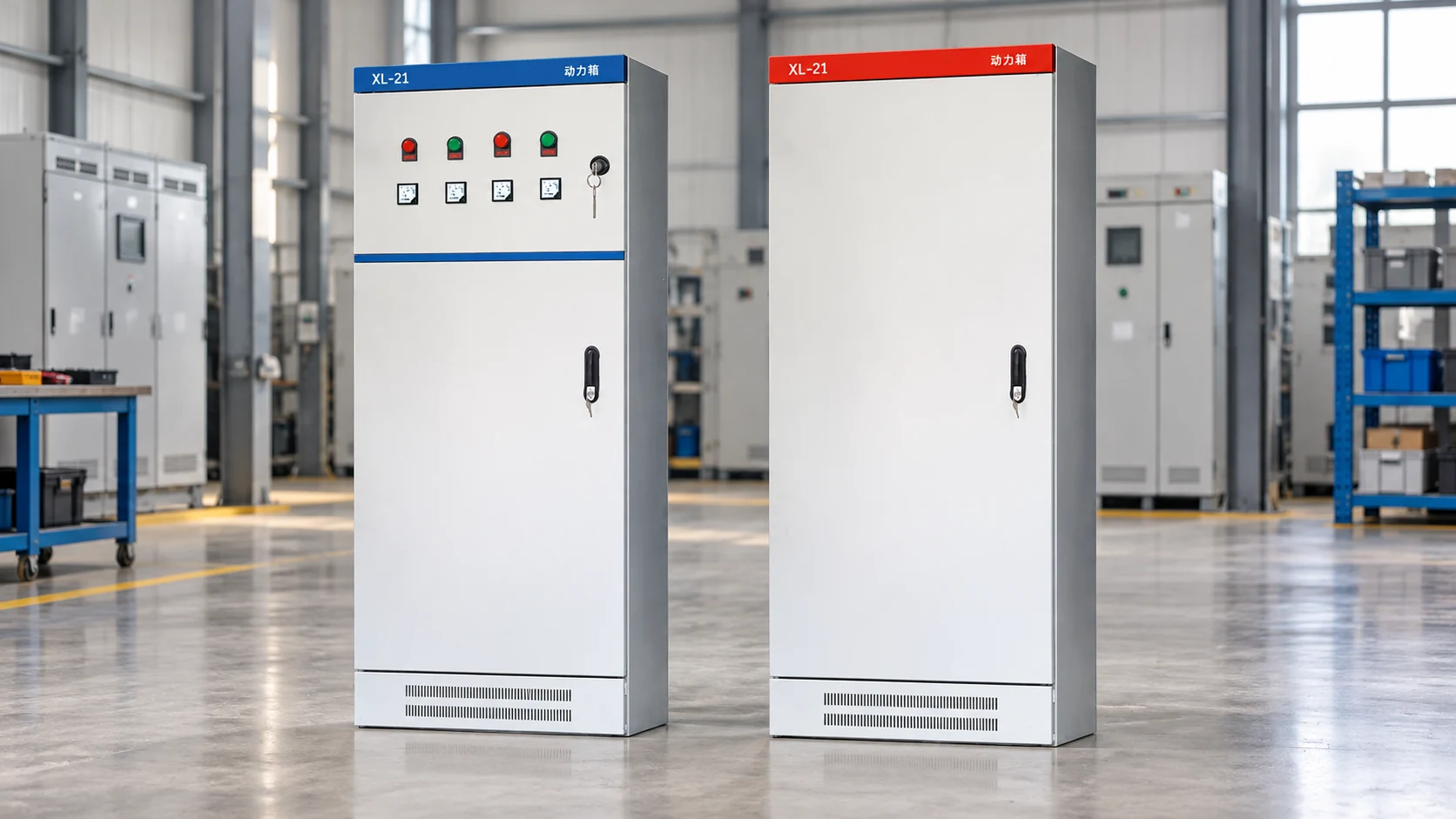
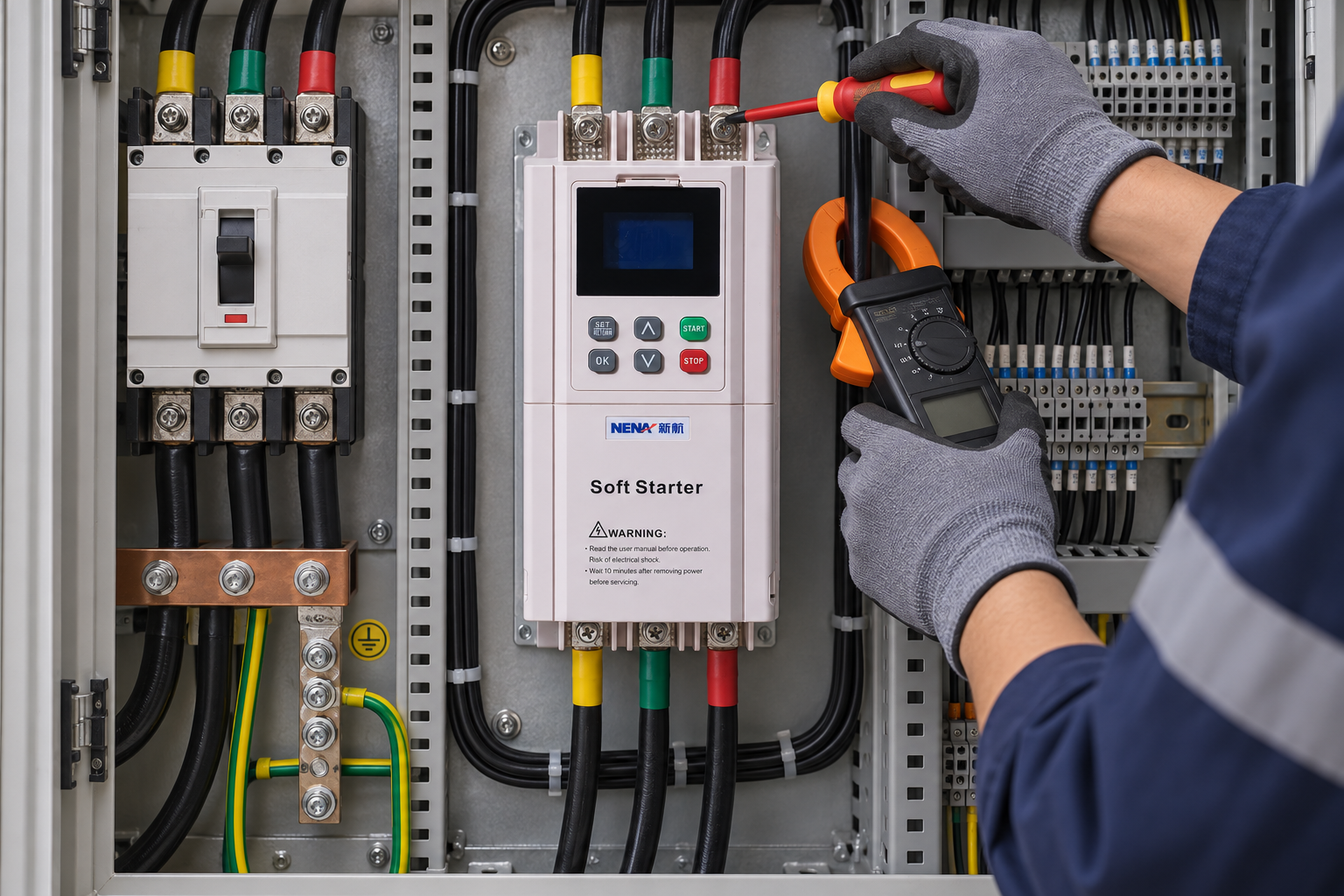 The panel design must coordinate switching, bypass, overload protection, isolation, and heat removal.
A reduced voltage starter is effective only when its current and thermal ratings match the duty. Start with the motor nameplate voltage, full-load current, service factor, connection arrangement, and the actual load profile. Then check the number of starts per hour, starts per day, ambient temperature, enclosure ventilation, altitude, cable length, and whether the motor is already warm when a restart is requested.
The load-side checks are just as important. Record the reflected inertia, static breakaway torque, running torque curve, acceleration time, pump head or system pressure, and any minimum-speed or minimum-flow constraint. A starter that is adequate for an unloaded fan may not be adequate for a loaded conveyor or a positive-displacement compressor. If a current limit is used, calculate whether the available torque remains above the load torque throughout acceleration.
Standards define how equipment is designed, tested, installed, and represented; they do not remove the need for a site-specific engineering review. IEC 60947-4-2 covers AC semiconductor motor controllers and starters, including relevant characteristics and test considerations. NEMA ICS documents provide industrial-control guidance in North American practice, while local electrical codes determine installation, protection, wiring methods, and inspection requirements.
Three compliance questions should be answered in the project file:
The commercial consequence of an unsupported claim is practical: a panel may fail inspection, delay commissioning, or leave the buyer responsible for redesign. Keep the bill of materials, parameter record, wiring diagram, protective-device coordination, and commissioning results with the equipment documentation.
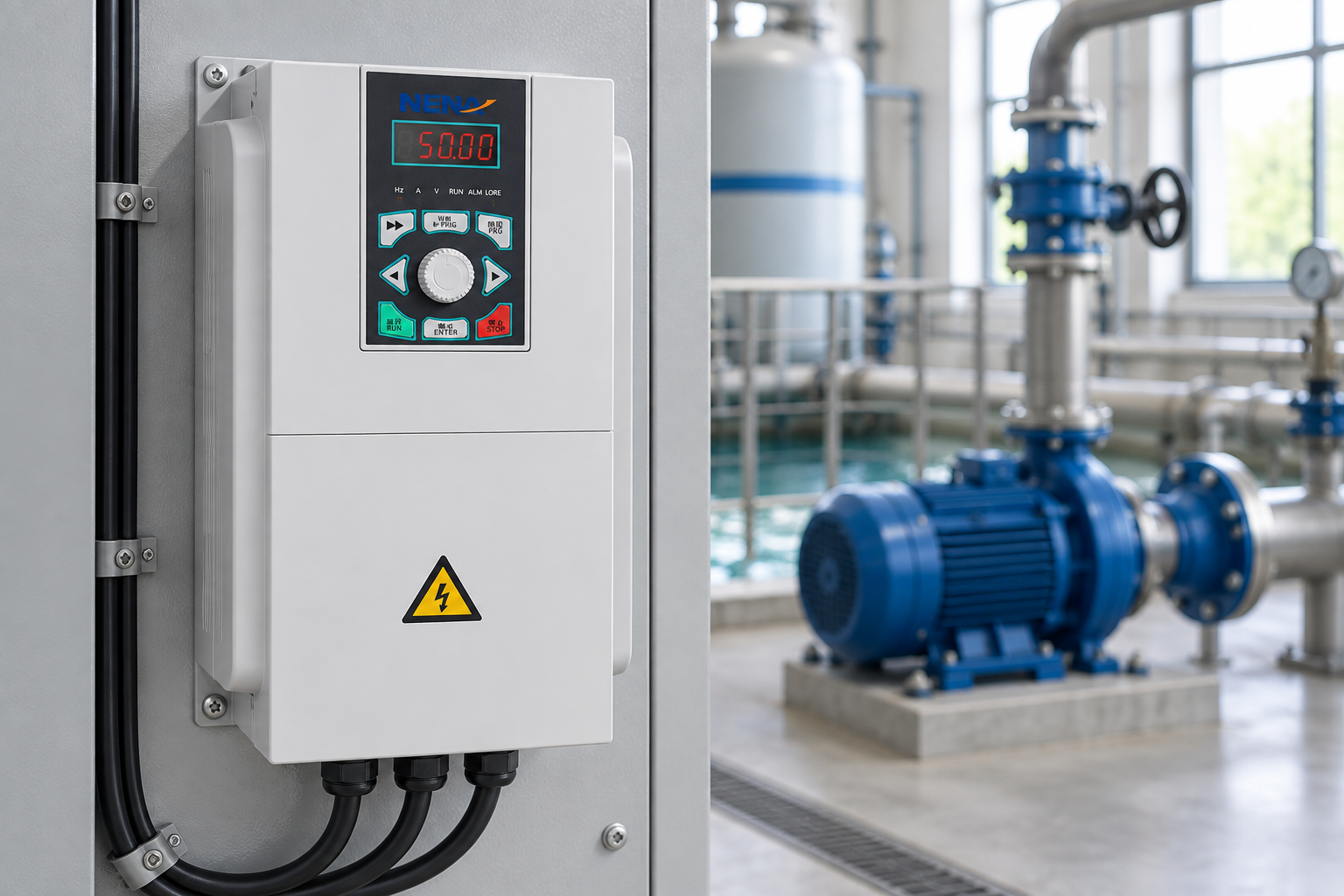
An AC motor soft starter is an electronic reduced-voltage controller that uses controlled semiconductor switching to ramp the voltage applied to an AC motor during starting and, where configured, stopping. It reduces current and torque shock compared with direct-on-line starting, but it normally does not provide continuous variable-speed operation.
It changes the SCR firing angle in each half-cycle so the motor receives a controlled voltage waveform during acceleration. A current limit, voltage ramp, torque control, or a combination may be used, and a bypass contactor can carry current after the motor reaches speed.
The main benefits are lower starting current, less mechanical shock, fewer nuisance trips, and smoother hydraulic or process transitions when the duty is suitable. These benefits can reduce maintenance and downtime, but they are not automatic: an overlong ramp, insufficient starting torque, poor bypass coordination, or missing protection can create new problems. Confirm the result with commissioning measurements.
A soft starter controls the voltage during the start while the motor generally returns to line frequency for normal running. A VFD controls both frequency and voltage, so it can regulate speed and torque over a wider operating range but typically requires more EMC, harmonic, programming, and thermal considerations. Choose the VFD when the process needs running-speed control; choose a soft starter when a fixed-speed motor mainly needs a gentler start.
If your team is comparing a fixed-speed pump, fan, conveyor, or compressor starting method, contact NENA/XINHANG with the motor nameplate, load description, supply information, required start performance, and destination-market compliance needs. A short data review at the decision stage is usually less costly than correcting a mis-sized starter after installation.