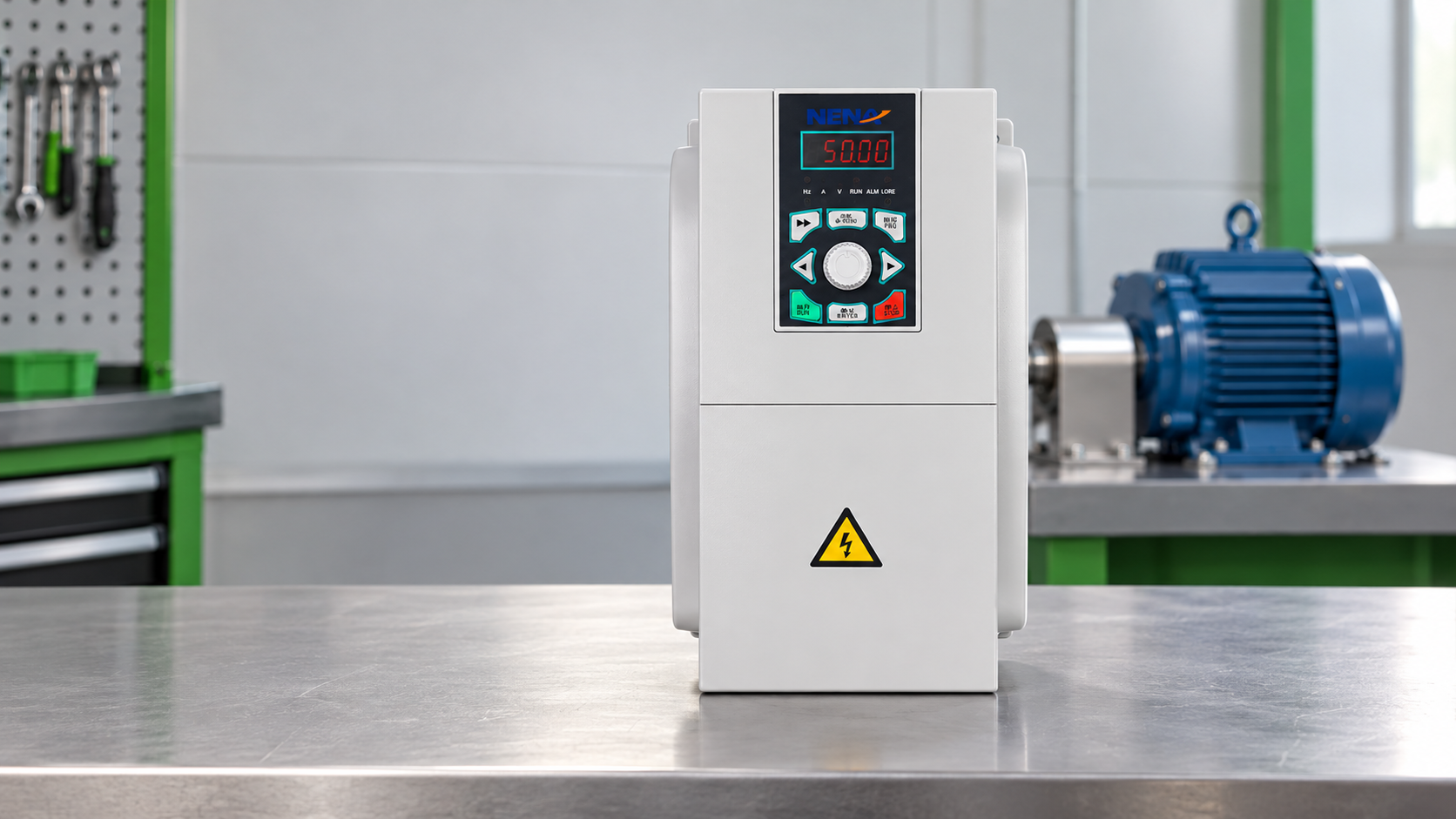
When Chen Wei, a maintenance engineer in Ningbo, encountered a pump that tripped whenever production demand changed, he first replaced the starter and restarted the line. The motor still accelerated harshly, pressure oscillated, and the drive cabinet showed an overcurrent alarm within seconds. The reversal came after checking the duty point, motor nameplate, and ramp settings: the problem was selection and specification, not simply a defective product.
Summary: A VFD drive first rectifies incoming AC to a DC bus, then uses high-speed switching to produce controlled voltage and frequency for the motor. For a 50 Hz motor, reducing commanded frequency generally reduces operating speed, but the correct result depends on motor current, load torque, cooling, and the system curve. Confirm those data points before choosing a rating; public NH820 information, for example, lists 5.5, 7.5, and 11 kW options for three-phase 380 V applications.
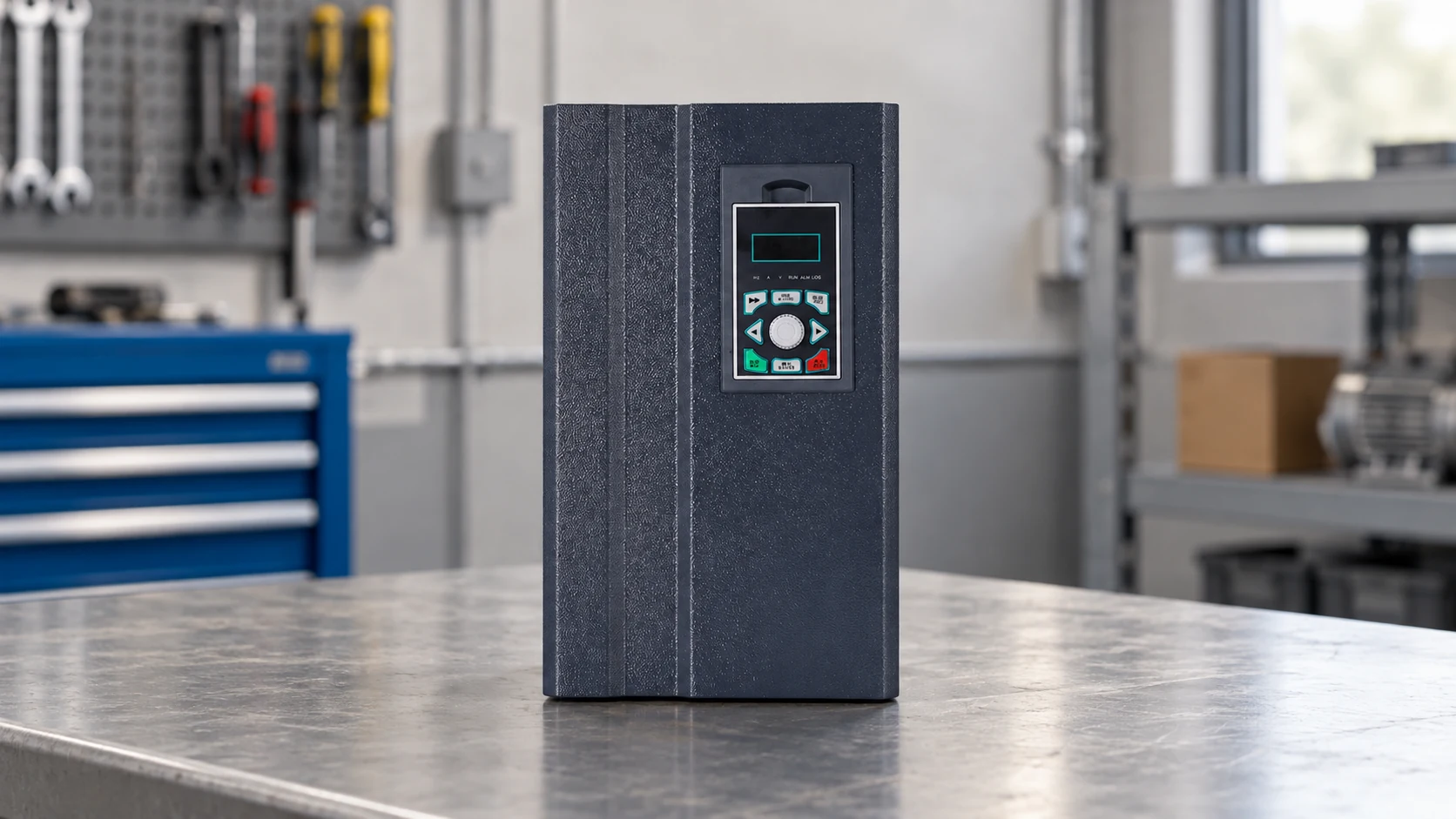
The power path is straightforward but easy to oversimplify. A VFD drive uses a rectifier to convert fixed-frequency AC to DC; capacitors and inductors stabilize the DC link; an inverter stage switches that energy into a pulse-width-modulated waveform. The motor responds mainly to the commanded electrical frequency and voltage, while slip and load determine the final shaft speed.
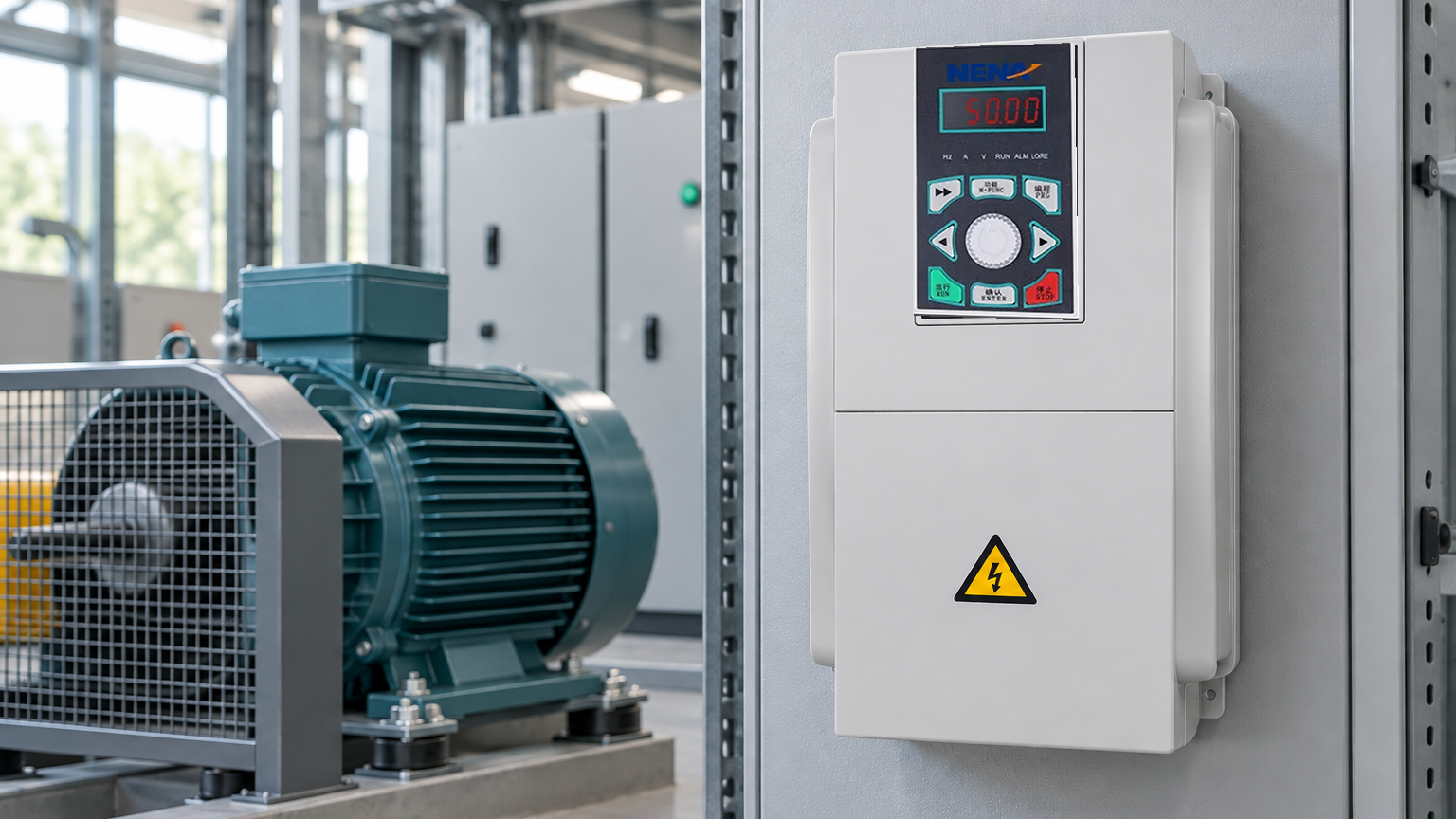
A controller can use a volts-per-hertz profile for a general load or vector control when torque response and low-speed behavior matter. Acceleration and deceleration ramps spread the change over a configured time instead of imposing a sudden step. During commissioning, record nameplate current and compare it with loaded current using a repeatable run test; a 50 Hz or 60 Hz setting is not a substitute for checking the actual machine duty.
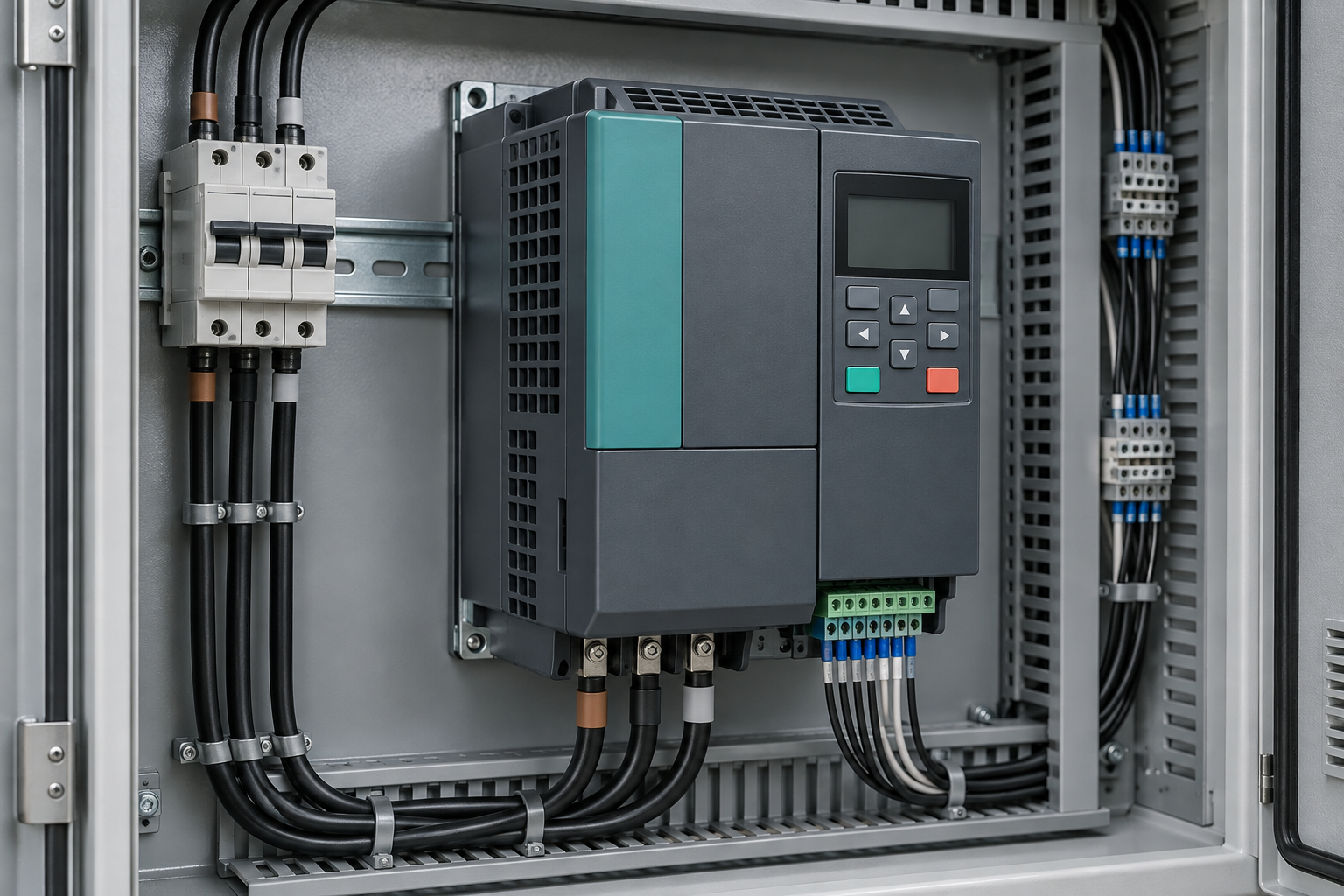
An inverter drive is a power-conversion system, not a universal plug-in replacement for a starter. Gather motor voltage, full-load current, base frequency, rated speed, insulation information, braking needs, enclosure conditions, and the required overload profile. Then classify the load: a centrifugal fan or pump usually follows a variable-torque pattern, while a conveyor, hoist, or compressor can demand substantial starting or constant torque.
Check the proposed rating against the motor current and duty class rather than matching kW alone. A three-phase 380 V input and an 11 kW label do not prove suitability for every 11 kW motor. A no-load spin test followed by a controlled loaded run can reveal incorrect phase sequence, excessive current, unstable feedback, or a ramp that is too aggressive. The honest total-cost calculation also includes an input reactor or filter where required, braking hardware, panel ventilation, commissioning time, and downtime risk.
The relevant VFD drive frequency converters category is a useful starting point, but the final specification should be based on the motor and load sheet.
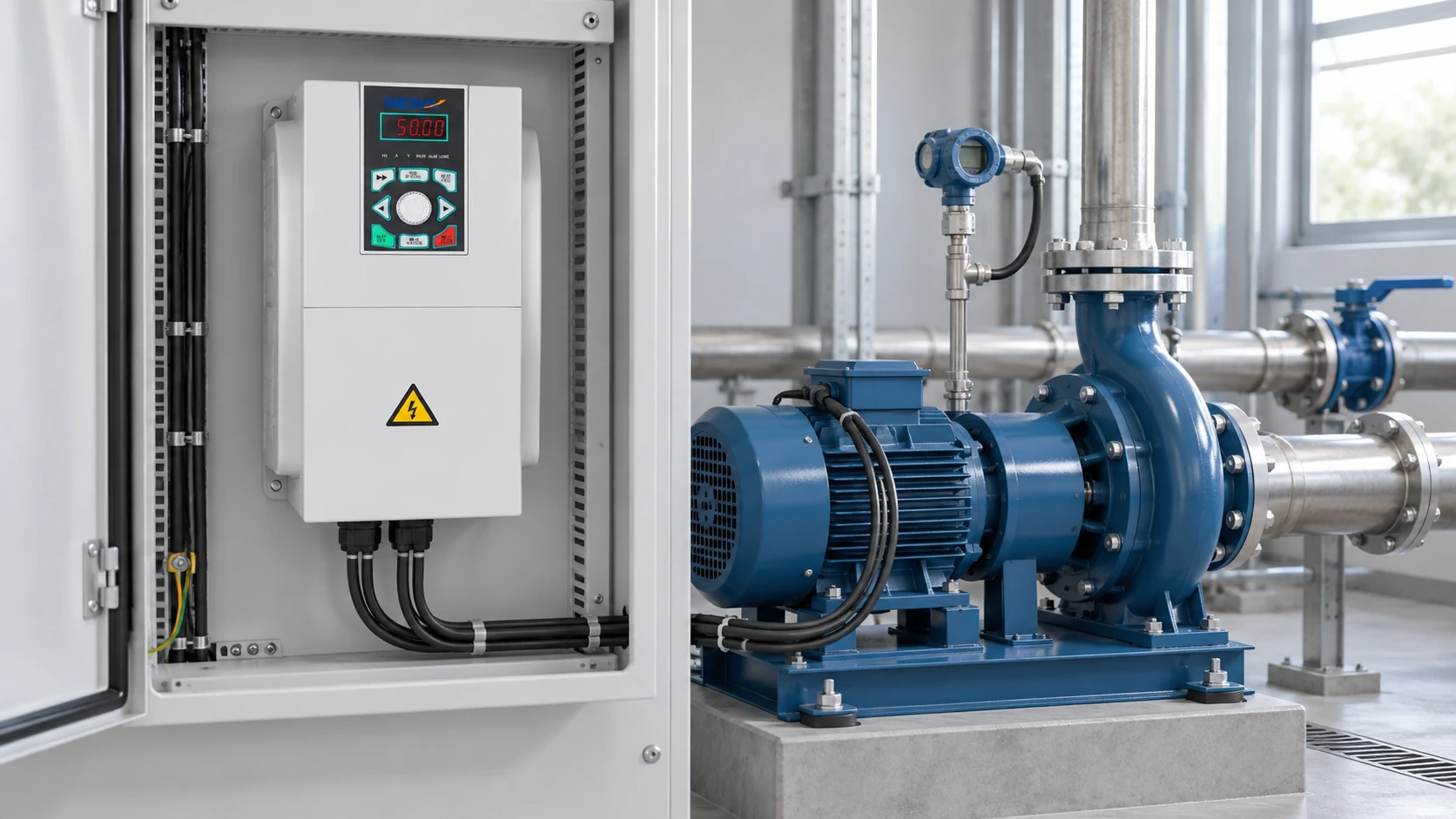
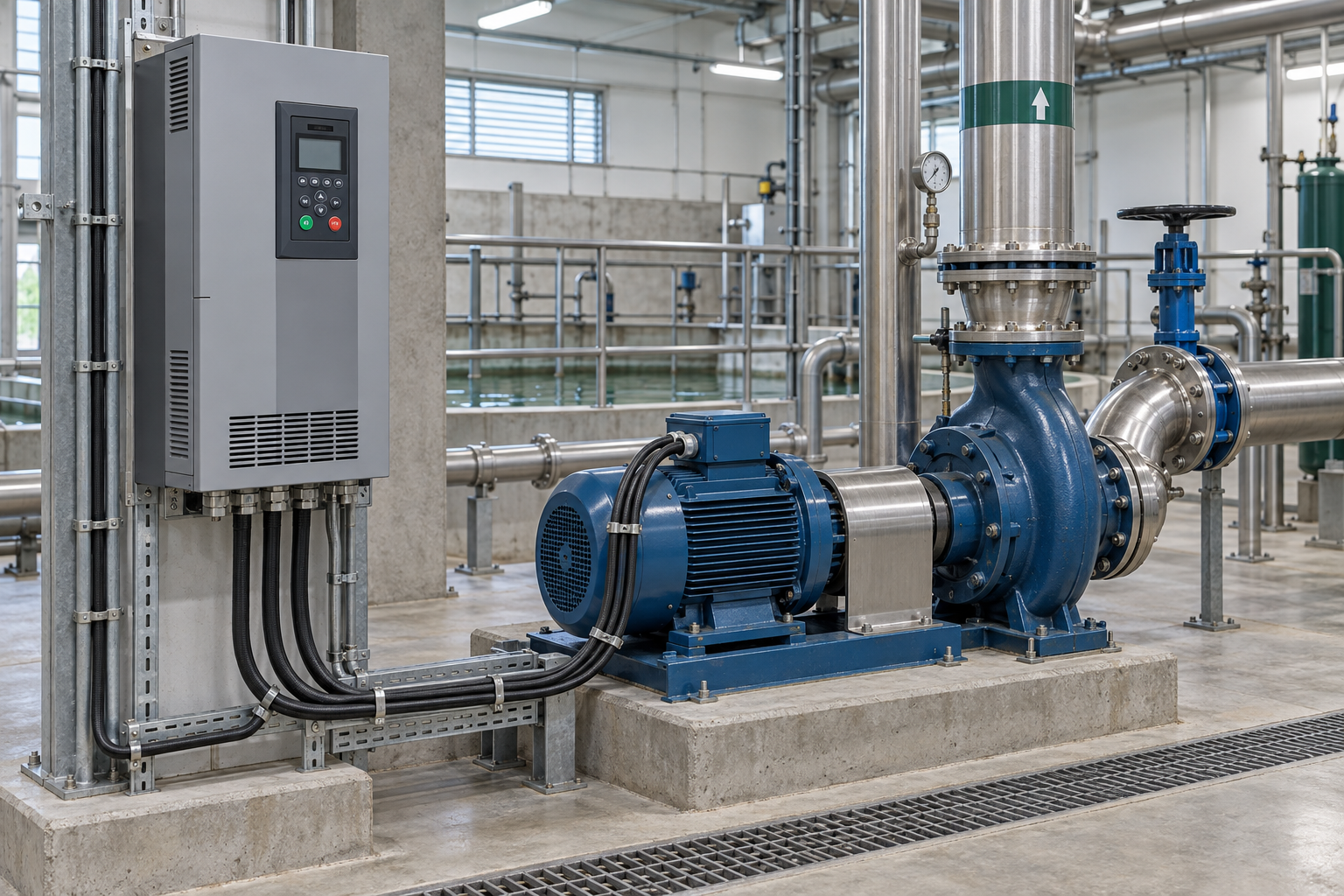
For a centrifugal pump, a VFD for pump application can match speed to changing flow instead of throttling a fixed-speed motor continuously. Under similar conditions, affinity-law relationships indicate that flow changes roughly with speed, head with speed squared, and power with speed cubed; real systems must still be checked against the pump curve, static head, minimum flow, and process limits. A small speed reduction can therefore matter, but it is not a guaranteed saving in every installation.
Set minimum speed, sleep/wake logic, acceleration time, pressure feedback, and dry-run or low-flow protection with the process owner. Use a trend of pressure, flow, motor current, and kWh before and after the change; the U.S. Department of Energy motor-systems guidance emphasizes measuring the system rather than judging efficiency from the drive nameplate alone.
| Option | Speed control | Typical fit | Key check | Unit-cost tendency and TCO |
|---|---|---|---|---|
| Fixed-speed starter | On/off or fixed frequency | Simple, steady-duty motor | Starting current and mechanical shock | Lower initial cost; may carry higher throttling, wear, or energy cost |
| Soft starter | Controlled start and stop | Reduced starting stress without continuous speed variation | Bypass arrangement and load torque | Moderate initial cost; limited process control after startup |
| VFD drive | Continuous frequency and voltage control | Variable flow, fans, conveyors, and process machines | Motor insulation, EMC, overload, cooling, and feedback | Higher initial cost; can reduce process losses when correctly sized and operated |
Use the application dimension first, then confirm electrical compatibility and operating environment.
| Application or equipment | Publicly described use or evidence | Selection questions |
|---|---|---|
| Industrial water pump | NH820 public information lists 5.5, 7.5, and 11 kW ratings and industrial water-pump use | What are the duty point, static head, minimum flow, and pressure-feedback range? |
| Boiler induced-draft fan | The same public information identifies boiler induced-draft fans as an application | Is the load variable torque, and will the motor remain adequately cooled at low speed? |
| Wire drawing or textile equipment | These processes are listed among example applications | Is constant torque, fast response, braking, or synchronized control required? |
| Medium CNC or plastic blow molding | These are also listed as example applications | What overload duration, repeatability, EMC controls, and machine-safety functions are required? |
For a practical product comparison, review the inverter drive options data with the complete motor and duty information; do not infer suitability from the product name alone.
IEC 61800 is a family of standards for adjustable-speed electrical power drive systems. It is a standards framework, not a blanket statement that every model has every certification. Ask for the applicable declaration, test report, installation instructions, EMC information, and environmental limits for the exact configuration and destination market.
The machine integrator must also address guarding, emergency functions, electrical isolation, and hazardous-energy procedures. In the United States, OSHA control-of-hazardous-energy requirements affect servicing practices; local rules may differ elsewhere. In commercial terms, unsupported certification language can delay acceptance, invalidate a tender response, or shift liability to the integrator. Treat EMC, earthing, cable routing, short-circuit protection, and lockout procedures as part of the system design—not as paperwork after installation.
Use this short procurement sequence:
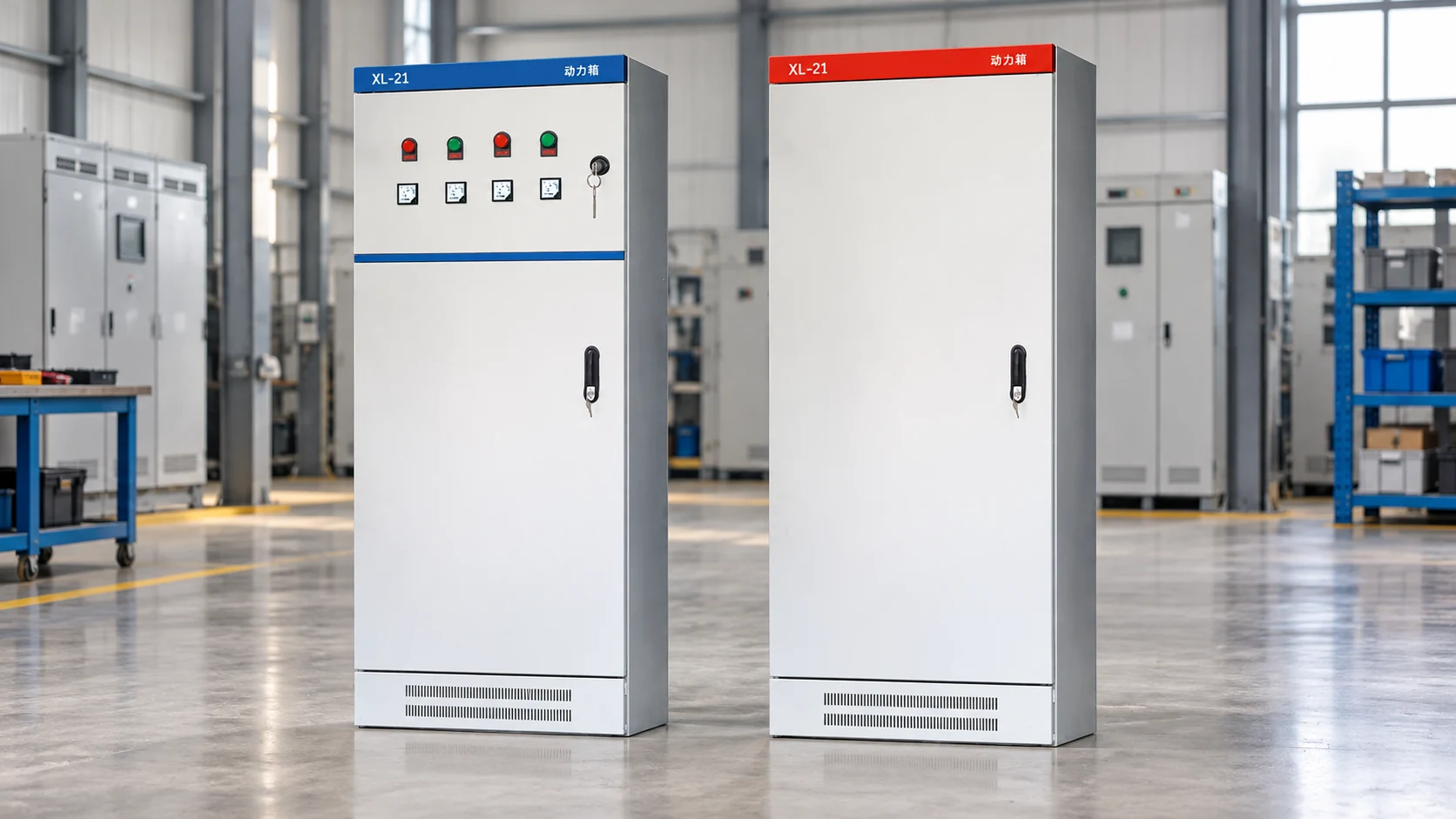
NENA/Zhejiang Xinhang Electrical presents frequency converters/inverters, soft starters, control cabinets, and distribution products. Its role should be assessed on the fit of the proposed configuration, documentation, testing, and sourcing support—not on an assumed universal certification.
Usually, yes in everyday industrial usage: VFD means variable frequency drive, and variable speed drive is the broader description of equipment that changes motor speed. The exact technology could differ in another context, so confirm whether the specification requires an AC frequency converter, a DC drive, or another topology.
An AC drive VFD is an adjustable-speed drive that controls an AC motor by varying its output frequency and voltage. It typically rectifies the incoming AC, manages a DC link, and synthesizes a controlled output waveform. Verify motor compatibility, current, overload, and installation requirements before applying the label to a particular model.
Yes, a VFD can act as a motor controller because it starts, stops, accelerates, decelerates, and regulates an AC motor. It does not replace every machine-control or safety function: guarding, emergency-stop architecture, isolation, and application logic may require separate equipment and validation.
It changes the frequency of the electrical waveform supplied to the motor; motor speed follows that commanded frequency with a load-dependent slip component. The drive also adjusts voltage, current, ramps, and sometimes feedback to maintain torque and protect the motor. Set limits from the motor and process data, then verify them during a loaded run.
The right frequency is only half the answer; the right duty data makes the result repeatable. For a configured drive, panel, or pump-and-fan discussion, review the pumps and fans solution.
Then contact Xinhang with the motor nameplate and operating points ready.