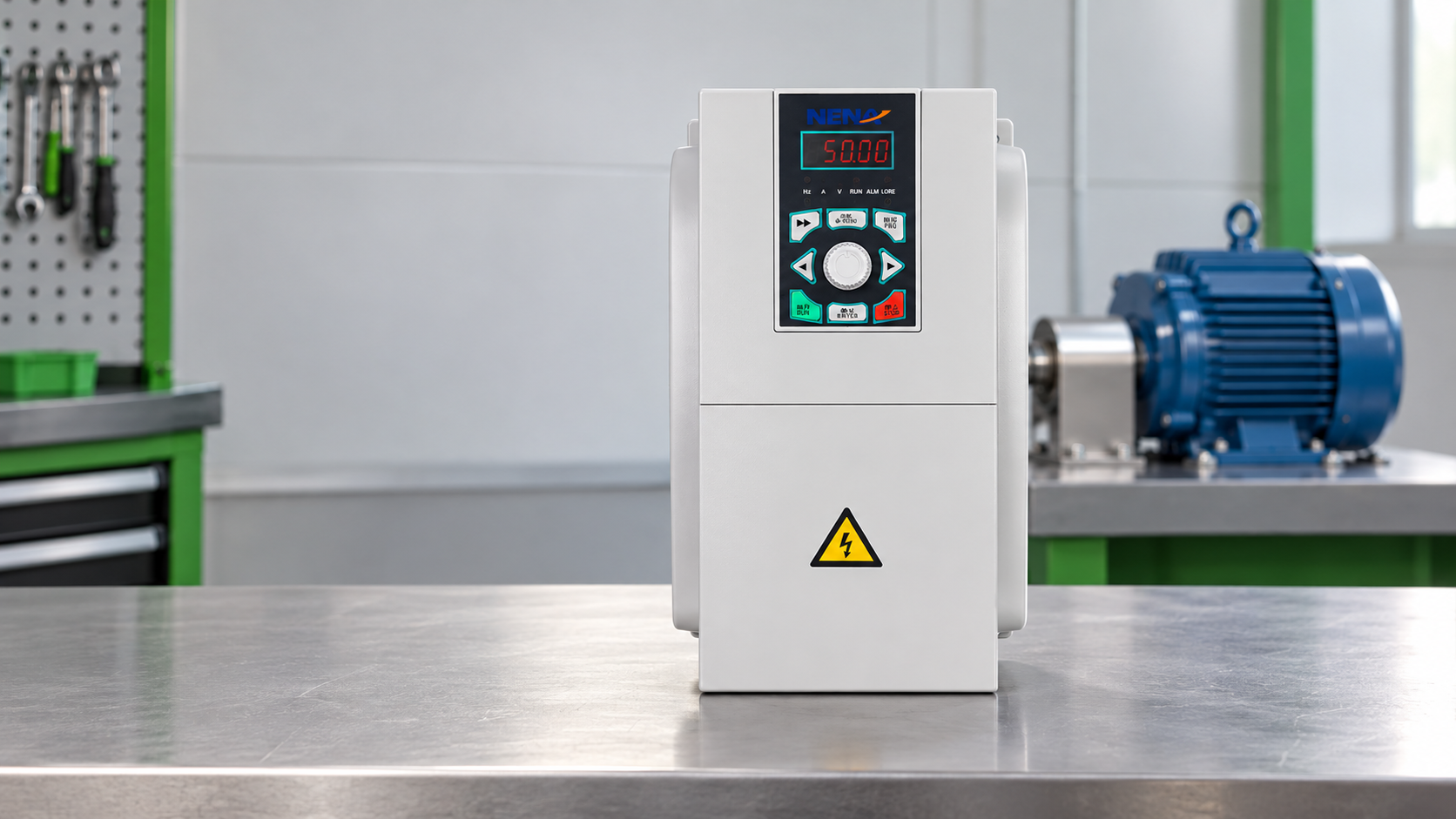
When a maintenance engineer in Monterrey encountered a conveyor that stalled at every shift change, Luis Ortega raised the commanded speed and restarted the line; within minutes the motor overheated and tripped again, revealing a mismatch in drive selection and load sizing – not a bad motor.
Summary: An AC motor drive converts incoming electrical power into controlled frequency, voltage, and torque for an alternating-current motor. For a two-pole motor, the synchronous-speed relationship is n_s = 120f/p: 50 Hz corresponds to 3,000 rpm and 60 Hz to 3,600 rpm before slip. IEC 61800-9-2 treats efficiency as a measured drive-system value, so the practical recommendation is to start with the motor nameplate, load profile, duty cycle, supply, braking, safety functions, and installation environment before comparing models.
An AC motor drive, often called an adjustable-speed drive or variable-frequency drive (VFD), rectifies incoming AC to a DC link and then synthesizes a new AC waveform with power switches. Changing output frequency changes the motor’s rotating magnetic field; coordinated voltage control maintains useful flux while the load accelerates, runs, or decelerates. IEC 61800-2 supplies terminology and rating concepts for adjustable-speed power drive systems, while the equation n_s = 120f/p provides a quick engineering check before slip and load torque are considered.
The control method matters. Scalar volts-per-hertz control is simple for pumps, fans, and other predictable loads. Sensorless vector control estimates rotor position to improve low-speed torque response; closed-loop vector control adds feedback when speed regulation or torque holding is critical. These labels describe control behavior, not a guarantee of suitability. Check the motor insulation system, current rating, overload duty, switching frequency, cable length, and enclosure conditions in the actual installation.
An AC motor drive is therefore a system component, not a standalone energy-saving promise: its result depends on the motor, process, wiring, settings, and operator procedures around it.
The phrase AC motor VFD describes a drive used with an AC motor, but it does not identify a universal rating. A 2-pole motor at 50 Hz has a 3,000-rpm synchronous reference, yet a conveyor, mixer, pump, and hoist impose very different torque and acceleration demands. Select by motor rated current and duty first; horsepower alone can conceal a mismatch when motors have different efficiencies, service factors, or cooling arrangements.
Ask the supplier to document five items: the motor’s voltage and current, the load’s torque-speed curve, required acceleration and deceleration time, braking energy, and the permissible overload profile. IEC 61800-5-2 addresses functional-safety aspects of power drive systems; it does not replace a machine risk assessment. A drive’s safe-torque-off input, for example, must be integrated with the machine’s safety circuit and validated in the completed system.
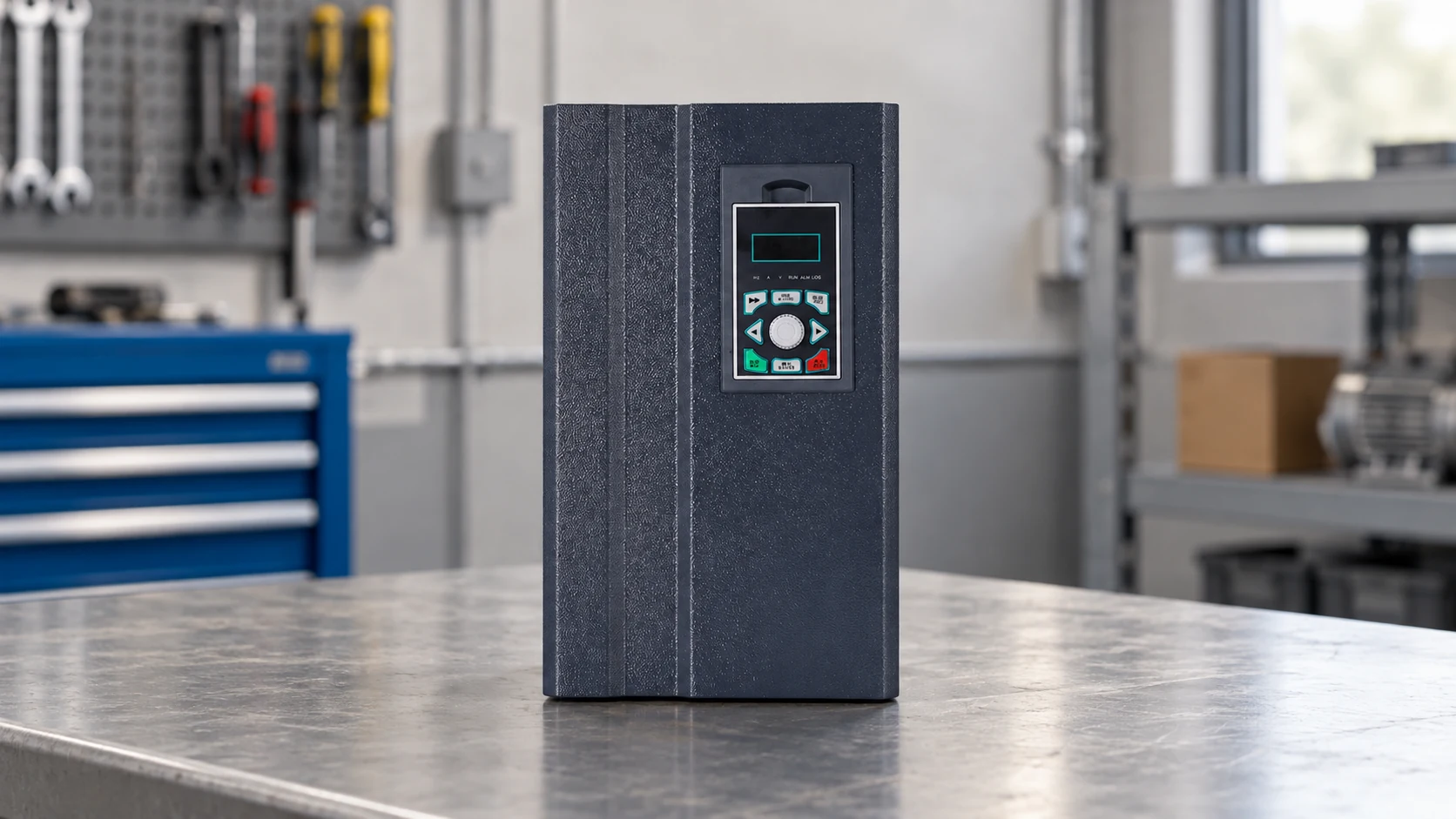
For a small general-purpose application, compare the published operating envelope with the motor nameplate and installation conditions. A 4 kW general-purpose inverter can be a useful reference point, but the final selection still depends on current, load inertia, braking, ambient temperature, and required control mode.
An AC motor speed controller can reduce process energy, but only when speed reduction is useful and the drive is correctly commissioned. IEC 61800-9-2 defines test and classification concepts for the efficiency of complete drive modules and power-drive systems; the drive, motor, and load should therefore be evaluated as a chain rather than as isolated catalog items.
The following is an illustrative calculation, not a promised saving. If a process needs 11 kW of mechanical output, 90% combined efficiency requires about 12.22 kW of electrical input (11 / 0.90), while 95% requires about 11.58 kW (11 / 0.95). The difference is approximately 0.64 kW while that operating point is maintained. Multiply by measured operating hours and the local energy tariff only after confirming that the load really runs at that point.
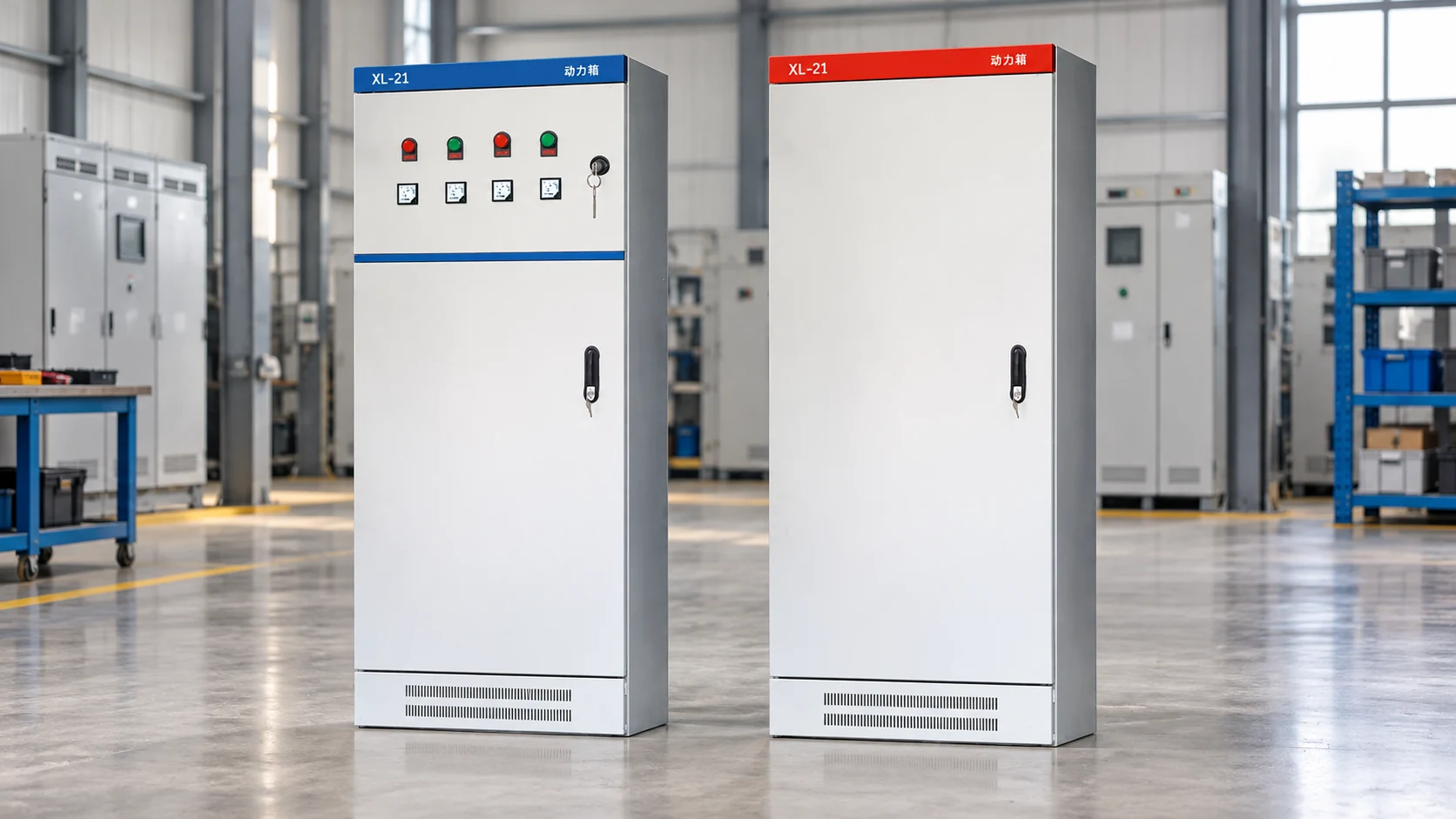
Hidden costs include input harmonics, a line reactor or other mitigation, motor-cable installation, EMC practices, cooling at low speed, braking resistors, commissioning labor, spare-drive strategy, and training. Compare the total cost of ownership over the intended service life; a lower unit price can be offset by nuisance trips, unplanned downtime, or a control panel that cannot dissipate heat.
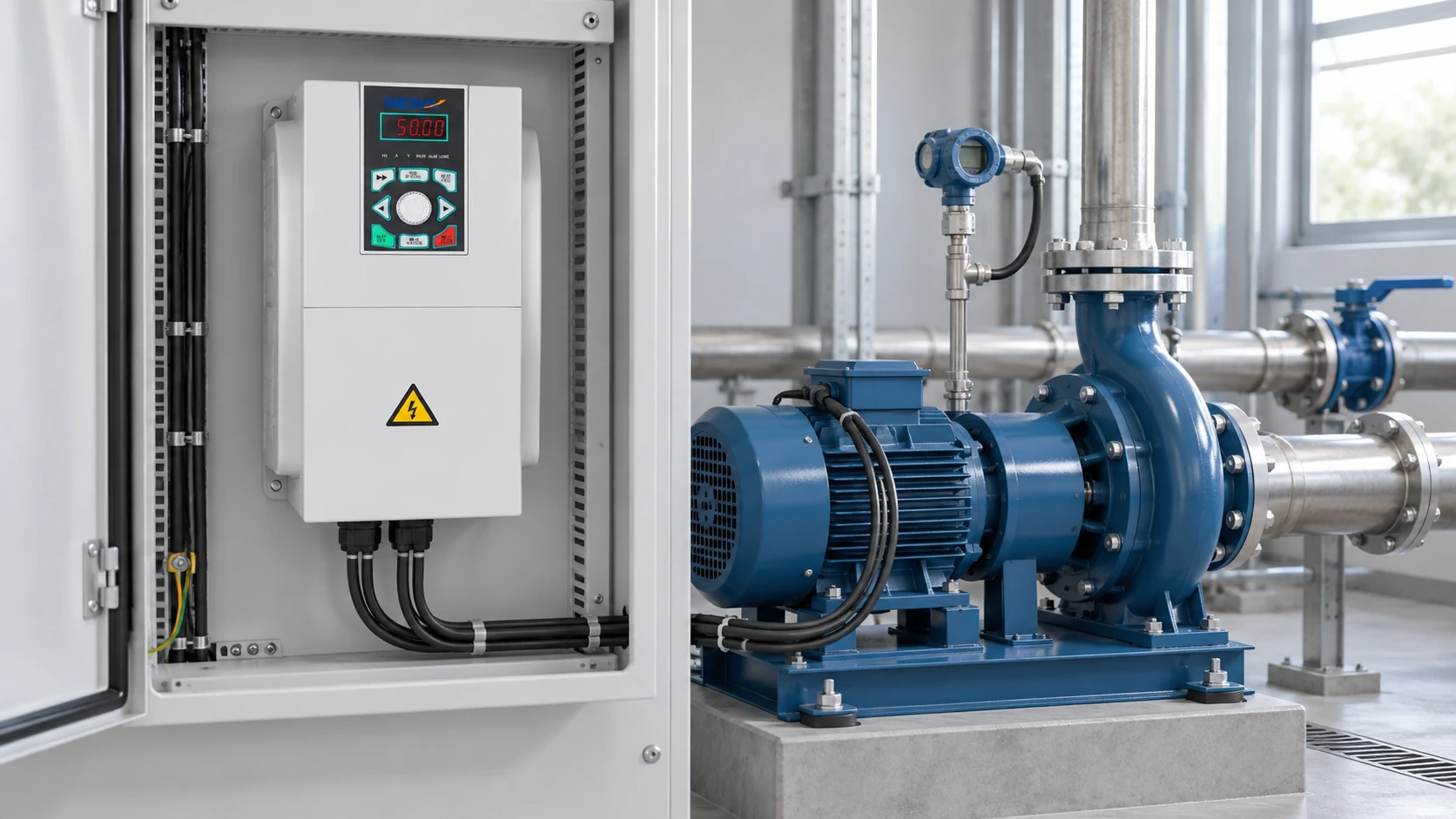
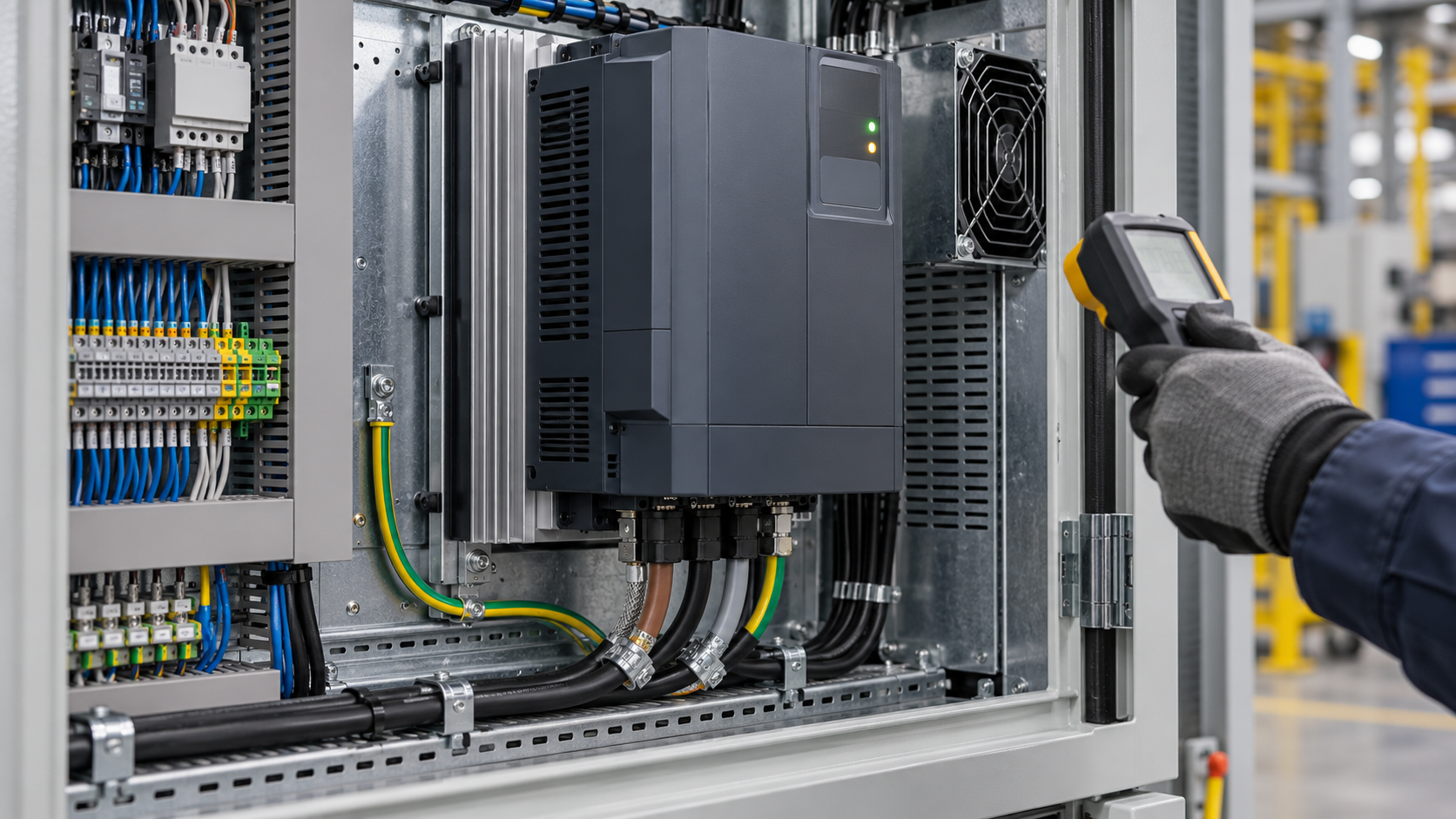 Panel design, heat removal, wiring, and safety interfaces affect the drive’s real operating cost.
Electrical and mechanical safeguards are part of the drive specification. IEC 60204-1 covers electrical equipment of machines, including equipment supplied at up to 1,000 V AC or 1,500 V DC; the applicable edition and destination-market rules still need confirmation. In the United States, OSHA 29 CFR 1910.147 addresses control of hazardous energy during servicing. These are compliance frameworks and regulations, not evidence that a particular drive is certified for every machine.
Use a documented isolation procedure, verify the absence of voltage with an appropriate test instrument, and account for stored energy in the DC link and rotating machinery. Keep control and power wiring separated according to the installation instructions, bond the protective conductor, and confirm enclosure ingress, ambient temperature, altitude, and ventilation. Functional tests should cover emergency-stop behavior, restart prevention, fault reset, braking, and loss of feedback where applicable.
Standards have different jobs, and the distinction matters in procurement:
NENA, the Zhejiang Xinhang team, can be included at this stage as a sourcing and documentation option when the buyer needs configurable drive choices and a defined evidence package. For category screening, review the available AC motor VFD options and then keep the request specific: motor data, application profile, destination requirements, and the test records needed for acceptance.
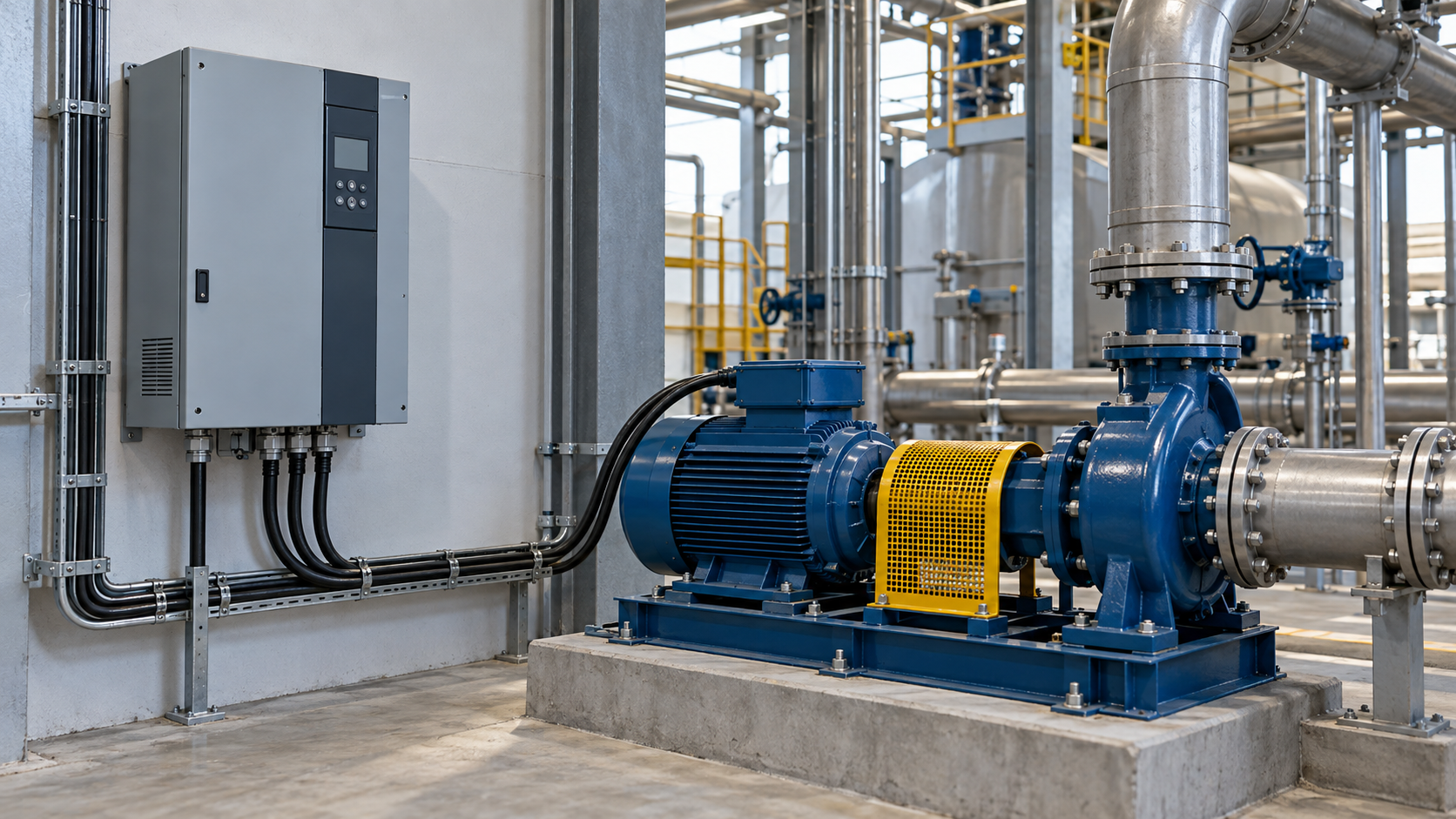
“AC drive” and “VFD” are commonly used for an adjustable-speed drive that changes the frequency and voltage supplied to an AC motor. The terms describe the control equipment, not a universal performance class. Confirm motor type, rated current, load duty, braking, and safety requirements before selecting a model.
Set a speed reference through the drive keypad, analog input, fieldbus, or another approved command source, then configure acceleration, deceleration, current limits, and motor data. The relationship n_s = 120f/p explains the frequency-to-synchronous-speed direction, while slip and load torque determine actual speed. Validate the command source and stop behavior during commissioning.
An AC motor controller is a broad term that can include a starter, soft starter, VFD, servo drive, or dedicated controller. The correct category depends on whether the machine needs only starting, continuous speed control, precise torque, feedback, or a safety-related stop. Match the controller’s current and duty ratings to the motor and application.
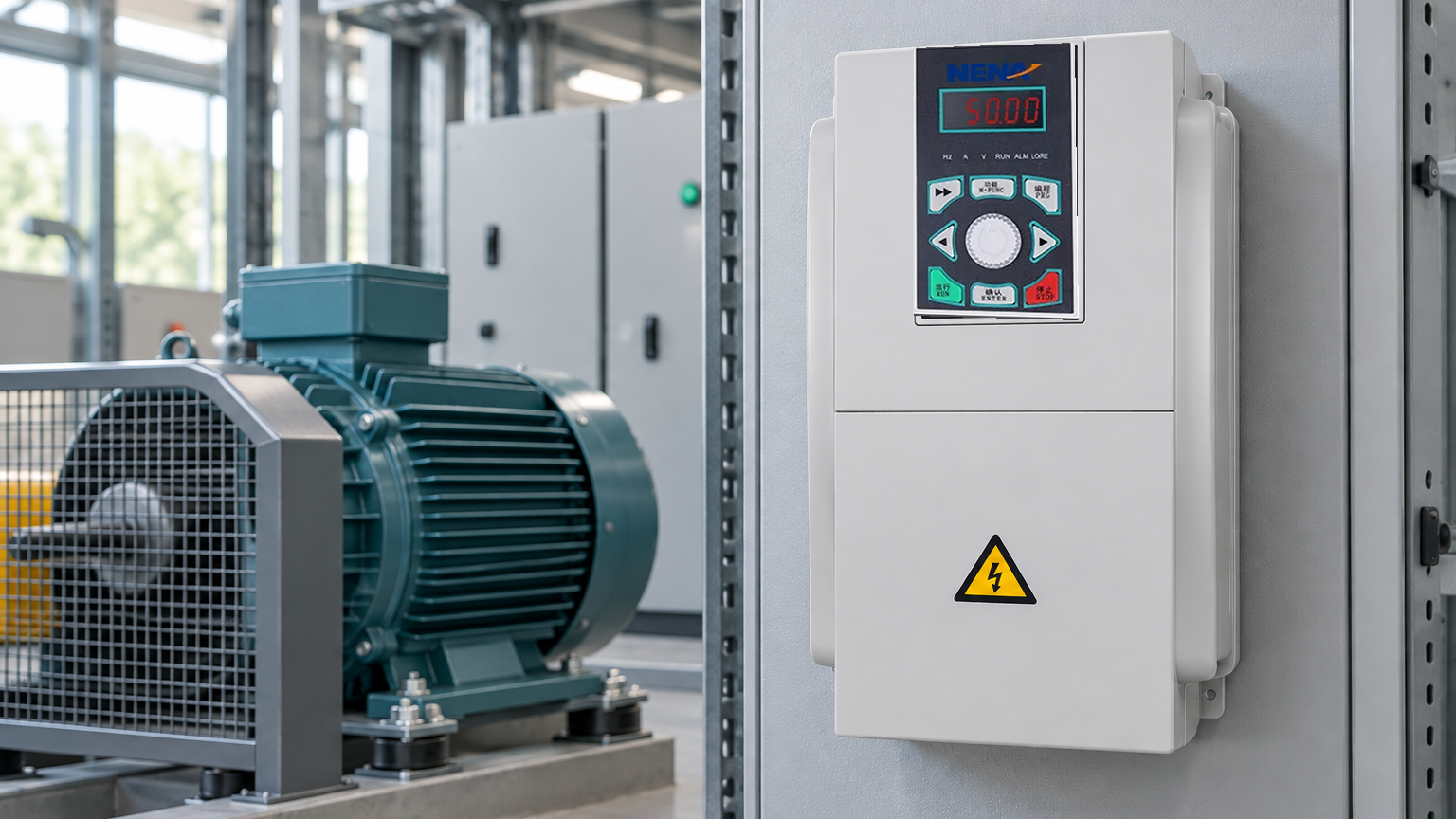
A VFD with motor is a matched operating system in which the drive, motor, wiring, settings, and load are commissioned together. The motor must tolerate the waveform, temperature, speed range, and bearing or insulation stresses created by the installation. A frequency inverter explainer can orient a first review, but the supplier still needs the actual nameplate and duty profile.
For a documented quotation or application review, contact NENA / Zhejiang Xinhang with the motor nameplate, load profile, destination market, and required acceptance tests.